How Imperial College London is accelerating dementia research with a modern data platform
Imperial College London’s UK Dementia Research Institute re-architected its Minder platform to scale sensor and health record data processing, improving dementia care through real-time monitoring and clinical integration.
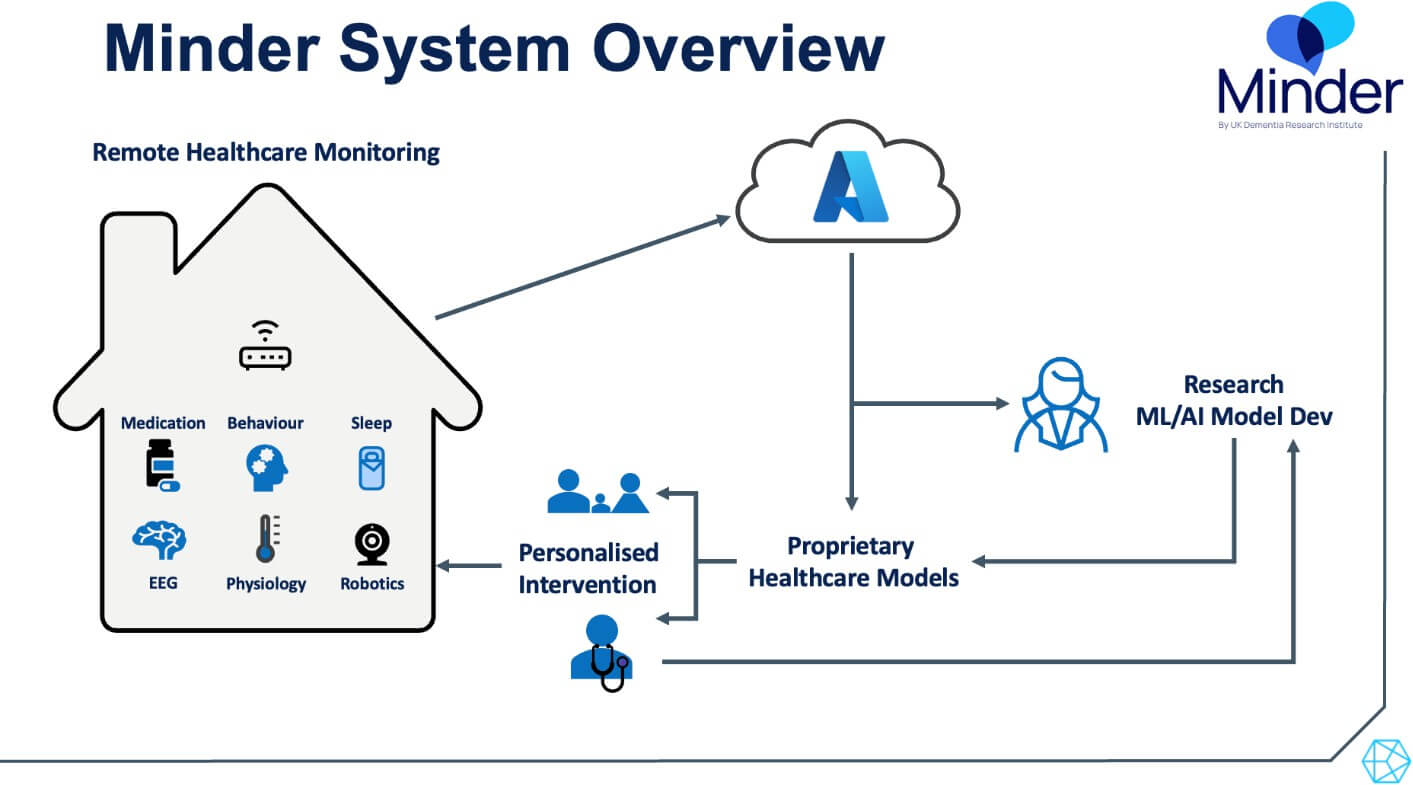
Imperial College London’s UK Dementia Research Institute Centre for Care Research and Technology (CR&T) tracks subtle health changes in dementia patients using in-home sensors, sleep monitors, and electronic health records via its Minder platform. Continuous data collection aims to detect infections early, reduce avoidable hospitalizations, and support independent living, but the platform’s growth created scaling and workflow challenges that slowed innovation and delayed clinical translation.
To address these issues, CR&T re-architected the Minder platform by decoupling storage and compute, introducing a dedicated research environment, and modernizing data pipelines. IoT data is now ingested via Kubernetes, stored in Delta Lake on Azure Data Lake Storage, and processed through bronze, silver, and gold layers to produce research-ready datasets, while preserving clinical workflows using FHIR standards for NHS interoperability.
The new architecture integrates with Imperial College Healthcare NHS Trust to embed remote monitoring data into clinical workflows, enabling clinicians to access real-time insights. Centralized governance through Unity Catalog ensures fine-grained access control, while Databricks serves as the unified analytics layer for researchers to explore data, build models, and collaborate independently of production systems.
Early results indicate significant gains, including hundreds of engineering hours saved and improved accessibility for non-technical stakeholders. The platform’s focus on reproducibility, governed access, and researcher-friendly tools reflects broader trends in healthcare, where scalable infrastructure and actionable data are critical for accelerating research and improving dementia care outcomes.