Introducing Feature Views
Databricks launches Feature Views in Public Preview to simplify machine learning feature pipelines, reducing duplication and governance overhead while supporting both batch and streaming sources for real-time use cases.
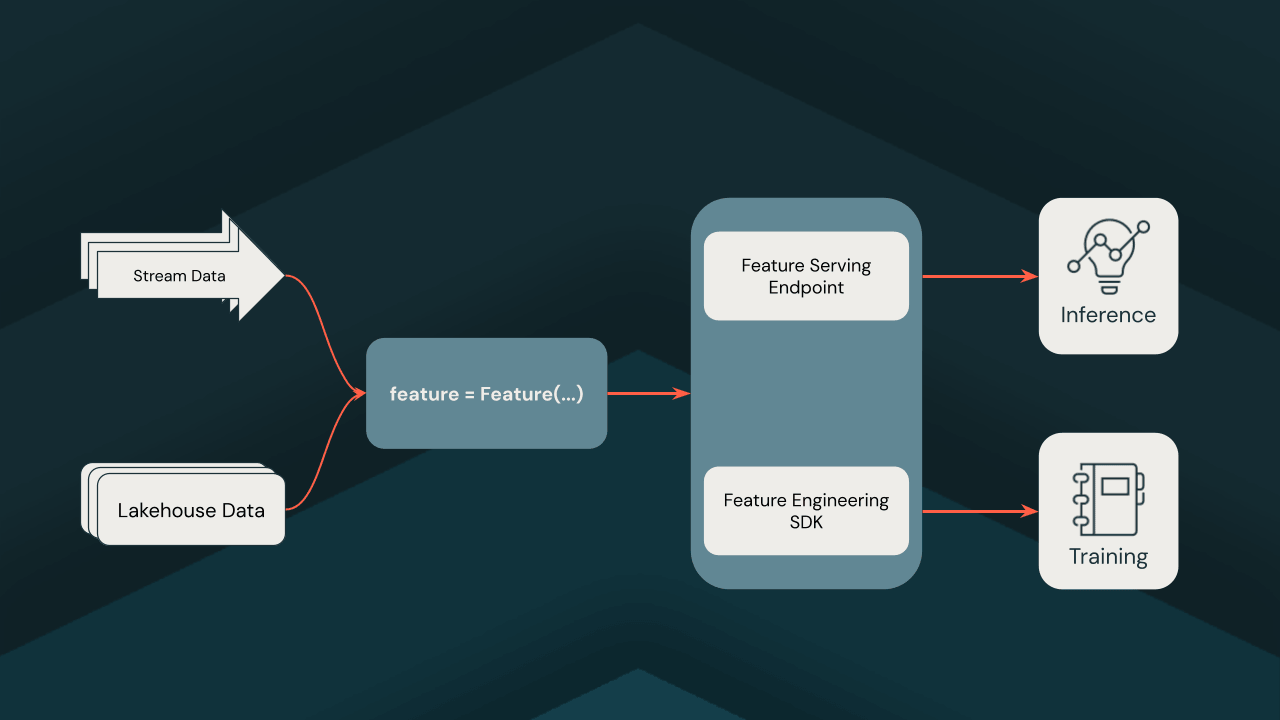
Databricks has introduced Feature Views, a new framework designed to streamline the creation and management of machine learning feature pipelines. The platform allows data scientists and engineers to define feature logic once, which the system then uses to generate historical data for experimentation and training. This approach eliminates the need for duplicated logic and fragile pipelines, addressing common challenges in real-time applications such as fraud detection and recommendations. Feature Views are positioned as a single abstraction spanning the entire ML lifecycle, from experimentation to production serving. The announcement highlights the platform's ability to handle both batch and streaming data sources with minimal code changes, simplifying the transition between different data processing modes.
Feature Views aim to close the gap between training and serving computations, a frequent source of failure in real-time ML systems. By maintaining a single feature definition, the platform ensures consistency between training and inference, reducing maintenance overhead and accelerating the path to production. The Feature Engineering Client SDK and Genie Code tools are introduced to facilitate quick feature development and experimentation. These tools enable users to declare features locally, compute them over historical data, and assemble point-in-time-accurate training sets within a single notebook environment. Genie Code further supports one-shot model experimentation workflows, integrating feature generation and model training seamlessly.
For production deployment, users can register features in Unity Catalog and materialize them with a single command. Databricks manages the underlying pipelines, writing to both online and offline stores while ensuring high-quality data, scalability, and reliability. Feature Views leverage existing Databricks products like Lakebase and RTM to optimize feature serving workloads. The platform handles corner cases such as backfilling long windows and expiring stale rows automatically. Streaming features sourced from Kafka achieve end-to-end p99 latency of 200ms from event to online availability, with rolling window aggregates updated per event for real-time accuracy.
Feature Views are governed as first-class Unity Catalog objects, ensuring discoverability, access control, and full lineage tracking. Features are packaged with models, and MLflow logs feature dependencies, enabling Model Serving to automatically retrieve required features at inference time without custom code. Genie Code integrates natively with Feature Views, allowing data scientists to build and iterate on features using simple prompts. Streaming materialization requires an Enterprise-tier workspace in supported regions. The announcement emphasizes the platform's ability to author features once and deploy them across experimentation, batch, and real-time serving without managing underlying infrastructure.