Databricks joins the Open Secure AI Alliance to advance AI safety and security
Databricks has joined the Open Secure AI Alliance to promote open research and tools for AI safety, security, and cyber defense, emphasizing transparency across the full AI agent stack.
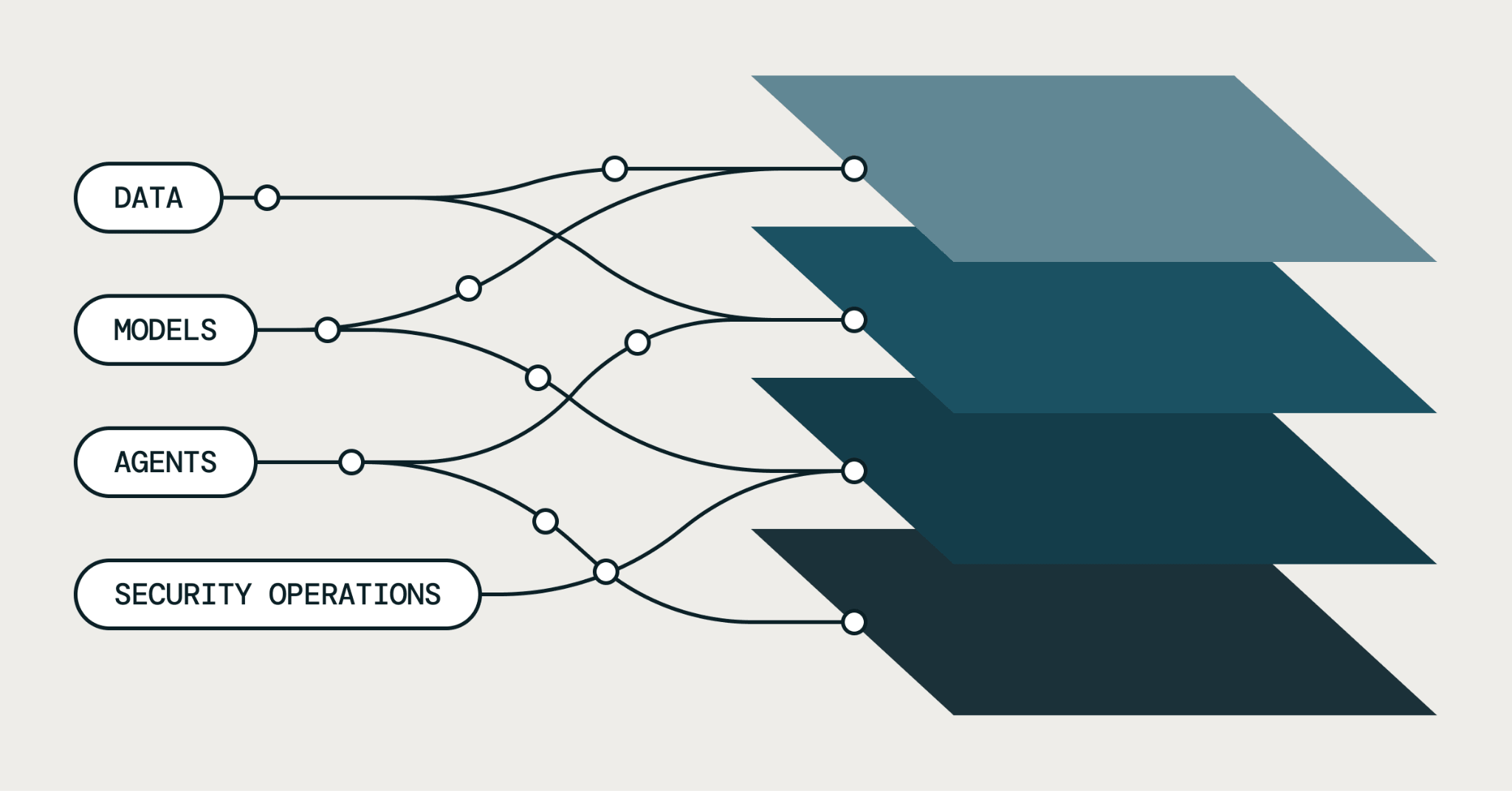
Databricks announced its founding membership in the Open Secure AI Alliance, a coalition of over 75 organizations including NVIDIA, aimed at advancing AI safety and security through open research and shared tools. The alliance focuses on three core areas: securing AI systems against emerging threats, leveraging AI for cyber defense, and ensuring transparency through open frameworks and models. Members contribute open models, harnesses, tooling, and governance frameworks to accelerate the development of secure AI practices across industries.
The alliance addresses the complexity of securing AI agents, which are composed of multiple layers including models, harnesses, guardrails, and governance systems. Databricks highlighted its role in providing governed data, agent capabilities, and open tools such as Omnigent, an open-source meta-harness designed to enforce policies and sandbox isolation across multiple agent frameworks. Omnigent supports NVIDIA’s OpenShell for layered, auditable protection, aligning with the alliance’s goal of inspectable and governable AI systems.
Databricks also introduced the Databricks AI Security Framework (DASF) 3.0, a vendor-agnostic framework that catalogs 97 technical security risks across 13 components and maps them to 73 mitigation controls, including coverage for agentic AI threats like memory poisoning and goal manipulation. Released under CC BY-SA 4.0, DASF 3.0 provides a blueprint for organizations to transition from risk identification to mitigation, ensuring alignment with standards such as MITRE ATLAS and NIST.
In addition to frameworks, Databricks emphasized its commitment to open security architectures, including the Security Lakehouse and Lakewatch, which enable AI-driven threat detection and response at scale using open data formats. The company also open-sourced Unity Catalog under Apache 2.0, providing a governance layer that enforces access controls across data, models, and tools, preventing vendor lock-in. Databricks’ participation in the alliance extends its long-standing open-source principles to AI safety and security, aiming to foster a collaborative ecosystem for securing the agentic era.