Lakehouse//RT: Scale real-time analytics, not your bill
Databricks introduces Lakehouse//RT to handle real-time analytics workloads from AI agents without proportionally increasing infrastructure costs, addressing spiky demand and high concurrency.
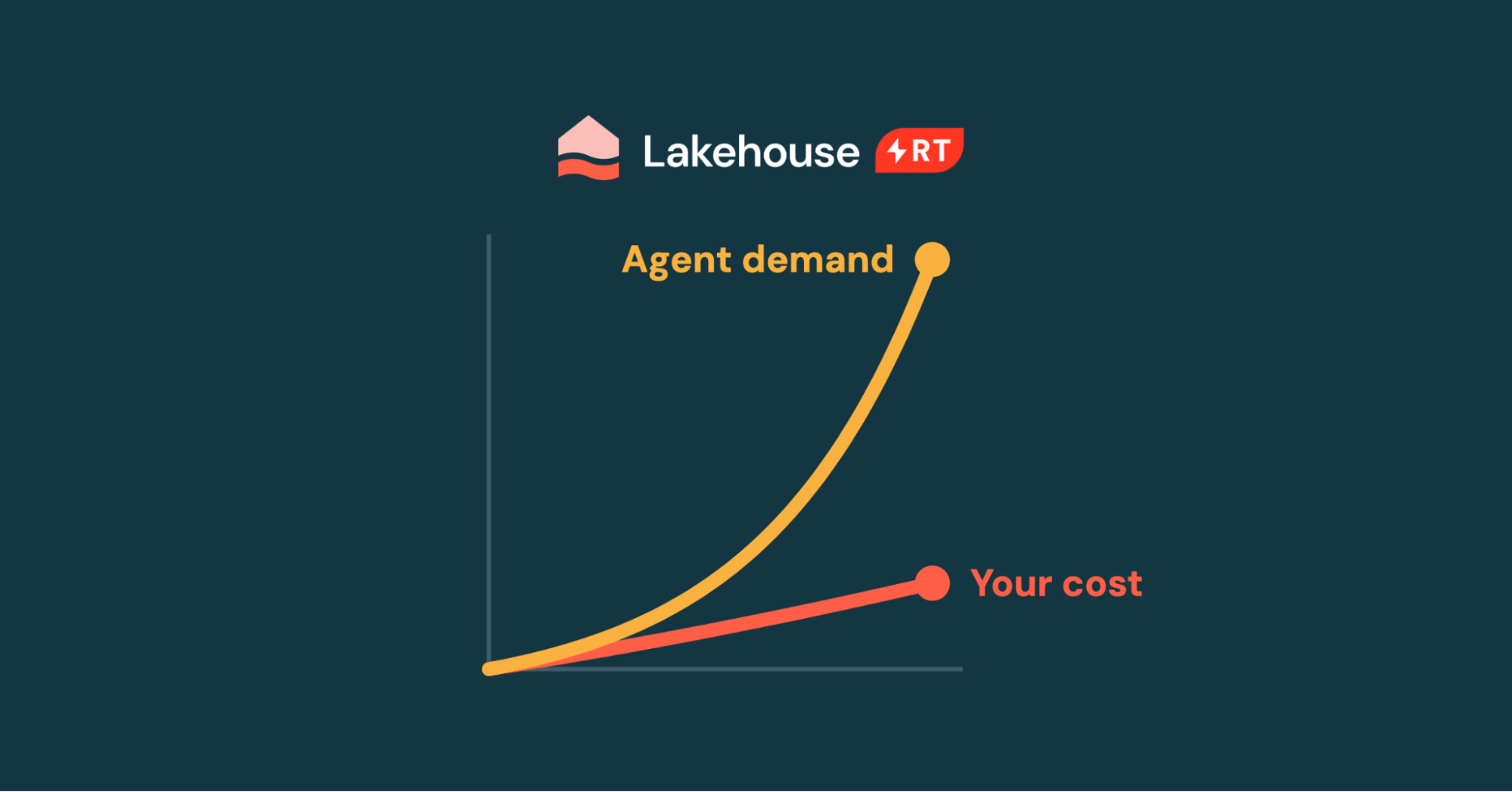
AI agents can generate hundreds of queries per second, far exceeding human analysts' capacity, which strains traditional data warehouses designed for human-scale workloads. Most warehouses scale compute linearly with query volume, leading to disproportionate cost spikes as demand grows. Lakehouse//RT is engineered to serve real-time workloads directly on the lakehouse while maintaining efficiency, avoiding the typical cost escalation tied to query growth.
Real-time workloads often require overprovisioning to handle peak demand, resulting in idle compute and wasted spend during off-peak periods. Lakehouse//RT scales efficiency rather than cost, enabling the same infrastructure to handle significantly more queries without a proportional increase in expenditure. Its architecture supports sub-100 millisecond latency at 12,000 queries per second, optimizing resource utilization for spiky, high-concurrency scenarios.
Traditional warehouses struggle with concurrency limits, forcing organizations to deploy multiple clusters to maintain low latency, even for small queries. Lakehouse//RT runs far more queries concurrently on a single warehouse, reducing the need for additional clusters and associated costs. Customer migrations demonstrate substantial improvements, such as Aurasell reducing costs by 10x while increasing query throughput and speed.
Lakehouse//RT eliminates the need for separate real-time serving layers like Apache Druid or Pinot, which require duplicated data and always-on infrastructure. Migrations to Lakehouse//RT have shown dramatic cost reductions, such as VisionHeight cutting costs by over 90% and nOps reducing infrastructure spend by more than 6x while removing duplicated data and sync pipelines.