Everything you need to know about Circuit Zandvoort
Formula 1 returns to Circuit Zandvoort this weekend for the Dutch Grand Prix after a 36-year absence, following a 2019 announcement delayed by the pandemic.
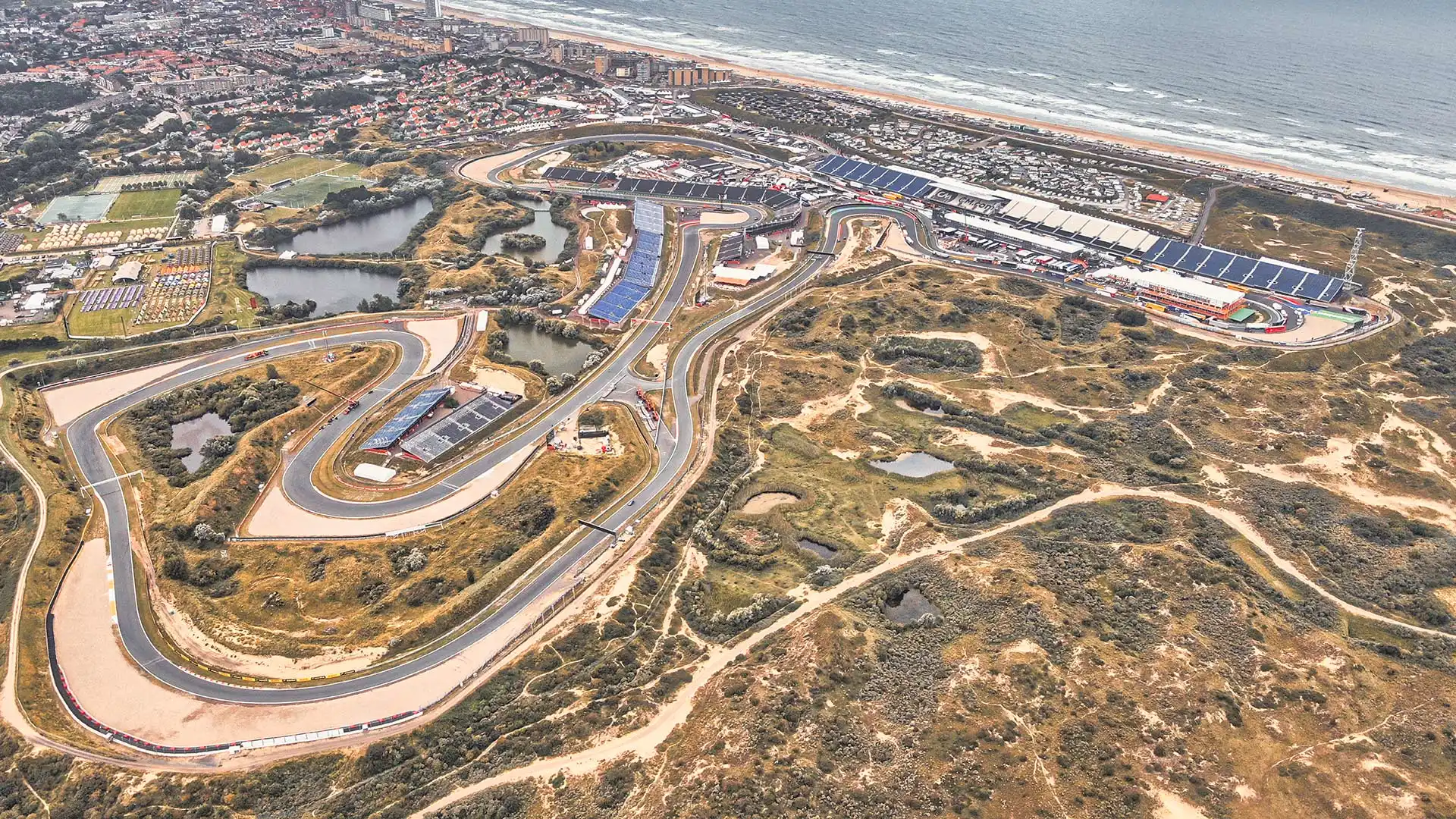
Circuit Zandvoort, first opened in 1948, blends permanent track sections with public roads through sand dunes near the Dutch resort town. Originally a 4.2km layout designed with input from 1927 Le Mans winner Sammy Davis, the circuit hosted its first F1 race in 1952, won by Alberto Ascari for Ferrari. The championship raced intermittently until 1985 before a 35-year hiatus. The track’s return in 2021 followed a modernisation effort, though its undulating, banked corners retain a challenging character praised by drivers for its old-school feel.
The circuit’s most distinctive feature is its banking at Turn 3, which forces drivers to commit to a single line for optimal exit speed. The final corner also features banking, adding to the track’s punishing nature. Former Renault driver Jolyon Palmer notes the middle sector’s undulations demand precision, while high-speed sections require stability to avoid oversteer. Despite modern updates, overtaking remains difficult, a trait drivers associate with older circuit designs.
For the 2024 race, teams will utilise two aerodynamic configurations: Straight Mode and Overtake Mode. Straight Mode reduces drag by adjusting both front and rear wings, deployed on designated straights to improve efficiency. At Zandvoort, these zones include the start/finish straight and the segment between Turns 10 and 11. The system alternates between high downforce for corners and reduced drag for straights, aiming to balance performance and speed.
Overtake Mode replaces the Drag Reduction System (DRS) and provides a temporary power boost by allowing drivers to recharge electrical energy. A single detection point per lap, located before Turn 13, determines eligibility, while activation occurs between Turns 13 and 14. Drivers must stay within one second of the car ahead at the detection point to use the mode on the following lap, targeting improved overtaking opportunities on the long straight leading to the finish line.