NVIDIA, Microsoft Kick Off a New Beginning for Windows PCs With RTX Spark and AI Agents
NVIDIA and Microsoft announced new Windows AI tools and hardware, including RTX Spark and DGX Station for Windows, enabling local AI agents and advanced model execution on PCs.
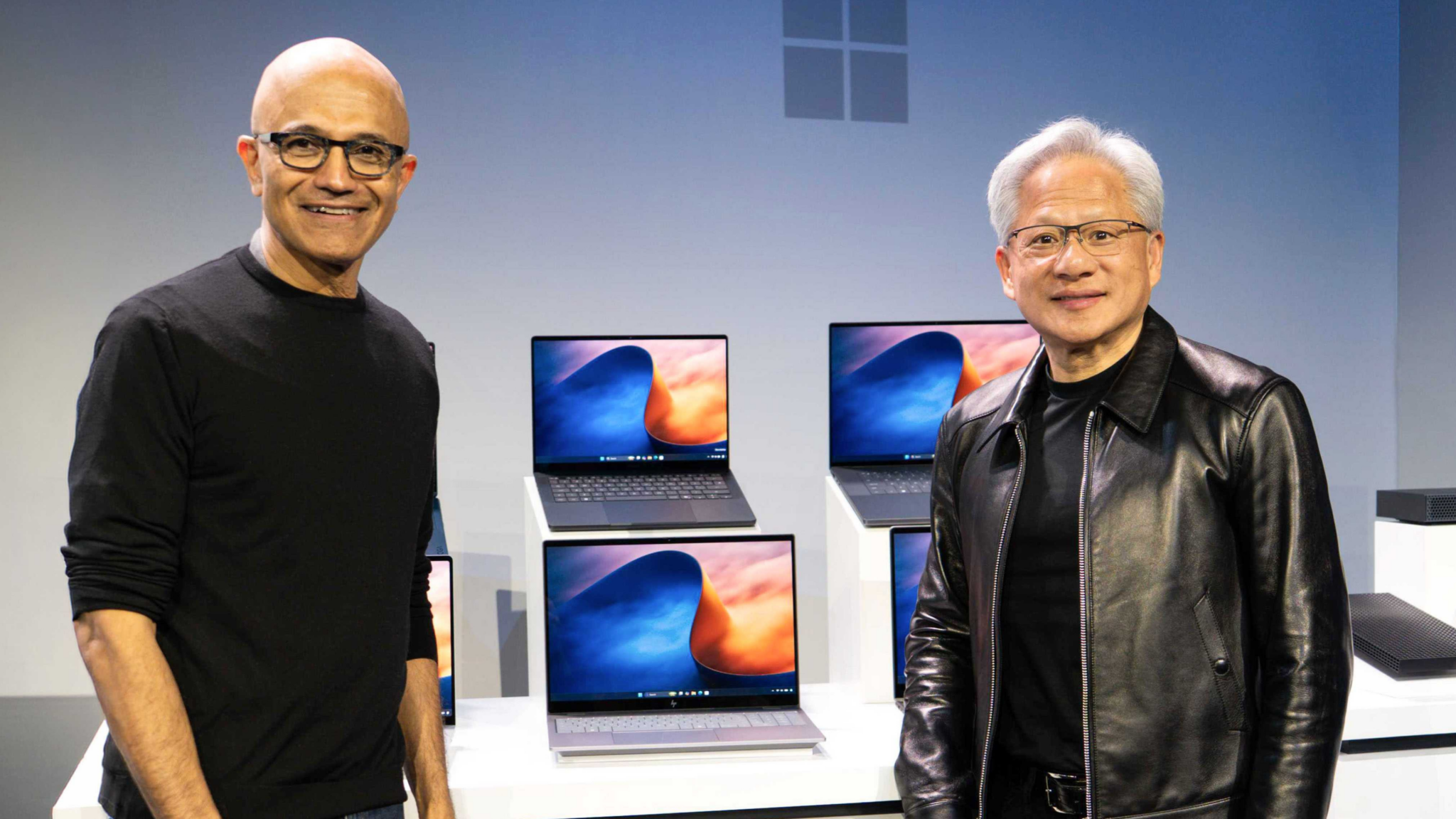
At a Microsoft event in San Francisco, NVIDIA CEO Jensen Huang and Microsoft CEO Satya Nadella highlighted their long-standing partnership and the integration of AI agents into Windows PCs. Huang emphasized NVIDIA’s historical ties to Windows, noting that the company’s success began with Windows support. Nadella praised Huang’s vision for AI agents as a long-term trend, framing the collaboration as a pivotal moment for the personal computer’s evolution into a platform for personal assistants.
Microsoft announced the general availability of Microsoft Execution Containers (MXC), a secure OS-level infrastructure for running AI agents persistently in the background on Windows. Pavan Davuluri, Microsoft’s EVP of Windows and Devices, explained that MXC enables agents to be secured, observed, and governed within the operating system. The announcement positioned MXC as foundational for the next generation of IT, with Nadella and Huang comparing its potential impact to past Windows innovations like DirectX.
NVIDIA introduced RTX Spark, which integrates the full NVIDIA AI stack into Windows laptops and compact desktops. Laptop preorders opened with availability starting October 16, while compact desktops will launch in November. RTX Spark combines an NVIDIA Blackwell RTX GPU with up to 6,144 cores and an NVIDIA Grace CPU, delivering up to one petaflop of AI performance and 128GB of unified memory for running large models locally.
Microsoft also unveiled Surface Laptop Ultra and NVIDIA DGX Station for Windows, the first deskside AI supercomputer designed for the Windows ecosystem. DGX Station for Windows runs on the GB300 Grace Blackwell Ultra Desktop Superchip, offering up to 20 petaFLOPS of AI compute and 748GB of coherent memory. The system allows developers to run frontier-class models locally without switching to Linux, integrating with existing Windows workflows and applications.