NASA, IBM Launch AI Foundation Model for Lunar Science
NASA and IBM unveiled an open-source AI model trained on lunar orbiter data to accelerate Moon surface analysis for crater mapping, volcanic feature detection, and ice stability estimation.
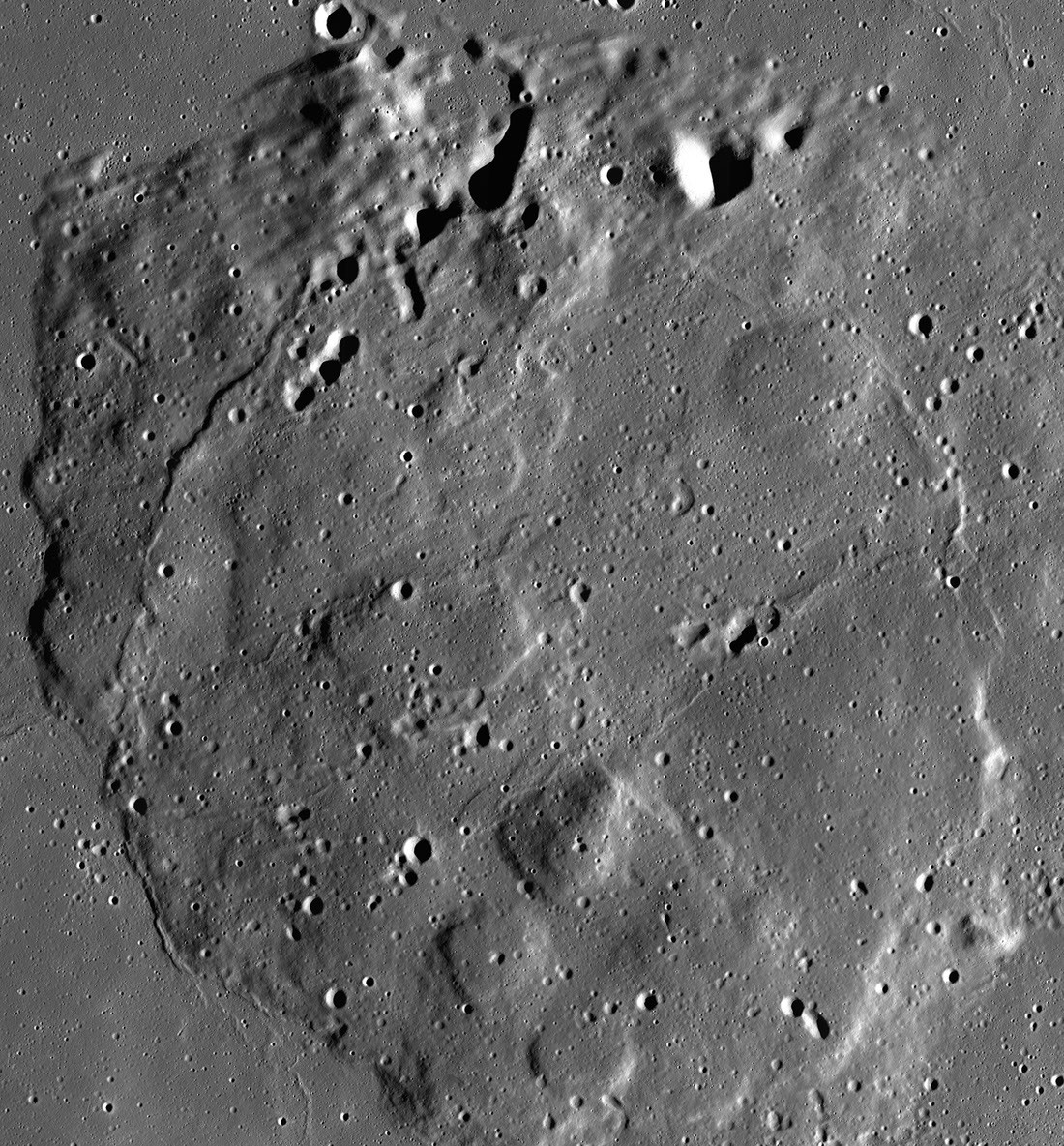
NASA and IBM have introduced the NASA-IBM Lunar Foundation Model, an open-source AI tool designed to analyze lunar surface data. Trained primarily on imagery from NASA’s Lunar Reconnaissance Orbiter, the model is hosted on Hugging Face with its codebase available on GitHub for public use. Researchers can leverage the model to rapidly process large datasets, aiding in geological studies and mission planning. The collaboration includes academic institutions and NASA centers, emphasizing accessibility and reproducibility in lunar science.
The model was trained on approximately 2 million image tiles from the Lunar Reconnaissance Orbiter’s dataset, covering over 1 million high-resolution images and nearly 964,000 multispectral images. Additional training data included imagery from NASA’s GRAIL, Lunar Prospector, and JAXA’s SELENE missions. Unlike traditional models, this foundation model is pre-trained on vast, unlabeled datasets, enabling quick adaptation to tasks like crater mapping and volcanic feature identification with minimal labeled data.
For lunar polar ice research, the model helps estimate stable ice patches in permanently shadowed regions, offering insights into the Moon’s history and potential resource mapping. It also accelerates the identification of irregular mare patches, which challenge current timelines of lunar cooling. The model’s efficiency in crater mapping supports dating the lunar surface and reconstructing solar system history, outperforming several baseline models in evaluated tasks.
The NASA-IBM Lunar Foundation Model is part of NASA’s AI for Science strategy, developed in collaboration with IBM and academic partners. It includes open datasets and benchmark collections, integrated into the TerraTorch toolkit. A companion paper on Hugging Face ensures reproducible research, enabling global scientists to refine AI models for future lunar exploration.