Perseverance Update: The Ghostly Rocks of ‘Idubi’ — Bright Remnants of Aqueous Systems from Long Ago
NASA’s Perseverance rover has discovered bright, hydrated silica-rich rocks at Mars’ Idubi site, offering new clues about ancient aqueous systems and potential biosignatures.
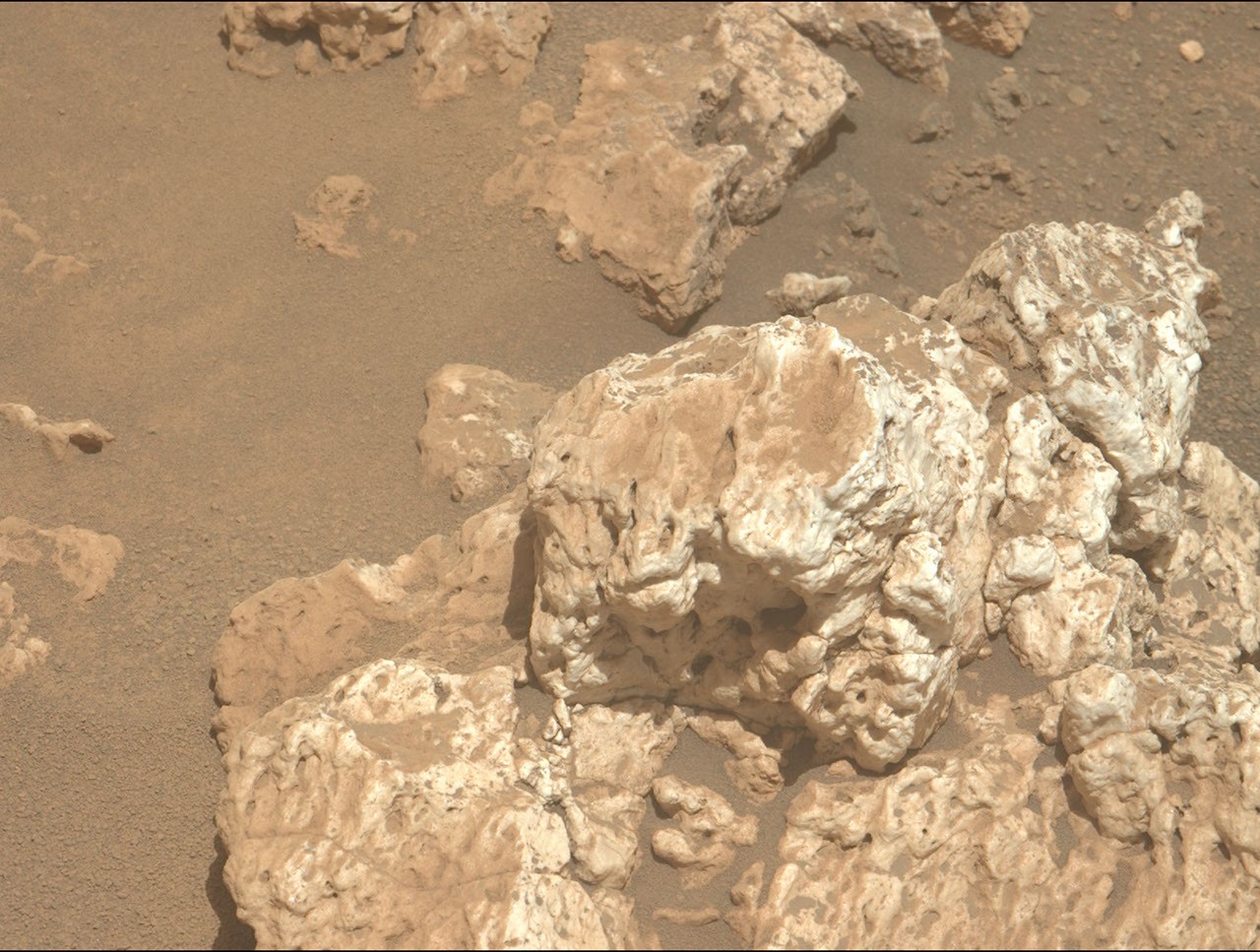
The Perseverance rover team identified an unusual cluster of light-toned rocks in the Lac de Charmes region outside Jezero Crater, distinct from the darker, dust-covered Martian surface. These bright fragments appeared brighter than typical igneous or impactite rocks previously studied, prompting closer investigation. The team directed the rover to analyze the rocks using the SuperCam instrument, which confirmed their composition as hydrated silica, a mineral linked to aqueous environments on Earth.
Hydrated silica can form in hydrothermal, pedogenic, or groundwater systems, making it a key target for understanding Mars’ past hydrological activity. Scientists note that such environments may have once supported microbial life, increasing the astrobiological significance of these deposits. The mineral’s ability to preserve microfossils further enhances its importance in the search for ancient life on the Red Planet.
Unlike previous silica-rich finds near Jezero Crater, the rocks at Idubi are large enough for proximity science instruments to gather high-resolution chemical and mineralogical data. This allows researchers to better constrain the origin of the deposits and assess their potential to preserve biosignatures. A detailed proximity science campaign is now underway to analyze these promising samples.
The discovery underscores the rover’s role in NASA’s Mars Sample Return Campaign, where Perseverance serves as the first leg of an interplanetary relay to collect and cache samples for future return to Earth. These findings could provide critical insights into Mars’ ancient climate and habitability, shaping future exploration strategies.