Wild, Scenic, and Increasingly Rusty
Scientists report over 200 Arctic streams in Alaska’s Brooks Range have turned orange in the past decade due to thawing permafrost, which releases iron and acids into waterways, disrupting ecosystems and water quality.
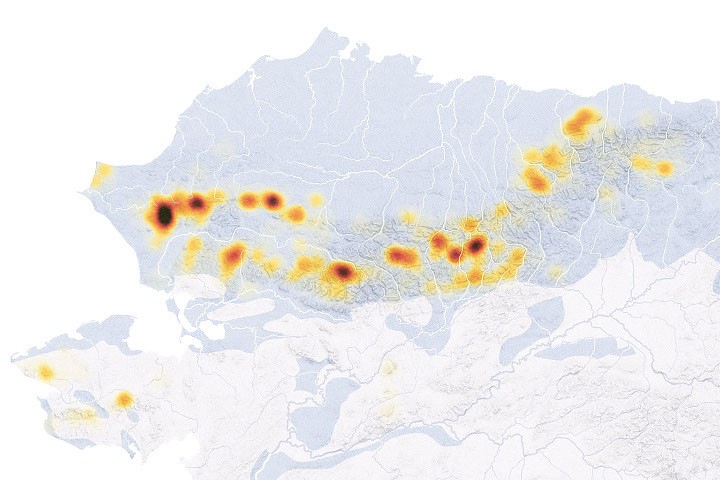
Satellite, aerial, and ground surveys across more than 600 miles of Alaska’s Brooks Range have documented over 200 streams shifting from clear to orange in the past 10 to 12 years. Researchers attribute the change to thawing permafrost, accelerated by rising air and ground temperatures, which exposes minerals to chemical weathering. The process releases iron, sulfuric acid, and trace metals, similar to acid mine drainage, altering water chemistry and color. Microbes in thawing soils may also contribute by producing soluble iron that oxidizes in flowing streams, further intensifying the discoloration.
A 2024 study led by ecologist Jon O’Donnell of the National Park Service identified 75 streams with recent color changes, later expanding to 200 observations using high-resolution satellite imagery. The findings, published in NOAA’s 2025 Arctic Report Card, reveal that some streams turned rusty around 2018 and remained discolored, while others fluctuated between rusty and clear periods. The Agashashok River in Noatak National Preserve showed a sudden shift in 2019, with a several-kilometer orange section and blackened vegetation near groundwater seeps, confirmed by Landsat data and ground surveys.
Researchers are investigating the conditions driving the onset of orange streams, including the role of deep snowpack, which may insulate soil and enable earlier permafrost thaw. Higher streamflow can dilute discoloration, while acidic groundwater discharge from thawing permafrost contributes to the phenomenon. A planned geophysical survey will examine subsurface geology, hydrology, and permafrost to better understand the process. The team also aims to quantify the impact on water quality and aquatic ecosystems, as some areas have already shown decreased biodiversity coinciding with the color change.
Communities dependent on these river systems for drinking water and subsistence fisheries face growing concerns as the discoloration spreads. Scientists are studying toxicity patterns over time and space, particularly where rusting rivers overlap with fish spawning areas. Brett Poulin, an environmental toxicologist at the University of California, Davis, notes that the phenomenon reflects broader consequences of permafrost thaw, consistent with acid rock drainage emerging in other cryosphere regions worldwide.