What’s driving Europe’s battery boom? Insights from EUPD Research’s Business Climate Survey and Storage Report
Europe’s battery storage market is shifting toward utility-scale projects as annual installations are projected to nearly double from 34 GWh in 2025 to 65 GWh in 2026, driven by higher electricity prices, renewable expansion, and supportive policies.
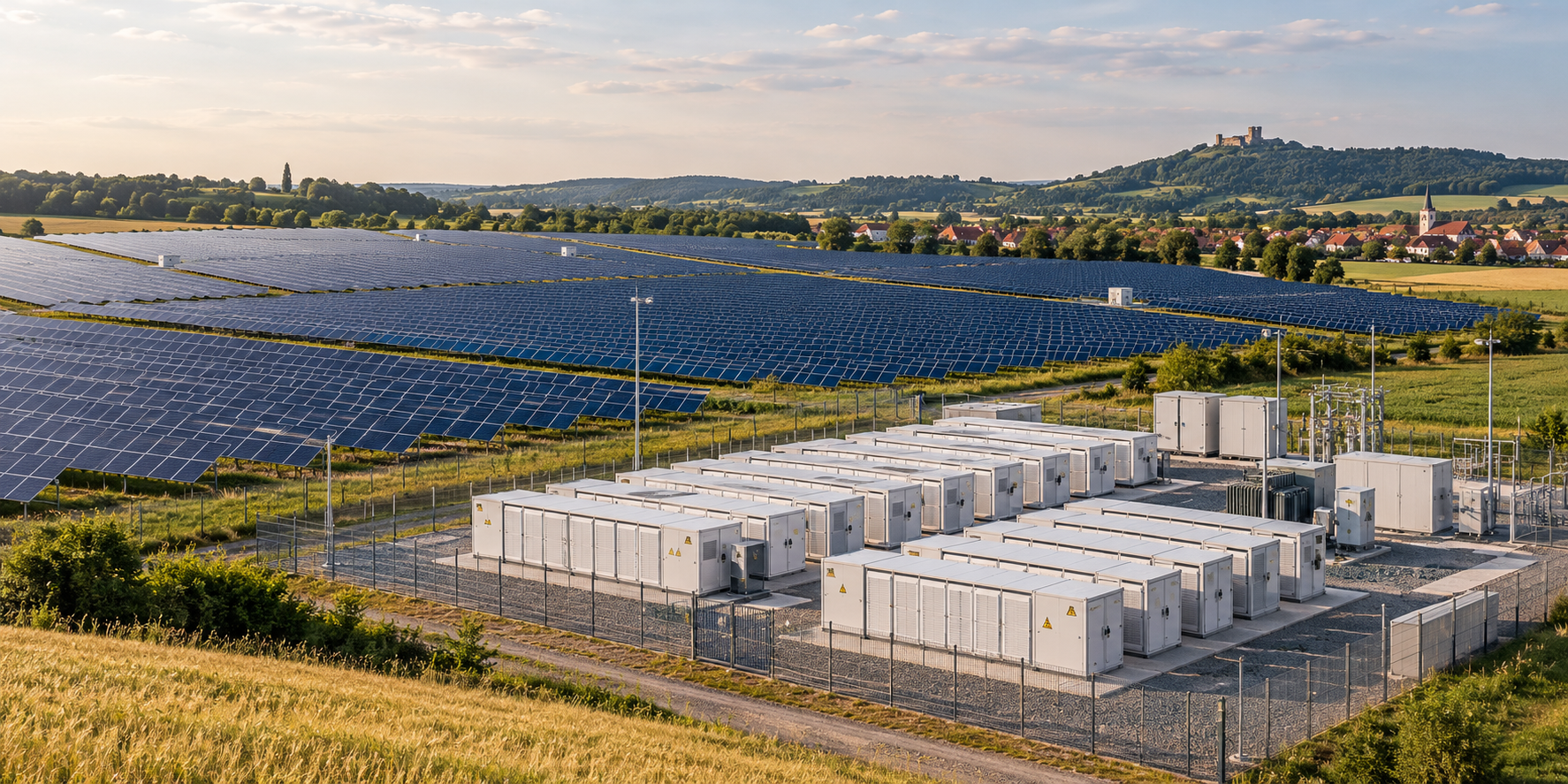
Europe’s battery storage market is transitioning from small-scale installations to utility-scale projects, with annual capacity expected to rise from 34 GWh in 2025 to 65 GWh in 2026. This shift is driven by higher electricity prices, tighter energy markets, and the growing share of renewable generation in the grid. Batteries are no longer just backup solutions but critical tools for balancing power systems and improving flexibility as solar and wind expand.
The utility segment is projected to install around 44 GWh in 2026, becoming the largest contributor to Europe’s storage growth. Countries with rapidly expanding renewable fleets are leading this transition, relying on batteries to shift electricity across different hours of the day and support grid stability. Policy reforms, funding mechanisms, and permitting improvements are further strengthening the business case for larger projects.
Residential storage is entering a mature phase, with manufacturers expanding into broader home-energy ecosystems that combine solar, EV charging, heat pumps, and energy management software. High retail electricity prices, declining battery costs, and tax incentives remain key drivers, though challenges like uneven smart-meter deployment and financing constraints persist. Germany, Italy, the Netherlands, Austria, and the UK are expected to lead residential installations in 2026.
The competitive landscape is evolving rapidly, with residential supplier rankings shifting between 2025 and the first half of 2026. Manufacturers are differentiating through integrated energy solutions and software capabilities rather than solely on battery hardware. Partnerships and delivery capabilities are becoming as important as technology itself, particularly in the commercial and industrial segment.