"Sexy sorceresses" and "bare-chested fighters": Dragon Age's original artists wanted to base it on Conan the Barbarian, much to the outrage of the designers
Dragon Age’s original vision clashed between Conan-inspired art and Tolkien-style design, with producers pushing for Diablo’s bloody aesthetic, leading to the series’ fragmented identity.
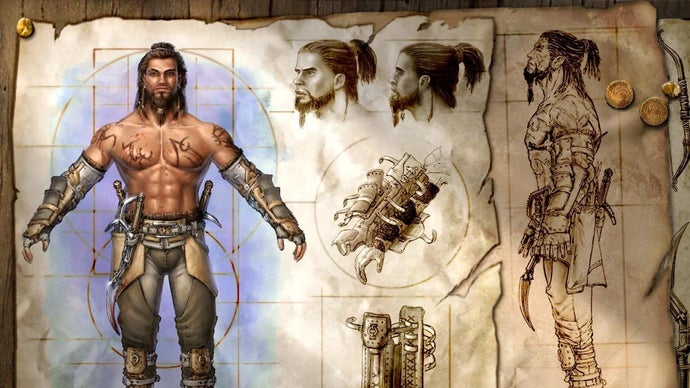
David Gaider, former BioWare lead writer and now creative director at Summerfall Studios, described early Dragon Age development as a factional struggle between art and design teams. The art department favored a Conan the Barbarian aesthetic with ‘sexy sorceresses’ and bare-chested fighters, while designers insisted on a Tolkien-inspired approach. This ideological divide persisted despite the game’s announcement at a closed E3 screening, where the art team’s Conan-influenced video went largely unchallenged. Gaider noted the art department’s refusal to compromise, forcing designers to assert their own vision in response.
Gaider recounted how producers introduced a third competing vision, advocating for a Diablo-style game where enemies explode in blood. Both art and design teams rejected this direction outright, though some concessions were made, resulting in Dragon Age’s notably bloody combat. The producers’ insistence on a ‘blood dripping’ theme was partially adopted but later toned down due to misalignment with the game’s tone. Gaider emphasized the lack of a unified vision early on, which led to reactive adjustments between each Dragon Age release.
The interview highlights BioWare’s internal struggles during Dragon Age’s development, particularly under Electronic Arts’ ownership. Gaider attributed Origins’ release partly to ‘sunk cost’ thinking after EA acquired the studio, and noted the absence of a clear creative direction initially. He contrasted this with Mass Effect’s more cohesive vision under project director Casey Hudson, who enforced a singular identity for the series. Gaider described Dragon Age as evolving organically rather than adhering to a deliberate plan, leading to noticeable shifts between Origins, Dragon Age II, and Inquisition.
Gaider’s reflections extend beyond Dragon Age, touching on broader industry challenges such as overspecialized studios and the financial pressures of $100 million projects. He left BioWare before Dragon Age: The Veilguard, whose troubled development and EA’s subsequent pause of the series left modders to sustain interest. The Summer Eternal anthology also includes remarks from former executive producer Mark Darrah about the risks of overspecialization in large-scale game development.