PARTNERSHIP WITH EUROPE, NOT SEPARATION, THE ANSWER FOR BRITAIN
The UK government reaffirms its commitment to European partnership, citing shared history and future challenges, as Brexit’s economic and political consequences continue to unfold.
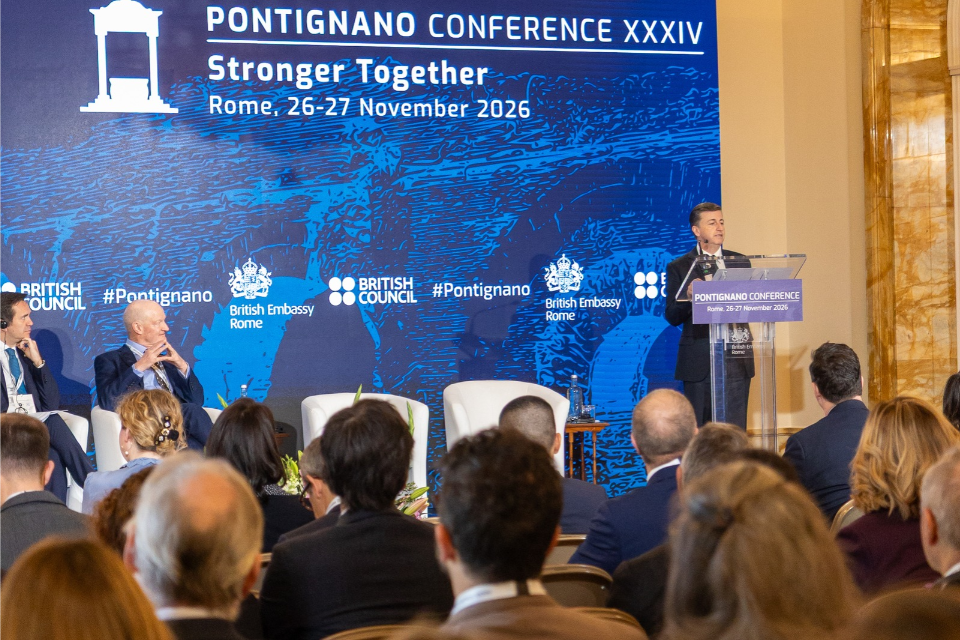
Scottish Secretary Douglas Alexander opened his speech in Rome by invoking centuries of European-Scottish ties, from Roman aqueducts to Italian-built cafés and the Italian Chapel in Orkney, to argue that Britain’s strength lies in connection rather than separation. He highlighted the cultural and economic exchanges that have shaped modern Scotland, including Adam Smith’s work in France and Glasgow University’s origins in Bologna, framing interdependence as a historical constant.
Alexander reflected on the 2016 referendum, recalling the night’s results and Scotland’s unanimous vote to remain in the EU, expressing concern for lost opportunities for young people and the economic consequences of divergence. He attributed the rupture to economic stagnation, political alienation, and cultural anxiety, arguing that these forces reshaped both domestic politics and the international order.
The speech warned that the past decade has seen a shift from convergence to fragmentation, with globalisation’s benefits unevenly distributed and trust in institutions eroded. Alexander described the world as increasingly polarised and protectionist, with geopolitical rivalry defining the decade ahead, challenging the post-1945 order built on cooperation and rule of law.
He concluded that Britain’s path forward must prioritise interdependence over isolation, positioning partnership with Europe as the answer to shared challenges. Alexander framed this as a return to Britain’s historical role in building bridges, not walls, and called for a politics that restores agency to people by securing their future in an era of great power rivalry.