How we accelerated code review in a large monorepo using Agentic Pipelines
Atlassian’s Jira team reduced code review wait times in a large monorepo by splitting AI review into two steps using Agentic Pipelines, matching files to guidelines before targeted feedback.
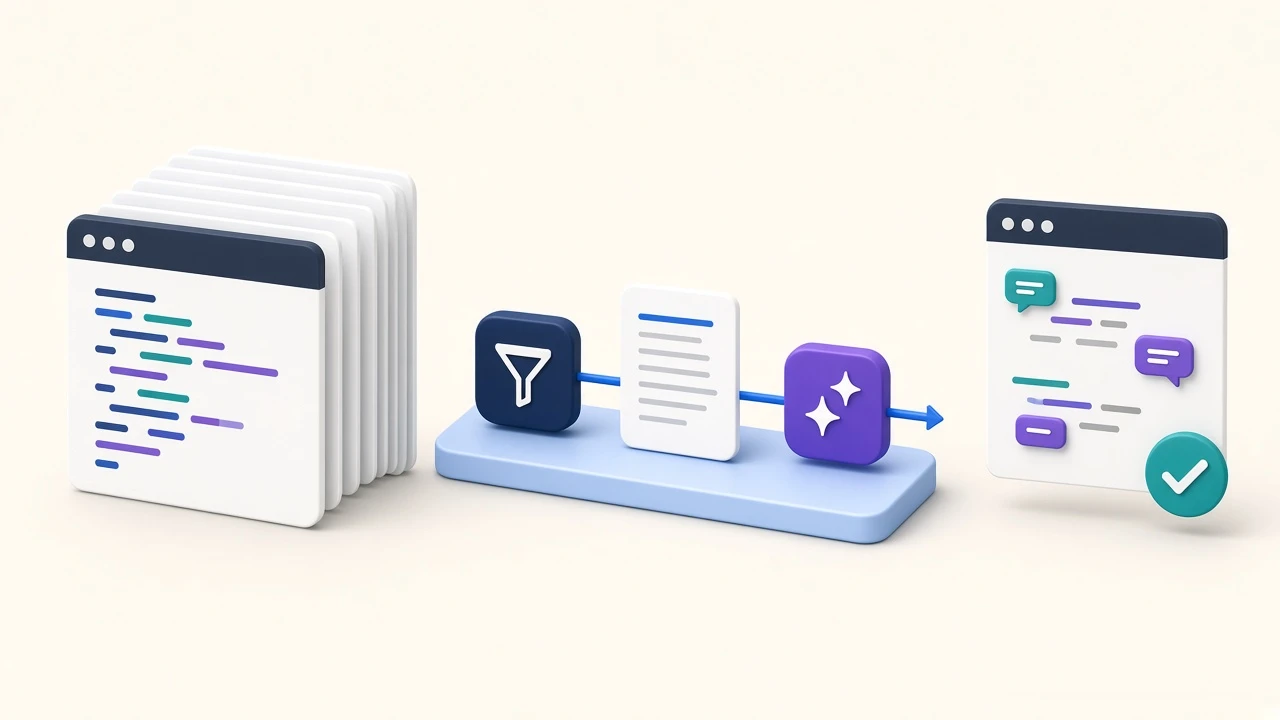
A single AI reviewer handling all team guidelines often produced irrelevant comments, such as suggesting data-fetching fixes for CSS changes, because it lacked context about which rules applied to specific code areas. This approach wasted reviewer time and diluted the value of automated feedback in a monorepo shared by multiple product teams with distinct directory-level guidelines.
The Jira team addressed this by deploying Agentic Pipelines, which splits the review process into two distinct steps: a matcher agent identifies which guideline documents apply to changed files, and a reviewer agent then evaluates only those relevant documents against the code diff.
The matcher agent uses the Bitbucket pull request ID to pair each changed file path with its corresponding guideline document, writing the results to tmp/pr-analysis.md, while the reviewer agent reads only those specified files to leave focused, critical comments aligned with team-specific standards.
Before full deployment, the team tested the pipeline on large pull requests, where both steps completed in about seven minutes—significantly faster than the previous wait times of up to a full day for initial review passes, though the agent’s role is to flag obvious misses rather than replace human review.