LHCb announces its 2026 Collaboration Award winners – Home
LHCb at CERN presented its 2026 Collaboration Awards on 24 June, honouring PhD students, early-career scientists and technical contributors for outstanding work in 2025.
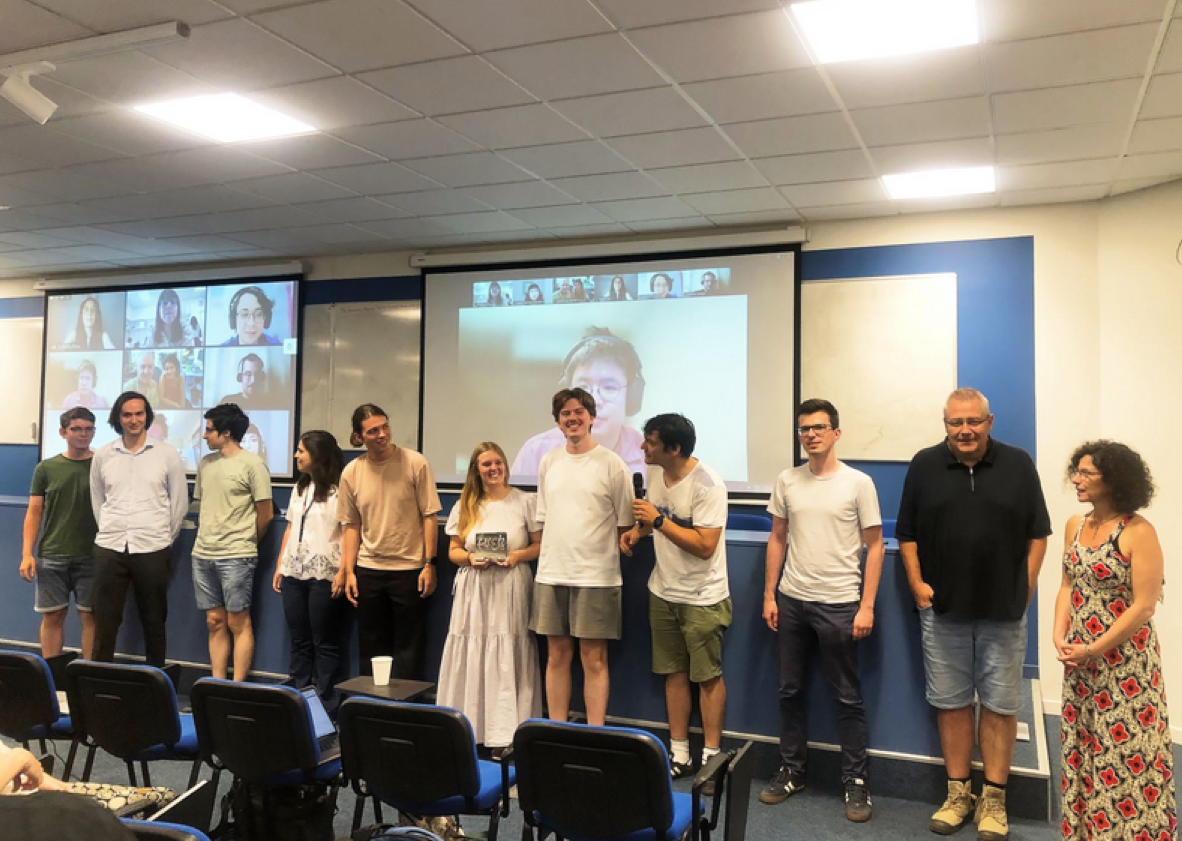
The LHCb Collaboration announced the winners of its 2026 Thesis, Early-Career Scientist and Technical Awards during LHCb Week at CERN on 24 June. Selection committee chairs Mara Senghi Soares, Eric Thomas and Michael Winn highlighted the high calibre of candidates, noting that many deserving contributors were not selected. The awards recognise the diverse roles essential to the experiment’s success, spanning research, operations and outreach.
Three PhD students received the 2026 LHCb Thesis Awards for theses defended in 2025: Fabian Glaser (Ruprecht Karls Universität Heidelberg), Jamie Gooding (Technische Universität Dortmund) and Giorgia Tonani (INFN Milano). The selection process evaluated scientific quality, clarity of presentation and contributions beyond the thesis subject, including operational support, innovation in promotion and outreach activities.
Technical Awards were presented to individuals or teams for outstanding contributions to LHCb’s research and development, operations, or the construction and installation of its systems. These awards recognise practical and technical advancements critical to maintaining and enhancing the experiment’s capabilities.
Early-Career Scientist Awards were given to individuals or small teams within the LHCb Collaboration for transformative contributions to operations, computing or software. The awards underscore the importance of early-career involvement in sustaining and advancing the experiment’s scientific output.