B2B Stablecoin Payments: What Changes and What Does Not
B2B stablecoin payments address cross-border delays and opacity but require supplier willingness and careful accounting adjustments.
The useful question is what changes for users, developers or buyers, and whether the announcement stays industry context or becomes something people can actually use.
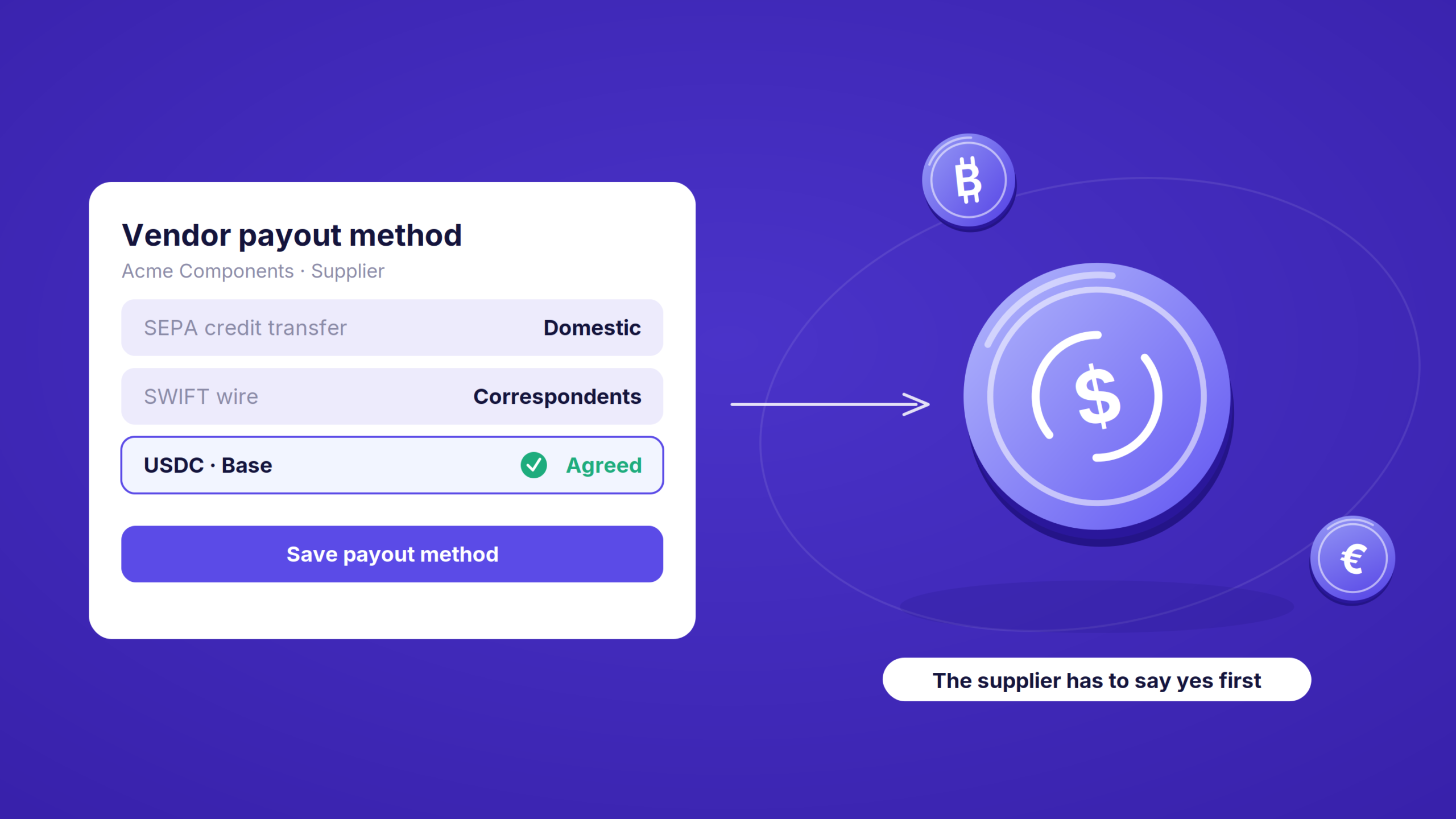
B2B stablecoin payments aim to resolve delays and opacity in cross-border wire transfers, where approval-to-confirmation timelines often exceed five days. Suppliers must voluntarily accept stablecoins like USDC or EURC, as no payment provider can mandate acceptance. Vendors may decline due to banking, accounting, or audit constraints, making supplier buy-in the critical first step before technical implementation. Projects should begin with written supplier agreement on payment methods during onboarding or contract renewals to avoid wasted effort.
Traditional wire transfers involve multiple correspondent banks, each adding fees, delays, and currency conversion spreads that obscure final amounts. Stablecoin payments replace this relay with direct token transfers to supplier-controlled addresses, arriving within minutes and providing verifiable transaction hashes. However, the procurement workflow—purchase orders, invoices, approvals, and three-way matching—remains unchanged. Stablecoins alter only the payment instrument and timing, not the underlying business processes that govern payables.
Stablecoins shift foreign exchange (FX) risk from banks to the payer, as timing of conversion becomes the user’s responsibility rather than the bank’s. Businesses must either hold the payment currency or convert at settlement, with costs ranging from 0.50 EUR plus 0.5% to 1.5% depending on conversion. EURC enables euro-denominated payments end-to-end, eliminating FX risk but requiring supplier support on Ethereum. Pricing transparency allows businesses to compare stablecoin costs against traditional banking spreads, though availability varies by network and asset.
Stablecoin payments introduce verifiable transaction records via on-chain hashes, reducing disputes over payment confirmations. However, fraud risks persist, as wallet addresses must be verified out-of-band to prevent payables fraud via email spoofing. Suppliers need compatible wallets but no additional accounts, and bulk payouts support up to 300 rows per CSV file with strict access controls. Eligibility depends on AML/KYC screening, and payout limits vary by asset and network, visible only in dashboards or APIs.