How Databricks manages its own coding agent spend with Unity AI Gateway Budgets
Databricks uses Unity AI Gateway Budgets to centrally manage AI coding agent spend across thousands of engineers, replacing manual approvals with automated daily and monthly limits to balance innovation and cost control.
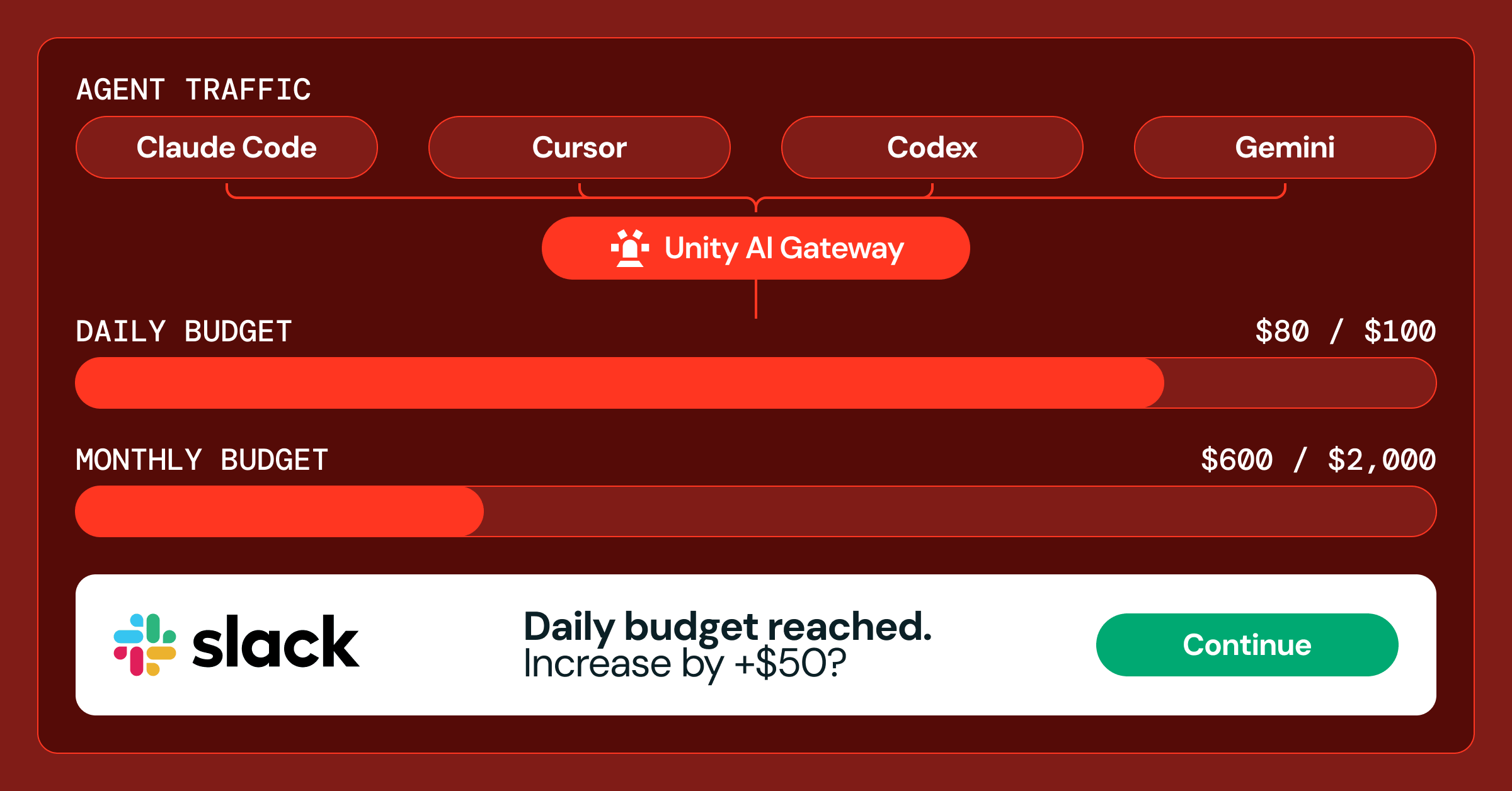
Databricks routes all coding agent traffic through Unity AI Gateway to enforce unified spend policies, budgets, and visibility across models like Claude Code and Codex. This centralization allows the company to apply consistent governance without altering individual tool settings, addressing the challenge of rapidly growing AI-related costs in R&D. By leveraging the same gateway provided to customers, Databricks ensures every request—regardless of tool or model—is metered and controlled in a single system.
The company initially relied on a single monthly spend limit per engineer, which led to friction as users frequently requested increases and large limits persisted indefinitely. This approach created bottlenecks, with hundreds of engineers hitting limits monthly, disrupting workflows and generating administrative overhead. To resolve this, Databricks restructured its governance model around two distinct budgets: a small daily limit to catch runaway spend and a higher monthly limit for extraordinary use cases.
The daily budget uses small, self-service increments triggered by user acknowledgment via Slack or CLI, ensuring frictionless unblocking for legitimate high-usage scenarios. The monthly budget, set at higher tiers, requires manager approval and is time-limited to specific projects, reverting once the project concludes. Both budgets are coupled through fixed ratios, maintaining proportional limits that adapt to user needs without compromising runaway protection.
Unity AI Gateway’s existing infrastructure enables this model by attributing all coding agent requests to user identities and applying budgets uniformly. Spending is capped by the stricter of the two limits at any time, with tier promotions managed through group memberships. Observability is integrated via Unity Catalog, providing team-level spend tracking and consolidated billing, streamlining both financial oversight and engineering productivity.