The agentic marketing stack starts with the data layer
Acxiom’s modernization shift from on-premises Hadoop to Databricks enabled 80-90% faster workloads and freed engineering teams to focus on agentic marketing workflows, transforming campaign execution and audience planning.
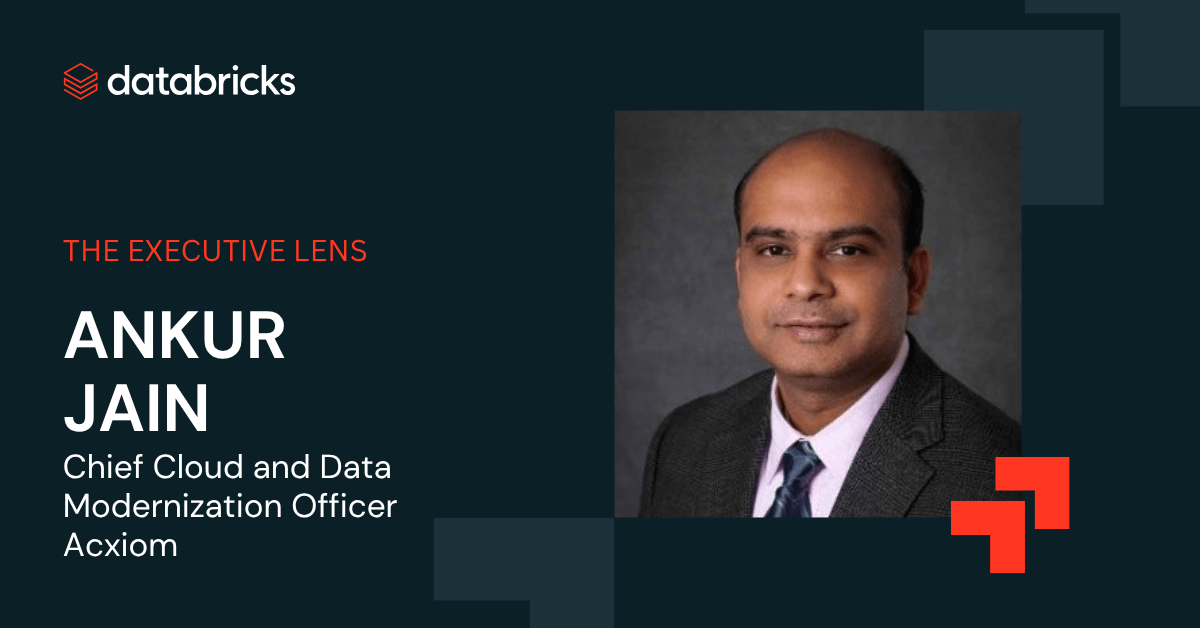
Acxiom, a data and technology provider for global brands, rebuilt its infrastructure under Chief Cloud and Data Modernization Officer Ankur Jain, replacing legacy on-premises systems with a cloud-native Databricks platform. The migration addressed scalability limits and manual pipeline inefficiencies, reducing workload runtimes from days to hours and freeing teams from infrastructure management to focus on product development and client solutions.
Agentic AI is now reshaping Acxiom’s marketing workflows, automating tasks that previously required months of manual effort. AI-driven code generation, automated testing, and CI/CD pipelines compress development cycles, while machine learning enables rapid ad variation generation. Audience planning and media buying are now executed via prompts, with agents building segments and activating campaigns in minutes, replacing multi-role, multi-month processes with streamlined, real-time operations.
Governance remains central to Acxiom’s agentic workflows, particularly given its handling of PII. AI-generated outputs undergo legal review before activation, with agents operating within strict privacy and security controls. Humans remain involved at high-risk decision points to ensure regulatory compliance and brand safety, balancing speed with trust in regulated industries like marketing and advertising.
Acxiom’s AI-native approach embeds intelligence across the entire marketing value chain, from data ingestion to performance analytics. Clients now experience transparent, collaborative workflows within their existing platforms, replacing opaque black-box processes. This shift responds to client demands for cost efficiency, performance, and speed, positioning Acxiom’s data delivery as a dynamic, real-time service rather than a static asset transfer.