What’s Driving Interest in Sodium-Ion Technology
Sodium-ion battery technology is gaining traction as a viable alternative to lithium-ion for stationary energy storage, driven by material abundance, safety, and operational advantages.
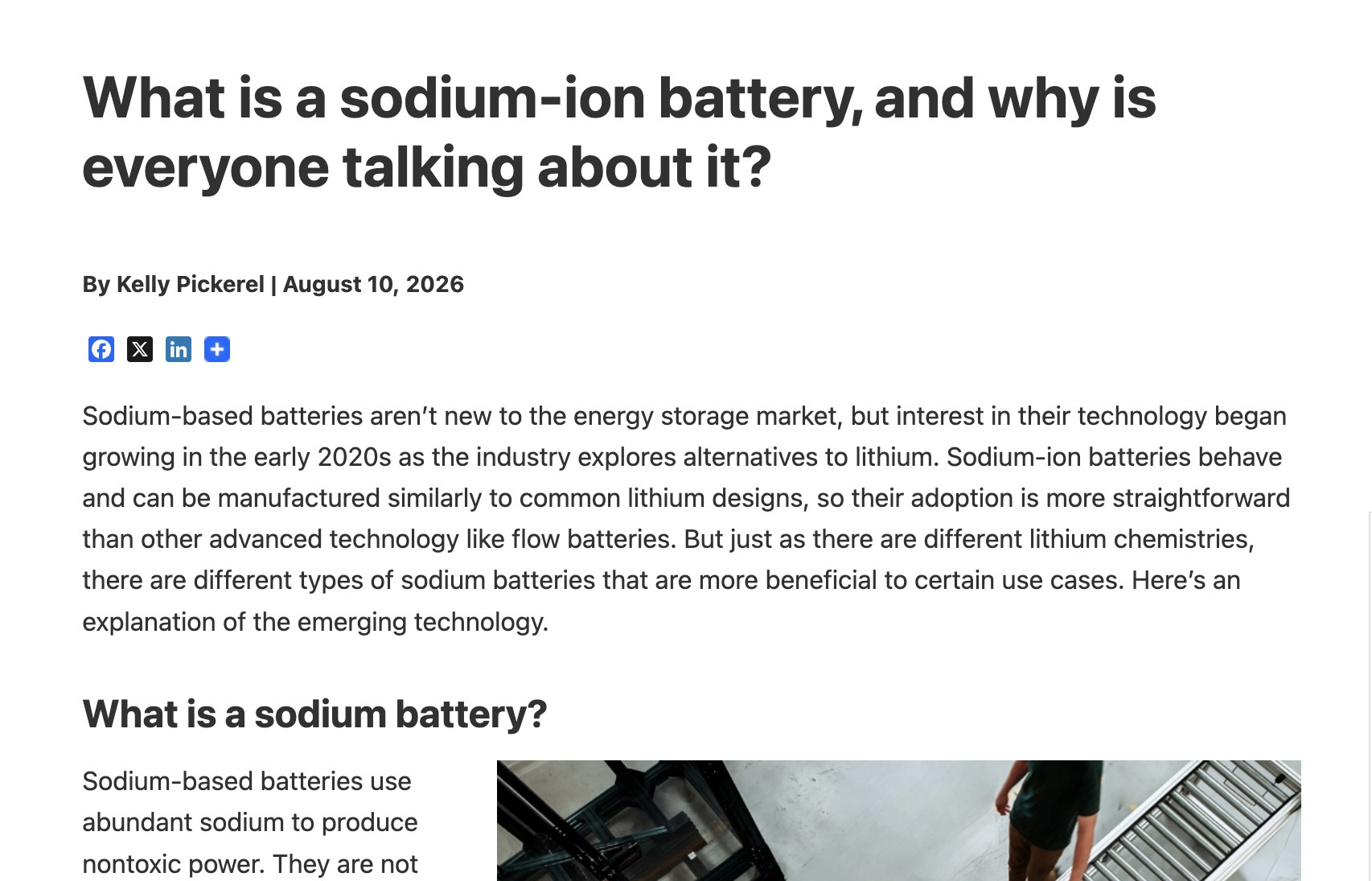
Sodium-ion batteries are attracting interest due to their use of widely available materials, broad temperature tolerance, and enhanced safety compared to lithium-ion systems. This makes them particularly suitable for stationary energy storage, where they can serve applications from residential setups to large-scale grid infrastructure. The technology’s potential is further bolstered by increasing investments in domestic manufacturing, which aim to scale production and reduce reliance on imported materials. Recent commercial partnerships and U.S. manufacturing announcements signal a shift from experimental stages to practical deployment in the energy storage sector.
For stationary storage, sodium-ion offers operational simplicity and cost advantages, addressing supply chain vulnerabilities exposed by lithium-ion’s material constraints. Developers are prioritizing technologies that enhance grid resilience and meet rising electricity demand, with sodium-ion positioned as a key solution. The technology’s ability to operate across diverse climates and its lower fire risk compared to lithium-ion further strengthen its appeal for utility-scale and community storage projects.
ESS is aligning its strategy with this trend by expanding its focus on non-lithium energy storage, including sodium-ion solutions tailored for short- and medium-duration applications. The company’s efforts reflect broader industry efforts to diversify storage technologies and reduce dependence on lithium, which remains subject to price volatility and geopolitical supply risks. Sodium-ion’s compatibility with existing grid infrastructure and its potential for lower lifecycle costs are driving its adoption in both commercial and industrial settings.
Analysts note that while lithium-ion remains dominant, sodium-ion’s progress is accelerating due to its alignment with sustainability goals and energy security priorities. The technology’s scalability and adaptability to varying grid demands position it as a complementary solution rather than a direct replacement. As manufacturing capacity expands, sodium-ion is expected to play a growing role in the energy storage landscape, particularly in regions prioritizing domestic production and supply chain stability.