Our newest AI Quest: Mapping the human brain
Google Research and Stanford Accelerator for Learning launched an interactive AI education quest called 'Polar Peaks,' teaching students ages 11 to 14 to map the human brain using AI while emphasizing responsible use and human oversight.
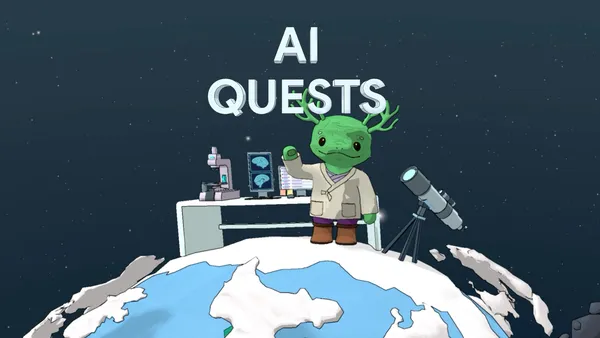
Google Research and the Stanford Accelerator for Learning have introduced 'Polar Peaks,' an interactive quest designed to teach students aged 11 to 14 how to map the human brain using artificial intelligence. The program focuses on practical skills such as data cleaning and model testing, while highlighting the importance of human oversight in AI development. Students engage with real-world scientific challenges by assuming the role of researchers, learning to apply AI responsibly in problem-solving scenarios.
'Polar Peaks' is the third installment in the AI Quests series, which has seen over 400,000 completions across 10 languages. The quest draws inspiration from Google Research’s decade-long work in connectomics, the science of mapping neural networks in the brain. Students interact with in-game mentors to scan and map neurons, addressing a character’s memory loss while practicing critical AI literacy skills under guided supervision.
To support educators, Google is releasing new teacher training modules through the Google AI Educator Series, enabling teachers to integrate AI Quests into classroom curricula. These modules are designed to reinforce AI literacy concepts and facilitate discussions on responsible AI use. The training for Quest #3 will launch next month, following the release of modules for the first two quests earlier this year.
The AI Quests initiative, including 'Polar Peaks,' won a 2026 Webby Award for AI Education and Best Global K–12 Learning Solution at the ETIH Innovation Awards. Google plans to expand the program by collaborating with educators and partners to bring additional quests to classrooms worldwide during the current school year.