Our WeatherNext 2 AI model demonstrated a massive leap forward in predicting cyclones.
Google’s WeatherNext 2 AI model, detailed in a Nature paper, delivers a decade of cyclone prediction improvements in one system and is now open-sourced for global research use.
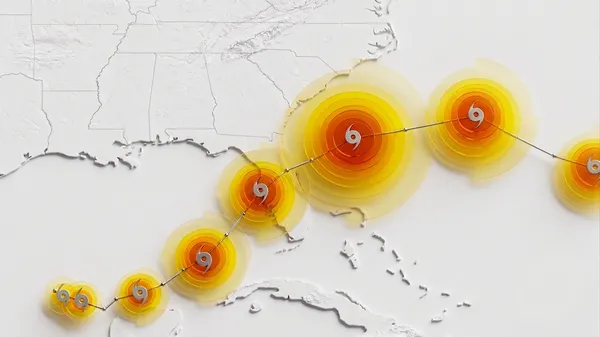
Meteorologists face persistent difficulty in forecasting tropical cyclones, where even small gains in warning time can save lives and reduce damage. Google researchers report in Nature that the WeatherNext 2 AI model achieved state-of-the-art accuracy in predicting a storm’s track, intensity, and wind structure. The model’s performance represents an advance equivalent to roughly ten years of incremental progress in cyclone modeling. This leap is based on training on decades of global weather data and high-resolution simulations.
The practical impact centers on earlier and more precise warnings for governments and emergency responders. WeatherNext 2 can identify rapid intensification events sooner than traditional models, giving communities more time to prepare. Researchers note the model’s ability to resolve fine-scale wind structures, which improves local risk assessments. The advance is expected to benefit regions frequently struck by cyclones, including the Pacific and Indian Ocean basins.
To accelerate global adoption, Google is releasing WeatherNext 2 under an open-source license for the research community. The move follows similar open releases of AI weather tools by other organizations, aiming to democratize access to advanced forecasting. The model’s code and documentation are available via the Google DeepMind blog, with technical details provided for replication and further study.
The announcement underscores the growing role of AI in climate resilience, complementing existing numerical weather prediction systems. While operational use will require integration with national meteorological services, the open-source release enables broader experimentation. Researchers anticipate that community contributions will refine the model’s performance over time, particularly in data-sparse regions.