Scientists are using Google AI to help restore giant kelp forests.
Google and Australia’s CSIRO are using AI and genomics to restore giant kelp forests, publishing reference genomes and analyzing DNA from 600 specimens along Tasmania’s coast.
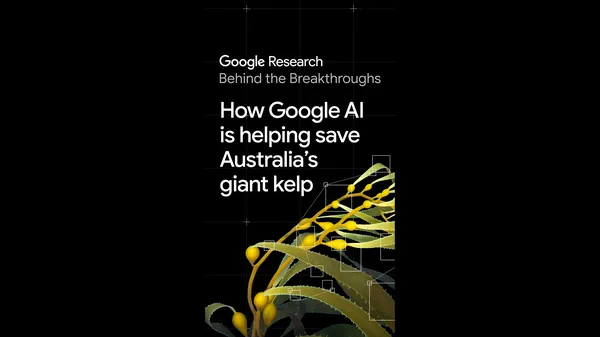
Underwater giant kelp forests serve as vital marine habitats and coastal protectors, yet they are declining globally due to rising ocean temperatures. To address this, Google has partnered with Australia’s national science agency, CSIRO, leveraging AI and genomics to aid restoration efforts. The collaboration aims to identify resilient kelp variants that can withstand warming conditions and support ecosystem recovery.
The team recently published two high-quality reference genomes for Australian giant kelp, establishing a genetic foundation for conservation work. These genomes provide a blueprint for understanding the species’ adaptive traits and guiding restoration strategies. Researchers are now using this data to inform selective breeding programs and habitat replanting initiatives.
Google’s open-source AI tool DeepVariant was trained to analyze DNA from 600 wild giant kelp specimens collected across 40 sites along Tasmania’s coast. The analysis revealed genetic diversity patterns and identified heat-tolerant variants, which are critical for restoring dwindling populations. This approach combines computational power with fieldwork to accelerate conservation outcomes.
The project is part of Google Australia’s Digital Futures Initiative, which supports technology-driven solutions for environmental challenges. By integrating genomics, AI, and field studies, the team is working toward replanting giant kelp forests with diverse, resilient specimens. The goal is to restore ecosystems that can adapt to climate pressures and sustain marine biodiversity.