Frontier models and production agents: Advancing Microsoft Foundry for the agentic era
Microsoft Foundry now supports GPT-5.6 models and the Asia-Pacific Data Zone, enabling production-ready AI agents with enterprise-grade controls and compliance across global regions.
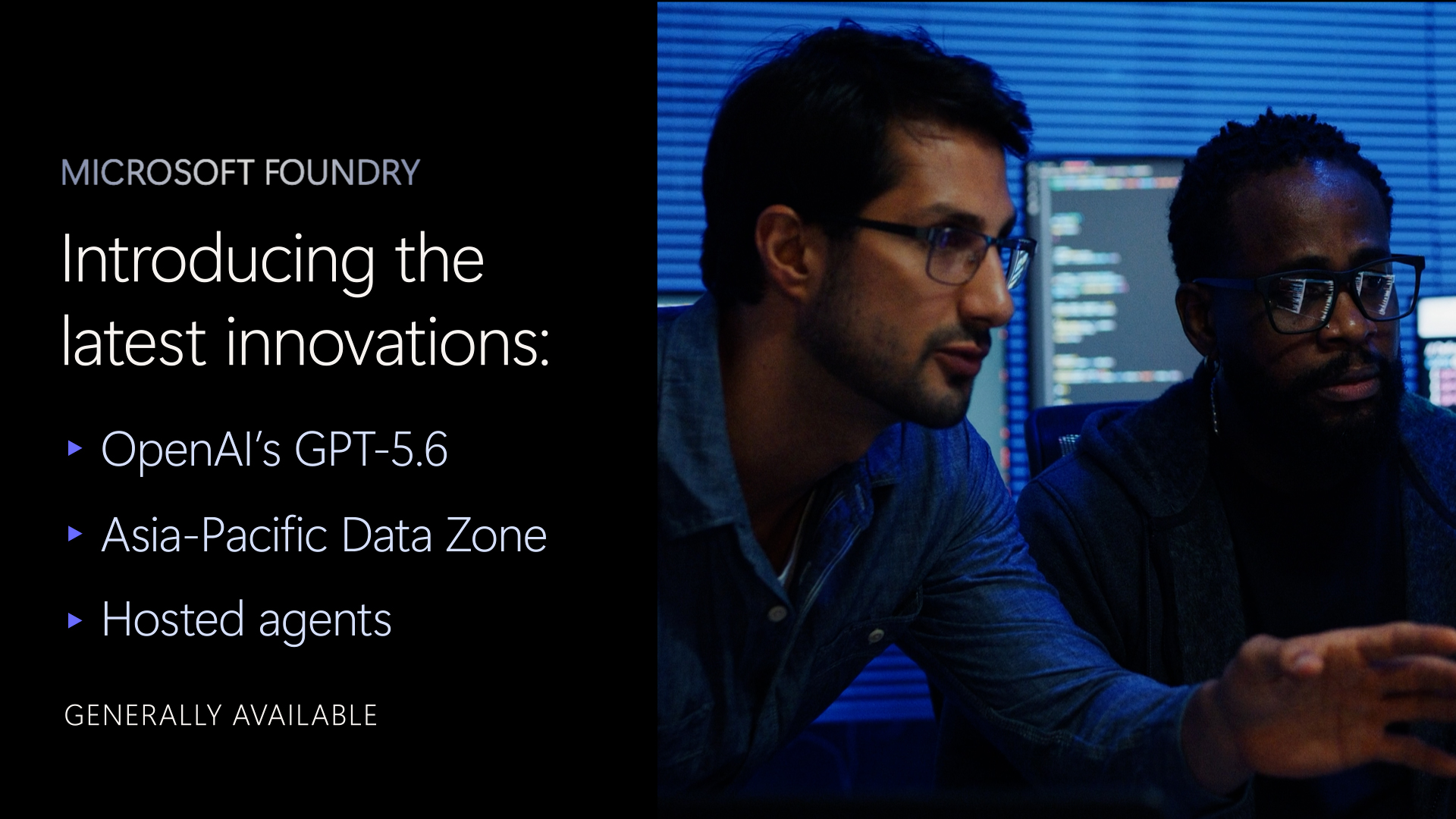
Microsoft Foundry has made GPT-5.6 models generally available, alongside the Asia-Pacific Data Zone and hosted agents in Foundry Agent Service. The updates aim to transition AI agents from experimentation to production by integrating frontier models, runtime environments, and enterprise controls into a unified platform. Over 100,000 organizations, including Adobe, Telefónica, and Tata Consultancy Services, are already deploying agents in production using these capabilities.
The platform now allows developers to build, run, and distribute AI agents within existing workflows, such as GitHub Copilot and Visual Studio Code, using the Foundry Toolkit. Organizations can select models like GPT-5.6 series based on performance, cost, and regional requirements, with deployment options including Global Standard, Global Priority Processing, and the new Asia-Pacific Data Zone. This expansion supports compliance with regional data sovereignty needs while maintaining consistent development and operations across environments.
Foundry introduces built-in capabilities for agent governance, including observability, security, and cost management tools. Features like model routing, prompt caching, and quota optimization help teams scale agents efficiently while controlling expenses. Spend tracking and ROI analysis connect business outcomes with agent usage, enabling organizations to evaluate the value of production deployments against operational costs.
The updates reflect broader adoption trends, with enterprises and digital natives deploying agents in days rather than weeks. Microsoft provides documentation, learning resources, and workshops to support developers in building production-ready agents. The platform’s Quickstart guide and curriculum, such as AI Agents for Beginners, offer step-by-step instructions for setup, testing, and deployment across various frameworks and environments.