APOD: 2026 July 31 – NGC 4372 and the Dark Doodad
NASA features a deep-space image of the Dark Doodad Nebula near the Southern Cross, paired with NGC 4372, a globular cluster 20,000 light-years away.
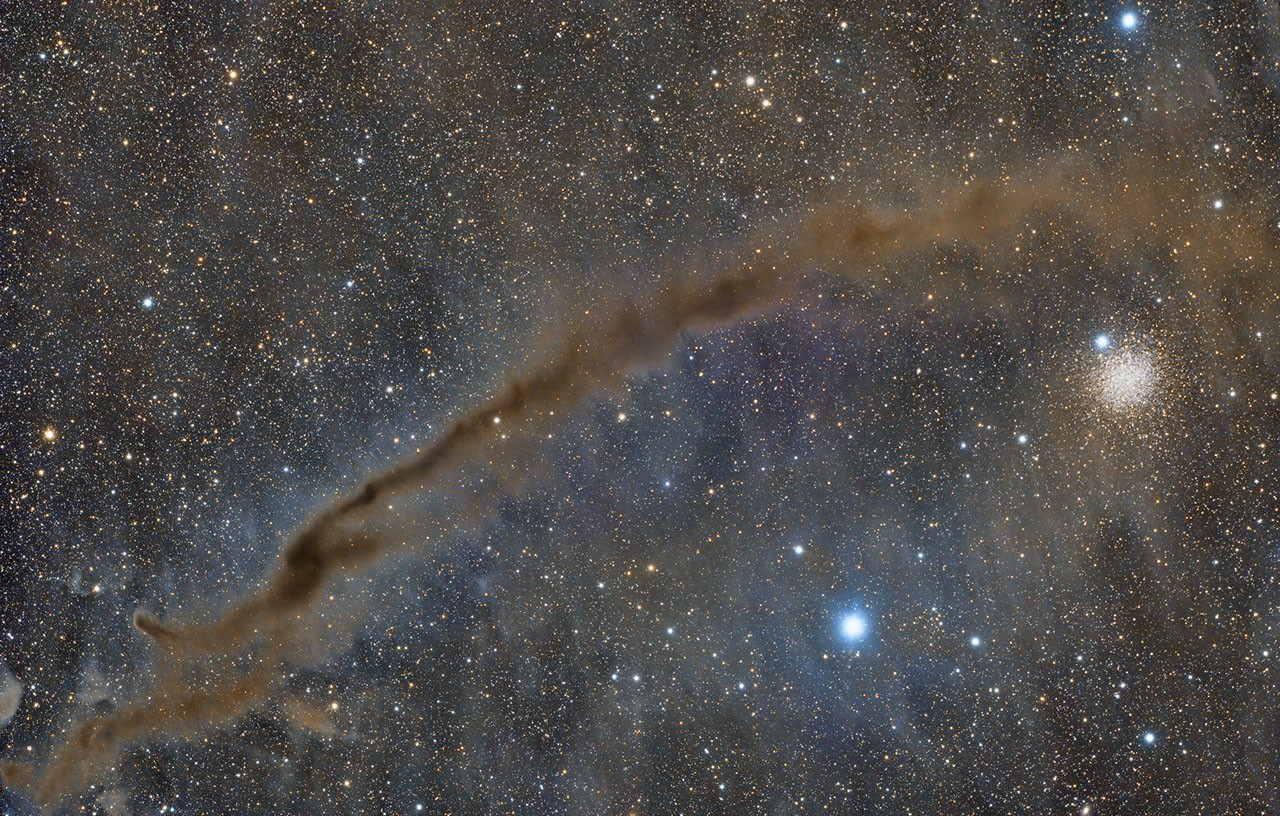
The Dark Doodad Nebula, a dusty interstellar cloud, appears in southern skies against rich starfields near the Coalsack Nebula and the Southern Cross. Visible through binoculars, it spans about 3 degrees in telescopic views and is punctuated by the globular star cluster NGC 4372 at its southern tip.
NGC 4372, located 20,000 light-years away, belongs to the Milky Way’s halo and lies in the same line of sight as the Dark Doodad. The nebula itself is approximately 700 light-years distant and stretches over 30 light-years long, part of the Musca molecular cloud where new stars may form.
The nebula’s informal name, the Dark Doodad, was coined in 1986 by astro-imager Dennis di Cicco during observations of Comet Halley from Australia. The term reflects its dark, elongated silhouette against brighter starfields.
This daily NASA feature highlights a different cosmic image with an explanation by an astronomer. The Dark Doodad offers a striking example of interstellar dust clouds and their role in potential star formation within our galaxy.