NASA Awards 2026 Innovative Technology Concepts
NASA’s NIAC program awarded $3.2 million to 18 projects exploring advanced aerospace technologies, including lunar infrastructure, planetary exploration, and interstellar missions.
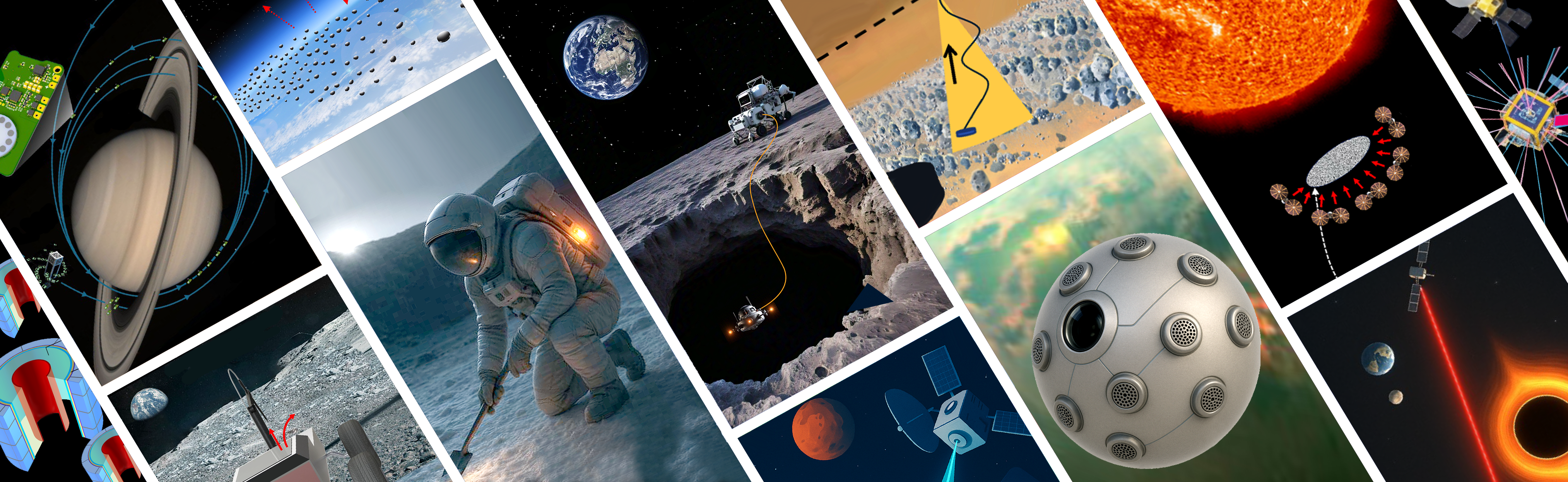
NASA’s Innovative Advanced Concepts (NIAC) program announced 18 Phase I awards totaling $3.2 million, each providing up to $175,000 for nine-month feasibility studies. The projects aim to advance early-stage concepts in aerospace technology, though they are not official NASA missions. Greg Stover, director of NASA’s Advanced Research and Technology division, emphasized the need for transformative innovation to support ambitious goals like sustained lunar presence and Mars exploration.
The selected concepts include systems for exploring lunar lava tubes with hovering robots, temperature management for small lunar rovers, and radioisotopic heat sources for astronaut suits during the Moon’s two-week-long nights. Other projects focus on Venus mission durability, mapping Saturn’s rings with 10,000 small satellites, and collecting samples from planetary rings around Saturn, Uranus, and Neptune.
Beyond the solar system, awardees will explore power sources for interstellar spacecraft, mapping exoplanet continents, observing black hole photon rings, and detecting gravitational waves to study galaxy formation. Additional projects aim to assess spaceborne dust for reducing solar radiation and monitoring orbital debris around Earth.
The NIAC Fellows, selected researchers, will conduct initial investigations to identify challenges and opportunities for further development. Phillip Williams, NIAC’s acting program executive, stated the program nurtures early ideas that could benefit future space missions and the aerospace economy.