NASA’s Perseverance Rover Watches Earth Vanish Behind Martian Moon
NASA’s Perseverance rover captured the first ground-based images of Earth vanishing behind Mars’ moon Phobos, taken on July 2 during a rare occultation.
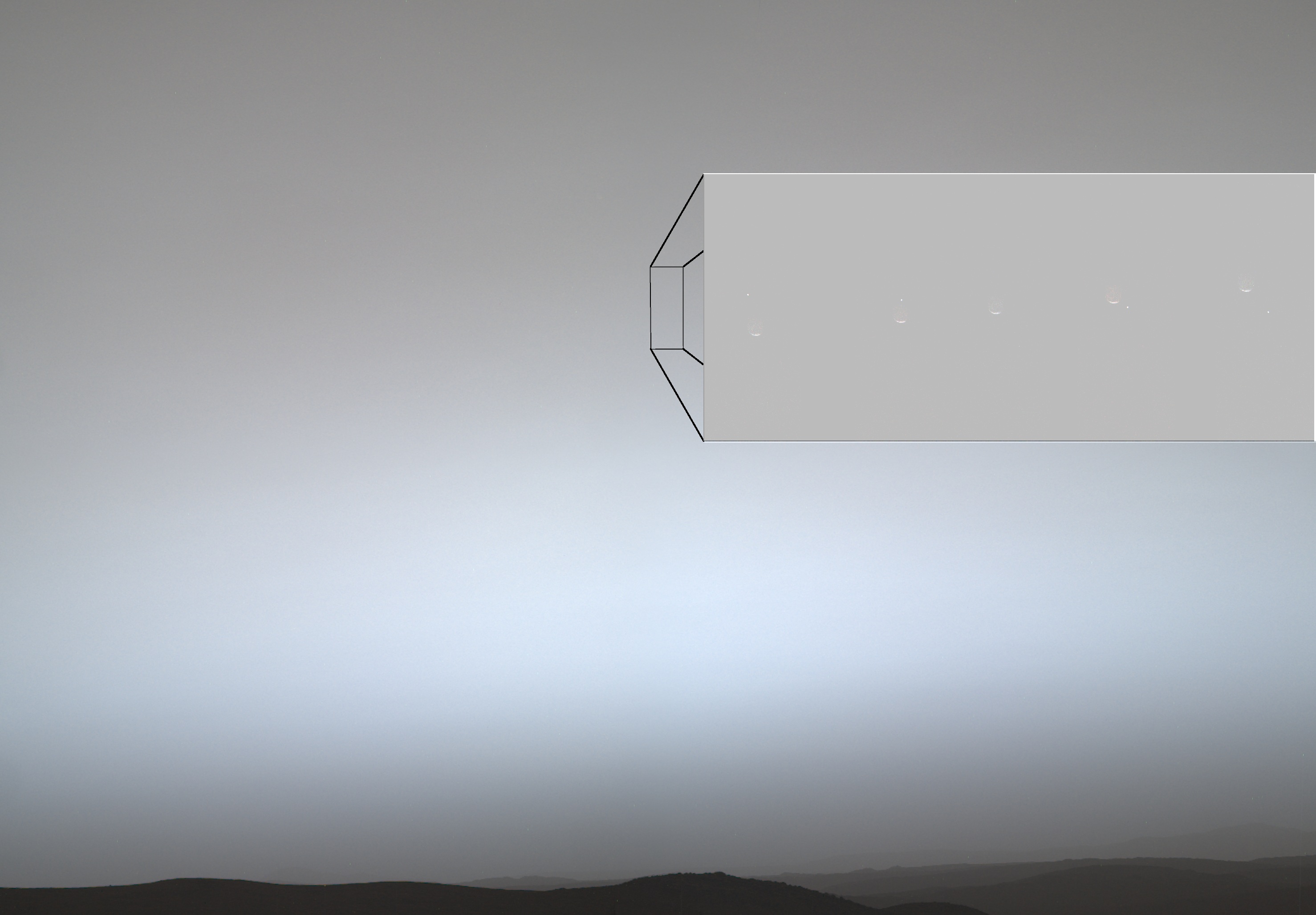
NASA’s Perseverance rover recorded a sequence of images on July 2 showing Earth disappear behind Phobos, the larger of Mars’ two moons. The event occurred at 7 p.m. local solar time on the rover’s 1,907th Martian day. The Mastcam-Z instrument documented the occultation, where Phobos passed directly between the rover and Earth, blocking the view of our planet. This marks the first time such an observation has been made from the surface of another planet.
The images were taken from Jezero Crater, where Earth appears as a single pixel-sized dot 195 million miles away. Phobos, a small, irregularly shaped moon about 17 miles wide, orbits just 4,850 miles from Mars. From the rover’s perspective, Phobos appeared roughly one-third the width of Earth’s Moon as seen from Earth. The event was planned by Mastcam-Z co-investigator Mark Lemmon, who noted the rarity of capturing Phobos and Earth aligned in this manner.
Astronomers classify the event as an occultation, distinct from an eclipse or transit. Occultations occur when a larger-appearing body blocks a smaller one from view, unlike eclipses where one object moves into another’s shadow. Perseverance has previously observed transits, such as Phobos passing in front of the Sun, which are sometimes called “Martian solar eclipses.” The rover’s Mastcam-Z instrument, led by Arizona State University, captured the sequence while operating on Mars.
NASA’s Jet Propulsion Laboratory manages the Perseverance mission, which is part of the Mars Exploration Program. The rover serves as the first component of the Mars Sample Return Campaign’s interplanetary relay team. Phobos orbits Mars three times daily, providing frequent opportunities for such observations, though aligned occultations remain uncommon.