NASA’s Curiosity Mars Rover Discovers Field of Honeycomb Textures
NASA’s Curiosity rover has discovered an extensive field of polygonal fractures on Mars, resembling honeycomb patterns, in the Valle Grande region. The findings may provide insights into ancient Martian environmental conditions.
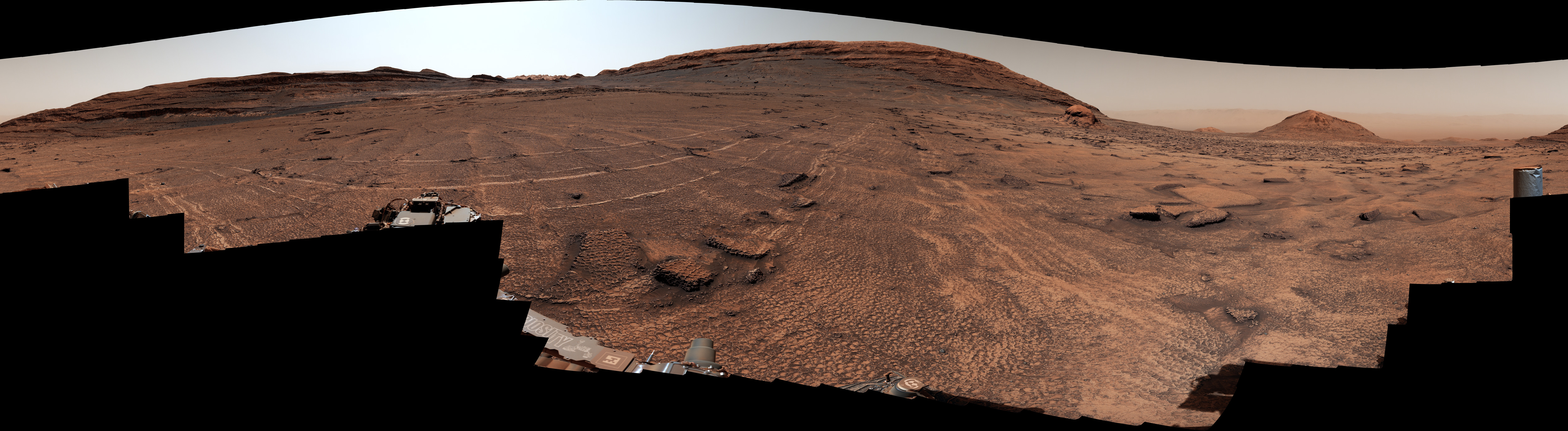
NASA’s Curiosity rover captured images of polygonal fractures, each measuring 1.5 to 3 inches across, during its ascent of the Martian valley Valle Grande. The honeycomb-like textures, observed on June 19 and 20, 2024, span a vast area and wrap around the nearby butte Miraflores, which rises 20 feet. Mission scientists noted the unusual scale of these features, which differ from smaller patches seen previously. The rover’s project scientist, Ashwin Vasavada, described the discovery as breathtaking, emphasizing the need to analyze the shapes and chemistry for clues about their formation.
The polygonal fractures may have formed through processes such as mud cracking, temperature cycles, or sediment compression. Some past observations confirmed mud cracks, while other mechanisms could explain the honeycomb patterns. Curiosity has encountered these features multiple times since landing on Mars on August 5, 2012, adding to a decade of geological surprises. The rover’s findings have reshaped understanding of Mars’ ancient environment, revealing evidence of past water, chemistry, and nutrients capable of supporting microbial life.
Billions of years ago, lakes and streams existed in the lower foothills of Mount Sharp, a 3-mile-tall mountain that Curiosity has been climbing since 2014. The rover has identified chemistry linked to Mars’ watery past, including carbon-based molecules that resemble precursors to RNA and DNA. While these organic molecules could originate from biological or geological processes, their presence confirms ancient Mars had the right conditions for life. The discoveries underscore the planet’s potential habitability during its early history.
Managed by Caltech and led by NASA’s Jet Propulsion Laboratory, Curiosity is part of the Mars Science Laboratory mission. The rover, the largest and most capable sent to Mars at launch, continues to explore the planet’s surface, uncovering clues about its geological and environmental evolution. NASA’s Mars Exploration Program aims to deepen understanding of the solar system’s history through robotic missions like Curiosity.