Antenna Testing for NASA’s SkyFall Mission
NASA’s SkyFall mission will test ground-penetrating radar using three aircraft, building on the Ingenuity Mars Helicopter’s legacy to support future Mars exploration.
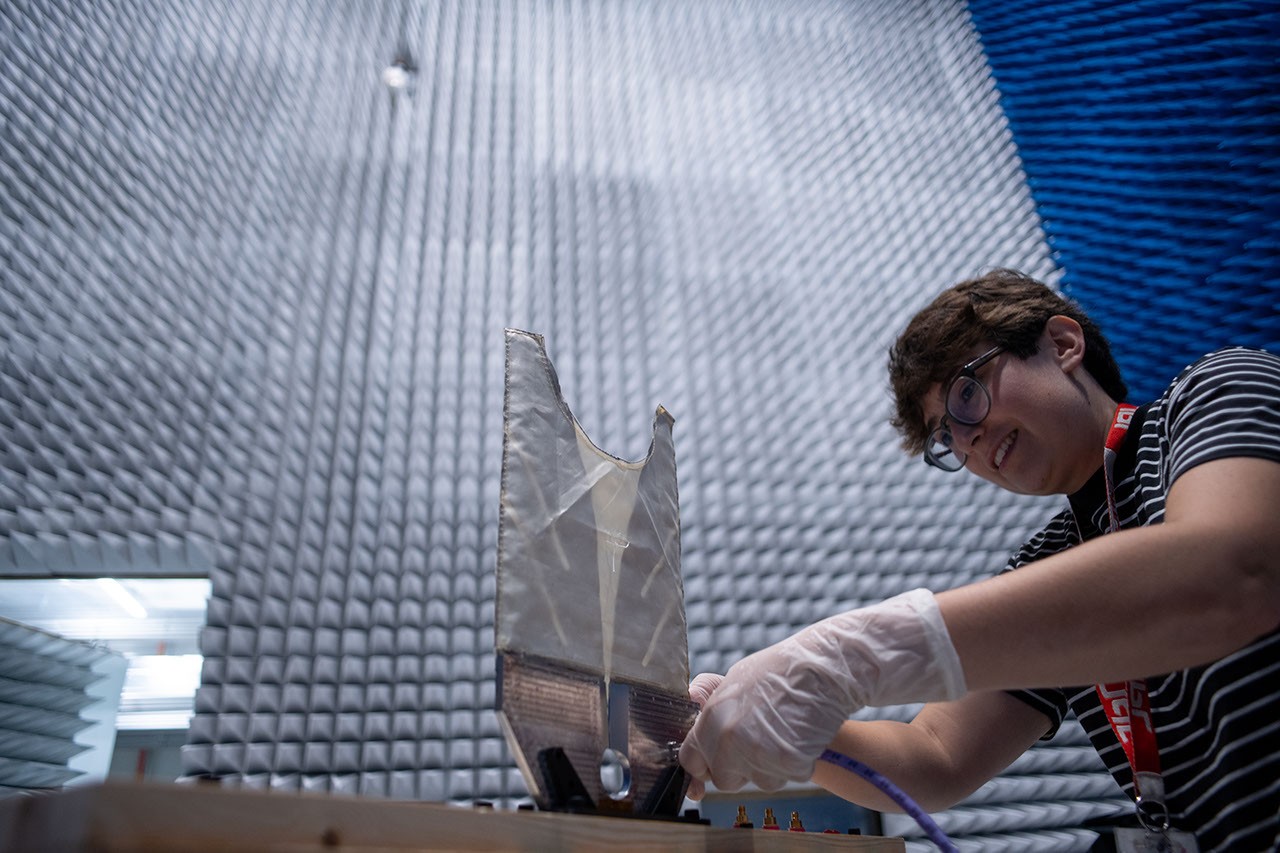
NASA engineers at the Jet Propulsion Laboratory in Southern California conducted antenna testing for the SkyFall mission, which will deploy three aircraft equipped with ground-penetrating radar. The tests, performed in an electromagnetic interference chamber, aimed to minimize signal reflections by positioning the antenna upward during measurements. This preparatory work ensures the radar’s accuracy for subsurface analysis on Mars. The mission follows the Ingenuity Mars Helicopter’s 72 flights, which demonstrated powered flight in the Martian atmosphere and aided the Perseverance rover’s operations.
SkyFall is designed to expand on Ingenuity’s aerial reconnaissance capabilities by providing subsurface data through radar technology. Each of the three SkyFall aircraft will carry four instruments, enabling comprehensive surveys of the Martian surface and potential underground features. The mission’s findings could inform future landing site selections and resource assessments for human exploration. NASA plans to launch SkyFall aboard the Space Reactor-1 Freedom spacecraft in late 2028.
The SkyFall mission represents a shift from Ingenuity’s role as a technology demonstrator to a scientific tool with practical applications. By integrating radar with aerial platforms, NASA aims to bridge gaps in surface and subsurface data collection on Mars. The mission’s success could validate new methods for exploring planetary bodies beyond traditional rover and orbiter approaches.
Preparations for SkyFall include rigorous testing of its radar systems to ensure reliability in the harsh Martian environment. The mission’s timing aligns with NASA’s broader strategy to advance robotic exploration ahead of potential crewed missions. Engineers are refining the radar’s sensitivity and data processing capabilities to maximize scientific return during its operational phase.