NASA’s ESCAPADE Snaps Family Portrait of Earth, Moon
NASA’s ESCAPADE spacecraft captured images of Earth and the Moon from deep space, providing calibration data for its instruments ahead of its 2026 Mars mission.
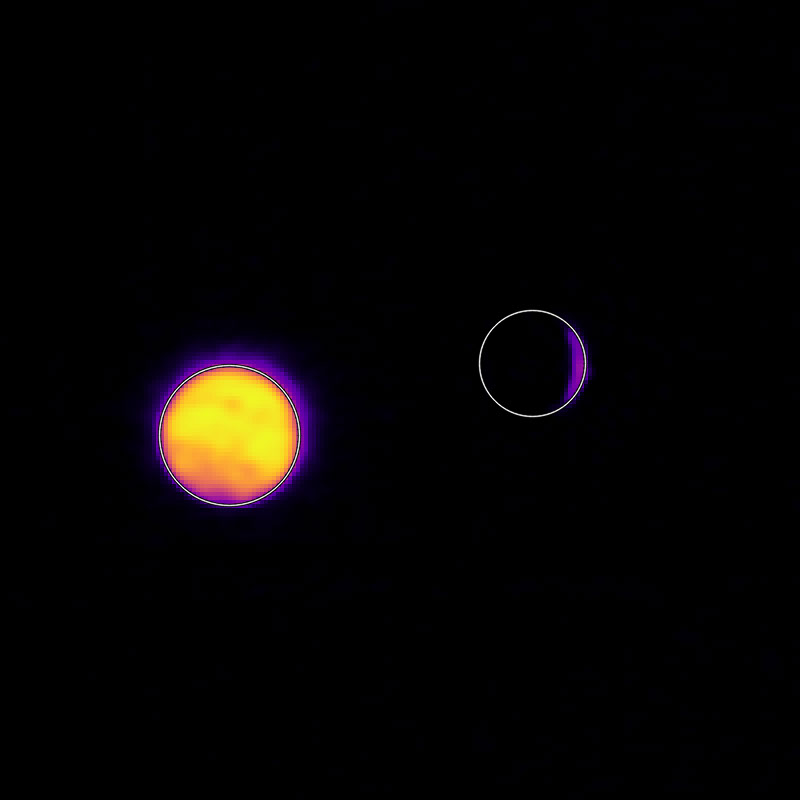
On July 3, one of NASA’s two ESCAPADE spacecraft, designed for Mars exploration, photographed Earth and the Moon from 363,250 miles away using visible and thermal infrared cameras. The images, taken as crescents due to partial sunlight, will help calibrate the spacecraft’s instruments before their primary mission. The thermal infrared images also revealed temperature differences between Earth’s sunlit and shadowed sides, as well as the Moon’s colder far side.
The ESCAPADE mission, led by the University of California, Berkeley, will study how solar wind interacts with Mars’ atmosphere upon arrival in September 2027. The spacecraft, built by Rocket Lab, are currently orbiting Lagrange point 2, a stable location about a million miles from Earth. Their trajectory includes a planned Earth flyby in November 2026 to gain momentum for the journey to Mars.
The mission’s cameras, provided by Northern Arizona University, will search for Martian auroras and analyze thermal properties of the planet’s surface and atmosphere. Principal investigator Rob Lillis emphasized the importance of Earth and Moon images for validating the instruments’ performance before reaching Mars.
Funded by NASA’s Heliophysics Division, ESCAPADE is part of the Small Innovative Missions for Planetary Exploration program. The mission involves collaboration with NASA’s Goddard Space Flight Center, Embry-Riddle Aeronautical University, Advanced Space, and Blue Origin, with UC Berkeley’s Space Sciences Laboratory leading the effort.