NASA Invites Media to SpaceX’s 35th Resupply Launch to Space Station
NASA invites U.S. media to cover SpaceX’s 35th resupply launch to the International Space Station, targeting October from Cape Canaveral, delivering science payloads and solar array hardware.
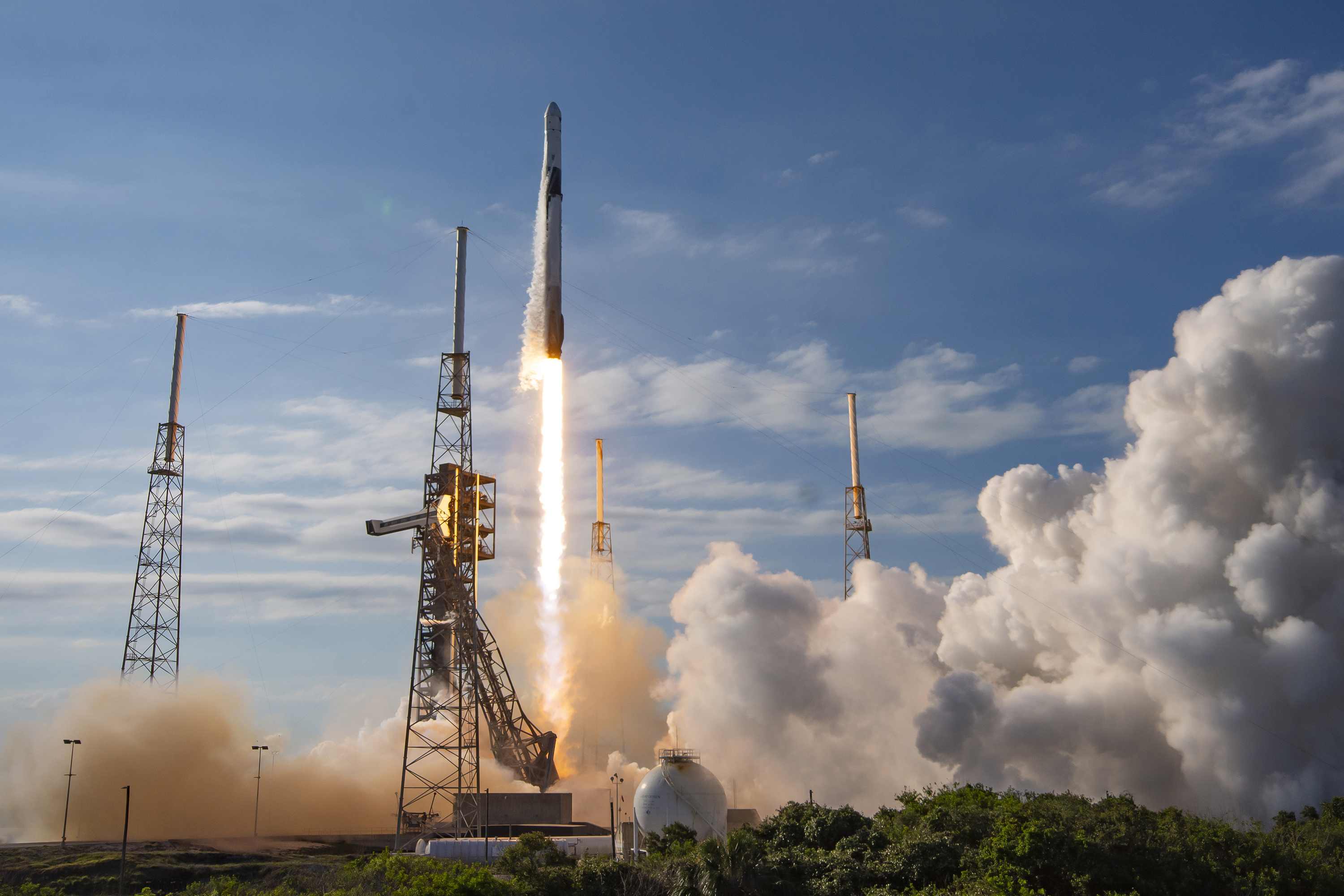
Media accreditation is now open for NASA’s 35th SpaceX commercial resupply mission to the International Space Station, scheduled to launch no earlier than October aboard a Falcon 9 rocket from Cape Canaveral Space Force Station in Florida. U.S. journalists may apply for credentials to cover prelaunch and launch activities, with the deadline set for 11:59 p.m. EDT on October 1. Accreditation requests must be submitted online, and approved media will receive confirmation via email. NASA’s media accreditation policy and contact details for logistical support are available online.
The Dragon spacecraft will carry supplies, crew equipment, and scientific investigations spanning biology, biotechnology, Earth and space science, physical sciences, and technology demonstrations. Cargo resupply from U.S. companies ensures a national capability to deliver research to the station, enhancing NASA’s ability to conduct new experiments aboard the orbiting laboratory. Among the cargo are the final sets of International Space Station Roll-Out Solar Arrays, which astronauts will install during future spacewalks to augment the station’s power supply.
The mission will transport experiments including hardware to manufacture artificial retinas in microgravity, aiming to restore vision for patients on Earth, and 3D heart cell models for advancing large-scale drug testing on future space missions. Additional payloads include materials to study glass formation in microgravity and brain organoids to identify potential treatments for neurodegenerative diseases such as Alzheimer’s, Parkinson’s, and multiple sclerosis.
The International Space Station has hosted continuous human presence for over 25 years, enabling scientific discoveries and technological advancements not possible on Earth. The station supports NASA’s goals of overcoming human spaceflight challenges, expanding commercial opportunities in low Earth orbit, and preparing for long-duration missions to the Moon under the Artemis program and eventual missions to Mars.