NASA Updates Next Steps for Commercial Swift Boost Mission
NASA and Katalyst Space have adjusted plans for the LINK spacecraft mission after an attitude control issue prevented a planned satellite boost, though rendezvous operations with the Swift Observatory will still proceed to test future servicing capabilities.
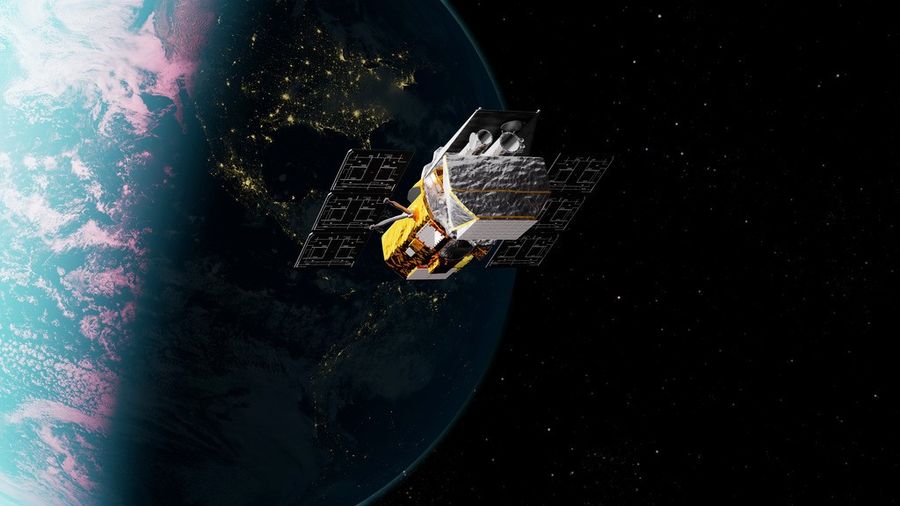
NASA and Katalyst Space announced that the LINK spacecraft will not proceed with plans to boost the Neil Gehrels Swift Observatory to a higher orbit due to ongoing attitude control issues. The mission’s primary objective of extending Swift’s science operations has been canceled, though LINK will still attempt a rendezvous to demonstrate servicing capabilities. NASA Administrator Jared Isaacman emphasized the mission’s value despite the setback, noting the team’s rapid response to advance satellite servicing technologies for future missions.
NASA and Katalyst are collaborating to assess next steps for the rendezvous attempt, aiming to gather data to inform future satellite servicing operations. Shawn Domagal-Goldman, director of NASA’s Astrophysics Division, described the mission as a high-risk, high-reward effort developed under an unprecedented timeline driven by solar activity. He acknowledged the disappointment over lost science opportunities but highlighted the mission’s broader contributions to advancing in-space servicing capabilities.
Without intervention, NASA anticipates Swift will likely re-enter Earth’s atmosphere later in 2025. The agency remains committed to finding rapid-response options for cosmic event observations, using existing missions to bridge potential gaps. Domagal-Goldman noted that the mission has already strengthened U.S. space industry capabilities, including record-setting progress in astrophysics launches and innovative problem-solving under tight deadlines.
Swift, launched in 2004 to study gamma-ray bursts and other cosmic phenomena, was designed for a two-year mission but has operated for over two decades. Increased solar activity has accelerated its orbital decay, prompting NASA to pursue a robotic servicing mission. The LINK spacecraft launched on July 3, 2025, aboard a Northrop Grumman Pegasus XL rocket, but encountered attitude control issues shortly after deployment, delaying its primary objectives.