"There is no excuse for what I did," Nvidia CEO says, as affair with an alleged Chinese spy makes the US-China AI race look even more ridiculous
Nvidia CEO Jensen Huang admits to an affair with a suspected Chinese spy, prompting internal and US intelligence investigations amid escalating US-China AI tensions.
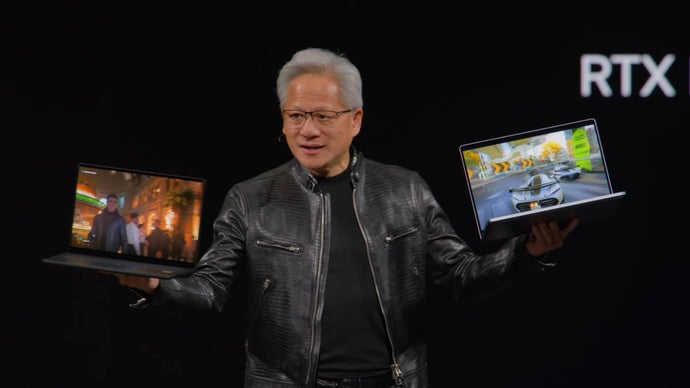
Nvidia has launched an independent investigation into itself following reports that CEO Jensen Huang had an extramarital affair with Alice Huang, a Chinese national and former managing director of Megaspeed, a Singapore-based data centre company. US intelligence agencies are probing Alice Huang on suspicion of sharing sensitive information with Beijing, raising concerns about potential national security risks. Jensen Huang publicly acknowledged the affair, stating he was 'unfaithful to my wife,' but denied any compromise of Nvidia secrets or national security.
The investigations intersect with broader US-China AI rivalry, where Nvidia’s AI hardware, including the H200 GPU, has become a focal point of trade restrictions and alleged embargo violations. Alice Huang’s former employer, Megaspeed, has been scrutinized for allegedly supplying Nvidia chips to Chinese companies in defiance of US trade bans. The affair’s timing amplifies concerns, as high-level intelligence-sharing could further strain already tense diplomatic and technological relations between the two nations.
Jensen Huang’s dual role in the AI arms race has drawn scrutiny, as he lobbied to relax US GPU export restrictions to China under the Trump administration, allowing Nvidia to sell advanced AI chips like the H200. However, many of these shipments have reportedly been delayed in Hong Kong, suggesting Chinese authorities may prefer domestically produced alternatives. Meanwhile, reports indicate that Chinese AI firm DeepSeek trained its latest model using illicitly obtained Nvidia technology, highlighting a potential black market for restricted hardware.
The scandal underscores the complex interplay between corporate leadership, national security, and the global AI competition. While the US leads in AI compute power, China dominates in open-source AI models and critical mineral mining. The investigations into Huang and his alleged paramour add a personal dimension to the geopolitical rivalry, raising questions about the ethical and security implications of cross-border relationships in high-stakes industries.