Things That Go Beep in the Night: Agentic AI Joins the Search for Extraterrestrial Signals
AI agents are now assisting radio telescopes in the search for extraterrestrial intelligence, processing vast data streams in real time to detect potential alien signals more efficiently.
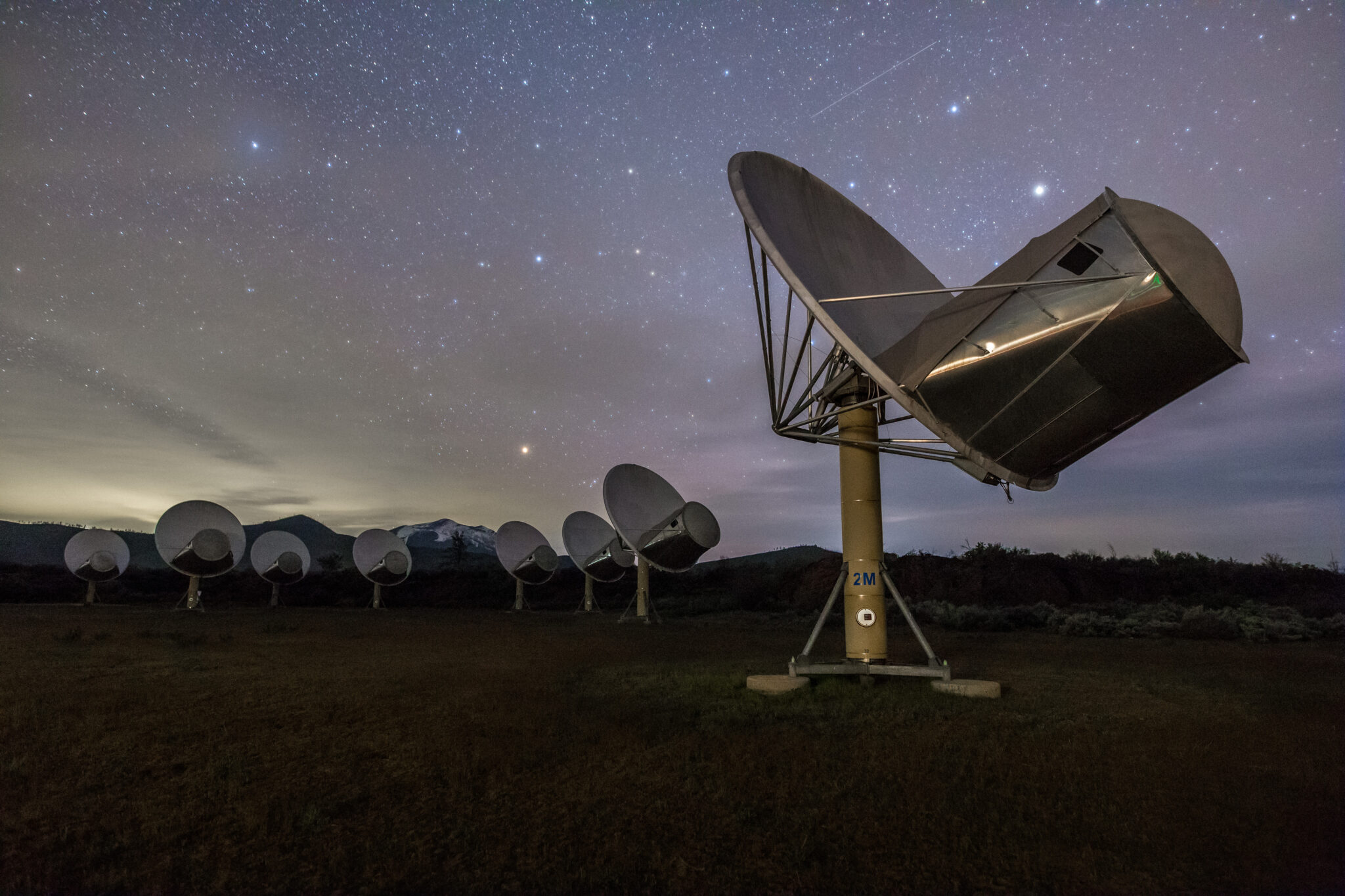
The search for extraterrestrial intelligence has incorporated agentic AI systems, which may one day detect AI agents from advanced alien civilizations rather than biological life. Breakthrough Listen and the SETI Institute are deploying these AI agents at the Allen Telescope Array in Northern California, where they can autonomously steer the telescope, correct data errors, and analyze incoming signals using natural language commands. The integration aims to accelerate the detection of potential extraterrestrial signals by automating complex tasks that previously required human intervention.
At the Allen Telescope Array, the NVIDIA Holoscan platform processes terabits of sensor data per second directly into GPU memory, enabling real-time analysis instead of storing raw data. The CyberEther framework, developed by the SETI Institute, performs signal processing using NVIDIA CUDA-X libraries, while Nexus serves as a central orchestrator for managing instrument state and compute resources. Together, these tools allow researchers to monitor live spectrograms and adjust signal-processing pipelines through simple natural language prompts.
The system, powered by NVIDIA RTX PRO 6000 Blackwell GPUs, can handle 2.4 terabits of data per second on-site, with inference running locally to minimize latency. This setup enables AI agents to steer telescope antennae, calibrate instruments, and correct data errors autonomously, compressing tasks that would take humans weeks or years into hours. The pipeline has already demonstrated its capability by achieving the first real-time AI detection of a pulsar in the Crab Nebula.
Andrew Siemion, Bernard M. Oliver chair for SETI at the SETI Institute, noted that future discoveries may resemble the AI systems themselves more than human-created technology. He emphasized that this advancement is not a cause for concern but a breakthrough in translation, potentially bridging the gap between human and extraterrestrial AI systems.