University of Manchester Uses NVIDIA Earth-2 to Forecast Air Pollution Across the UK
The University of Manchester adapted NVIDIA’s Earth-2 AI frameworks to model U.K. air pollution at 2–3 km resolution, enabling faster, lower-cost forecasts for policy and healthcare use.
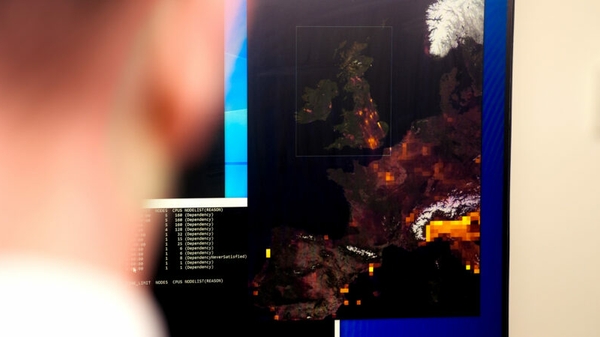
Air pollution contributed to an estimated 30,000 deaths in the U.K. last year, yet traditional chemistry-based models are too slow and costly for frequent, detailed forecasts. Researchers at the University of Manchester, led by Professor David Topping, explored whether NVIDIA’s generative AI frameworks used for weather forecasting could address this gap. By training the Earth-2 CorrDiff model on existing chemistry-climate simulations, the team aimed to reduce computational barriers while maintaining accuracy in pollution modeling.
The project leveraged Isambard-AI, the U.K.’s national AI supercomputer, to train the model in just two days using a year of hourly U.K. pollution data at 2–3 square kilometer resolution. The workflow was later adapted to run on NVIDIA’s DGX Spark personal AI supercomputer, demonstrating scalability from large supercomputers to desktop setups. Additional development included Earth-2 StormCast, a model that incorporates real-time air quality observations for time-dependent forecasts.
Potential applications include predicting the impact of policy changes on air quality and providing proactive alerts to healthcare providers for patients with respiratory conditions. The team also envisions integrating real-time data from edge AI devices to support immediate decision-making during events like wildfires. Open-source training data and workflows are planned for release to enable similar models in other regions.
The approach reduces reliance on expensive supercomputing cycles, with researchers noting the model’s efficiency on Isambard-AI’s NVIDIA GH200 hardware. Future work includes increasing resolution to street scale and developing an agentic interface for clinicians or agencies to query pollution forecasts directly.