Stephen King's Most Unhinged Sci-Fi Action Masterpiece Is Officially Free to Watch on YouTube
The 1987 film adaptation of Stephen King’s dystopian novel *The Running Man* is now available to stream for free on YouTube, offering a campy yet resonant take on a surveillance-state reality show.
Stephen King’s 1982 novel *The Running Man*, published under the pseudonym Richard Bachman, presents a bleak vision of a future where a police state controls the public through a deadly reality TV spectacle. The story follows Ben Richards, a desperate father framed for refusing to kill civilians, who enters the titular game to secure medicine for his sick daughter. The novel’s ending is grim, with Richards ultimately crashing a plane into a TV network’s headquarters in a final act of defiance against the system.
The 1987 film adaptation, directed by Paul Michael Glaser and starring Arnold Schwarzenegger, diverges sharply from the novel’s tone by embracing camp and dark humor. Set in a collapsed 2017 America, the film depicts a police state divided into paramilitary zones, where the state-owned network airs *The Running Man*, a reality show forcing prisoners to fight for survival against assassins called Stalkers. The film’s exaggerated violence and satirical elements contrast with the novel’s despair, offering a more satisfying resolution.
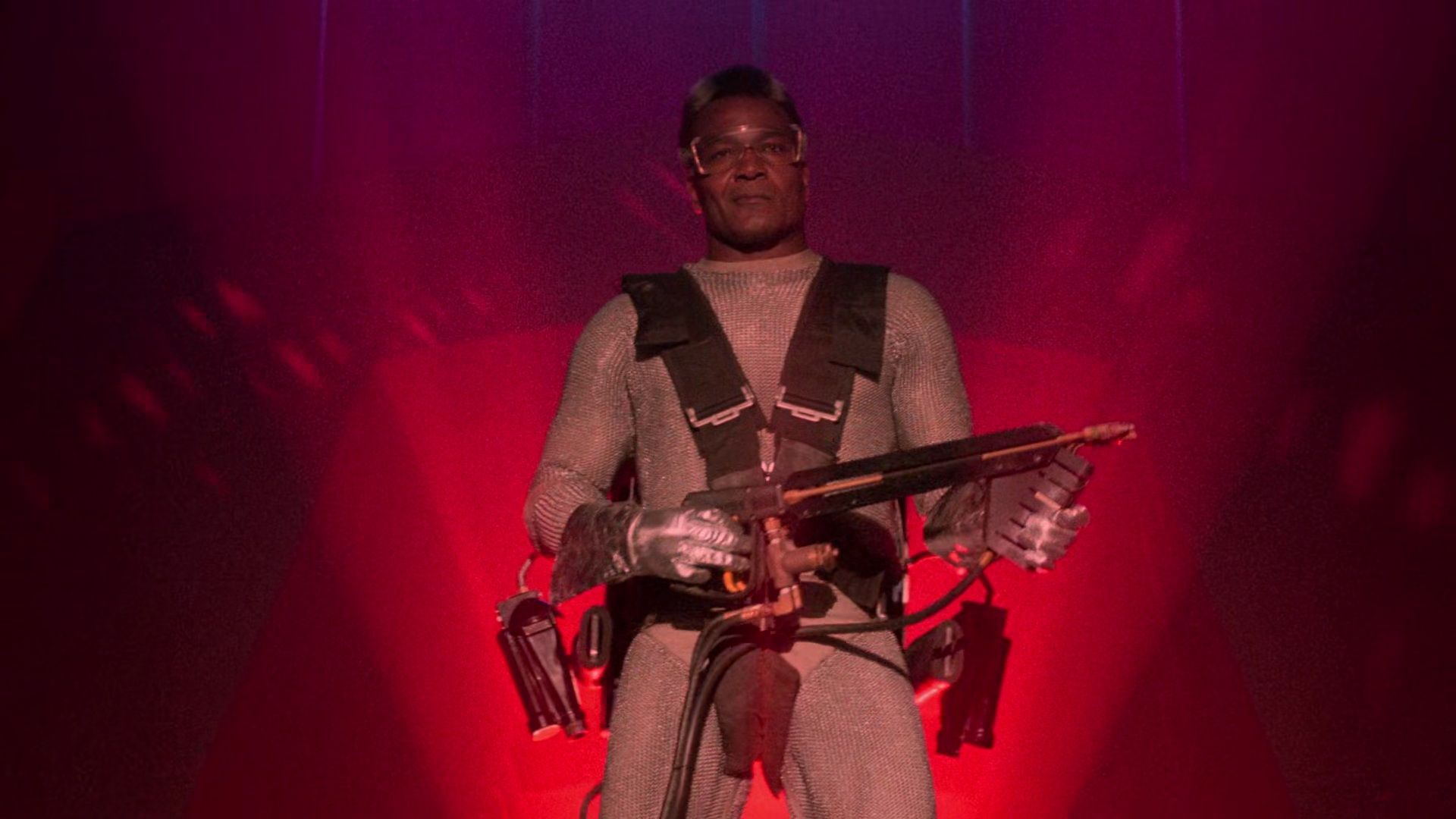
The film’s Stalkers, including Buzzsaw, Dynamo, and Subzero, perform like twisted game-show contestants, introducing themselves to a cheering studio audience in a manner reminiscent of *The Masked Singer*. Host Damon Killian, played by Richard Dawson, manipulates footage to frame Ben Richards as a ruthless killer, turning the audience against him while the network profits from spectacle and public humiliation. The film’s visual style, marked by bright white text on a red backdrop, underscores its satirical take on media manipulation.
King himself acknowledged the tonal gap between the novel and film, noting in *The Bachman Books* that the cinematic Ben Richards bears little resemblance to his literary counterpart. Despite the differences, both versions critique a culture that prioritizes entertainment over truth, with the film’s exaggerated absurdity serving as a darkly comedic reflection of modern media dynamics. The free availability of the 1987 film on YouTube provides a timely opportunity to revisit its prescient satire.