NATO Submarine Rescue System conducts Exercise Flying Fish
NATO’s Submarine Rescue System completed an exercise to validate rapid global airlift readiness, involving UK, French and Norwegian crews and RAF transport aircraft.
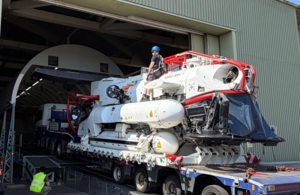
The NATO Submarine Rescue System (NSRS), jointly owned by France, Norway and the UK, conducted Exercise Flying Fish to demonstrate its ability to be airlifted worldwide by the Royal Air Force. The system is designed to evacuate submariners from disabled submarines at depths up to 610 metres, requiring 350 tonnes of equipment transported by road and air. The exercise tested the full mobilisation chain, including a police-escorted convoy to RAF Brize Norton, where the rescue vehicle and support equipment were loaded onto military transport simulators. This marks the first use of the A400M Atlas for NSRS transport, expanding deployment options for UK and NATO forces.
The loading of the Submarine Rescue Vehicle and heavy support equipment onto C-17A Globemaster and A400M Atlas simulators was carried out by the RAF’s Joint Air Delivery Test and Evaluation Unit. The exercise validated procedures for rapidly deploying the NSRS, ensuring compatibility with both aircraft types for future missions. This capability enhances the system’s flexibility in responding to submarine emergencies across NATO’s operational areas. The training also reinforced coordination between specialist RAF teams and partner nations’ crews.
A spokesperson for the Royal Navy, Marine Nationale, and Norwegian Navy highlighted the importance of maintaining readiness through regular exercises like Flying Fish. The NSRS is operated on behalf of the three navies by the Submarine Delivery Group, with JFD Global as the service contractor. The exercise ensured that all teams remain qualified and that the system’s rescue readiness is continuously validated for partner nations.
The exercise underscored the collaborative nature of submarine rescue operations, requiring seamless coordination among multiple agencies. By testing the NSRS’s air mobility and loading procedures, the RAF and allied forces demonstrated their ability to respond swiftly to a submarine emergency anywhere in the world. The training reinforces confidence in the system’s operational readiness and the preparedness of crews to handle real-world contingencies.