UK military satellite Titania launches into orbit following £3bn space investment into defence of space
The UK has launched the military satellite Titania, enhancing space-based observation for the Armed Forces as part of a £298 billion defence investment plan.
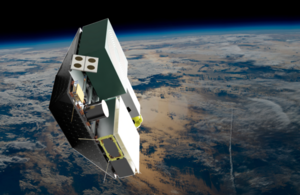
The British-built military satellite Titania has successfully entered orbit, providing the Armed Forces with improved space-based observation capabilities. Operated by UK Space Command under the ISTARI programme, Titania joins the earlier Tyche satellite to strengthen the UK’s military satellite constellation. The satellite, weighing approximately 100kg, orbits Earth every ninety minutes at 27,000 km/h, supporting military coordination and intelligence gathering.
The launch coincides with Project Inaros, a trial network of advanced ground sensors designed to monitor space threats from sites in the UK, Australia, and Cyprus. These neuromorphic sensors, developed by Optera in partnership with the National Security Strategic Investment Fund, detect changes in light to identify unusual activity near UK satellites. The system aims to provide early warnings to safeguard critical space assets.
Titania and the Inaros sensor network are part of a £298 billion Defence Investment Plan commitment over the next four years to enhance the UK’s space capabilities. The investment supports highly skilled jobs, strengthens the industrial base, and secures national resilience by protecting satellites essential to daily life and military operations.
The Strategic Defence Review recognises space as vital to national security, and Titania and Inaros directly address this priority. The ISTARI programme, including future satellites Juno and Oberon, expands space-based intelligence, surveillance, and reconnaissance for British forces worldwide. The MOD highlights the sovereign capability and long-term benefits of these investments for security and prosperity.