Peacock party takes pride of place in nod to decades of turbulent history
UN Geneva welcomed five peacocks, including a rare white male, gifted by India to continue a century-old tradition at the Palace of Nations, where the birds will roam freely after a temporary stay.
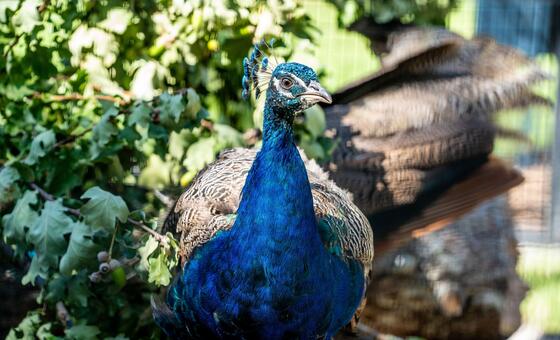
The United Nations Office at Geneva received five peacocks—four blue and one white—from India as part of a diplomatic gift preserving a tradition dating to before the League of Nations. The birds were presented during a ribbon-cutting ceremony in Ariana Park, where they will initially reside in a temporary aviary for three months before being allowed to roam freely. UN Geneva Director-General Tatiana Valovaya highlighted the symbolic colors of the birds, matching the UN flag, and noted their temporary housing arrangement.
India’s Ambassador to the UN, Arindam Bagchi, emphasized the significance of the donation, recalling a 1981 gift of peacocks by Prime Minister Indira Gandhi. The tradition traces back to Swiss archaeologist Gustave Revilliod, who bequeathed the estate in 1890. The new arrivals include a rare white peacock, India’s national bird, which drew immediate attention from visitors eager to take photographs.
Dr. Tobias Blaha, Director of Geneva Bioparc, oversaw the safe transport of the peacocks, using a specially modified ambulance with medical equipment to minimize stress. He described Ariana Park as an ideal habitat with ample shade, trees, and open grass areas, though he acknowledged challenges posed by local predators like foxes and martens. Young peacocks, he noted, often roost too low, increasing vulnerability to ground threats.
UN Geneva Facilities Management Officer Laetitia Menin explained that the five males, all hatched this year, are expected to establish a stable hierarchy, reducing the likelihood of dispersal during mating season. The park’s peacock tradition has persisted despite historical challenges, including the near-extinction of the species in the grounds decades ago. The new arrivals may soon join a solitary surviving peacock, though staff hope to avoid the birds’ tendency to leave droppings near building entrances.