The AI Revolution: How Fuel Cells Are Solving the Data Center Power Challenge
Data centers face rising power demands from AI workloads, prompting a shift toward fuel cells and heat recovery systems to improve efficiency and reliability amid grid limitations.
The U.S. Department of Energy projects AI-driven data centers will triple energy use by 2028, with power availability now the top site selection factor. Projects like Amazon’s $10 billion Mississippi data centers and Meta’s planned 5-gigawatt facility in Louisiana highlight the scale of demand. Traditional grids struggle with the rapid power fluctuations of AI workloads, which can swing from 15kW to 100MW in seconds, necessitating more responsive solutions.
Fuel cells and supercapacitors address these spikes by providing instantaneous load responses and high cycle counts, unlike batteries with limited charge-discharge cycles. Bloom Energy’s solid oxide fuel cells (SOFCs) achieve 99.9% availability while generating heat that can be captured for additional efficiency. By integrating fuel cells with absorption chillers, data centers can improve power usage effectiveness (PUE) by 10-15%, a critical sustainability metric.
Heat recovery from data centers is gaining traction globally, with projects like Microsoft’s Helsinki system using 32 heat pumps to supply district heating for 100,000 people. This reduces Finland’s greenhouse gas emissions by 1-3%. Containerized, turnkey solutions such as heat pumps and modular fuel cells are in demand for rapid deployment, enabling data centers to scale quickly without prolonged grid interconnection delays.
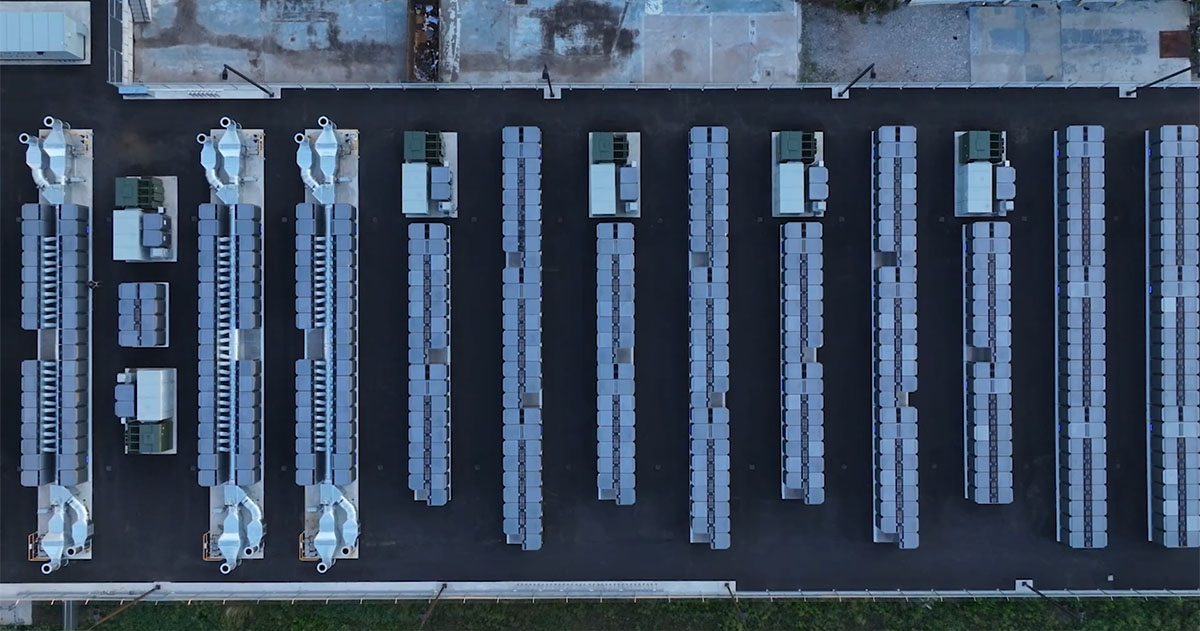
Fuel cells also support islanded microgrids, operating off-grid to meet data center needs while utilities process interconnection agreements. Bloom Energy’s high-density, low-noise fuel cells produce minimal emissions, including no nitrogen or sulfur oxides, and can be stacked efficiently in urban areas. The company has already deployed over 400 MW of fuel cell power to data centers worldwide.