A new class of batteries helps data centers play nicely with the grid
A startup’s new battery system aims to replace diesel generators and stabilize grids strained by AI data centers, with a 5-gigawatt order from Crusoe for commercial deployment.
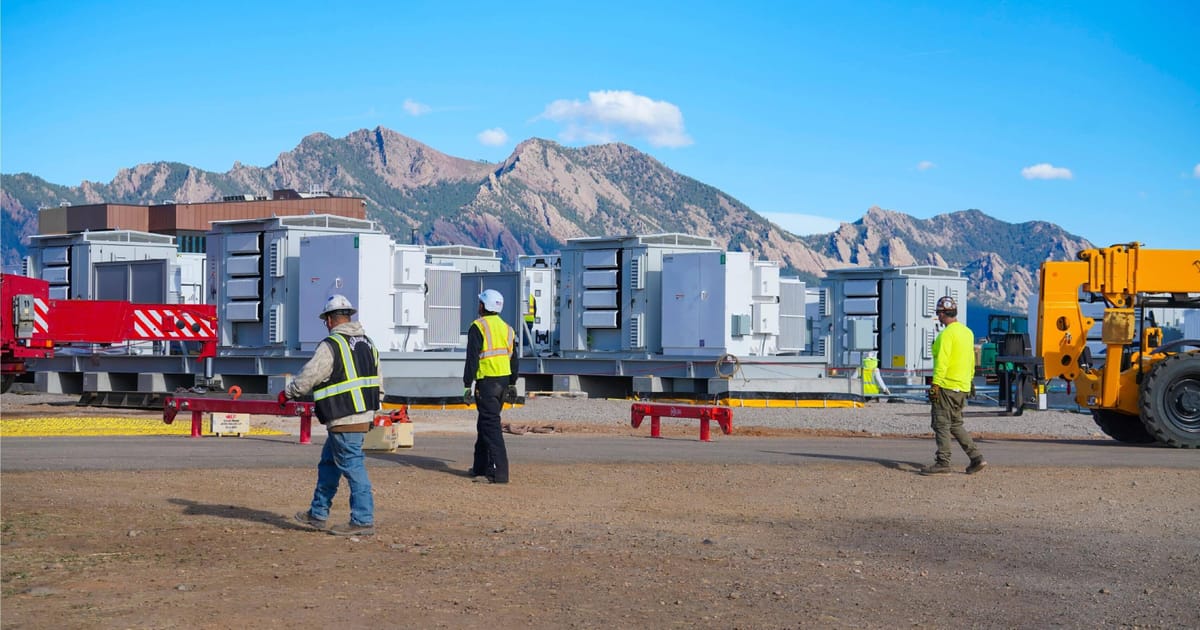
Lithium-ion batteries offer data centers a cheaper and cleaner alternative to fossil-gas turbines and diesel backup generators, yet adoption has lagged due to reliability concerns and unclear payback. Traditional UPS systems, mostly lead-acid, only activate during outages and do not address grid stability. ON.Energy’s AI UPS integrates lithium-ion batteries to act as both a shock absorber for the grid and a continuous power source for data centers, decoupling loads from grid fluctuations. The system uses patented double-conversion technology and high-performance inverters to ensure seamless power quality.
ON.Energy completed trials at a national grid testing facility earlier this year, validating its technology’s ability to manage multi-megawatt loads. The startup now prepares for commercial-scale deployment following a 5-gigawatt order from Crusoe, a major AI data center developer. The AI UPS combines battery energy storage and UPS functions into a single asset, simplifying grid integration for utilities. Chief Engineer Shahil Shah at the National Renewable Energy Laboratory confirmed the system’s performance under rigorous testing conditions.
Data centers pose unique challenges to grid operators, including rapid power demand swings and sudden disconnections that can destabilize the grid. Utilities like PJM Interconnection have recorded multi-gigawatt drops from data centers, risking voltage and frequency imbalances. Regulators, including the North American Electric Reliability Corp. and Texas utility regulators, are implementing new requirements to mitigate these risks. ON.Energy’s system is designed to prevent such disruptions by maintaining stable power output and isolating data center loads from grid disturbances.
Data center operators face pressure to reduce costs imposed on utilities and customers by avoiding grid expansions. A centralized UPS system like ON.Energy’s can serve multiple purposes, including peak demand reduction and renewable energy integration, once its primary role is fulfilled. The technology allows data centers to curtail grid power as needed, providing flexibility while stabilizing the grid. Crusoe’s data center campus under construction includes designated space for the AI UPS, signaling growing industry interest in scalable solutions.