Ford’s new EV pickup will come with more affordable home-power backup
Ford’s upcoming Fathom EV pickup will offer home power backup without costly bidirectional chargers, cutting costs by up to 60% compared with rivals.
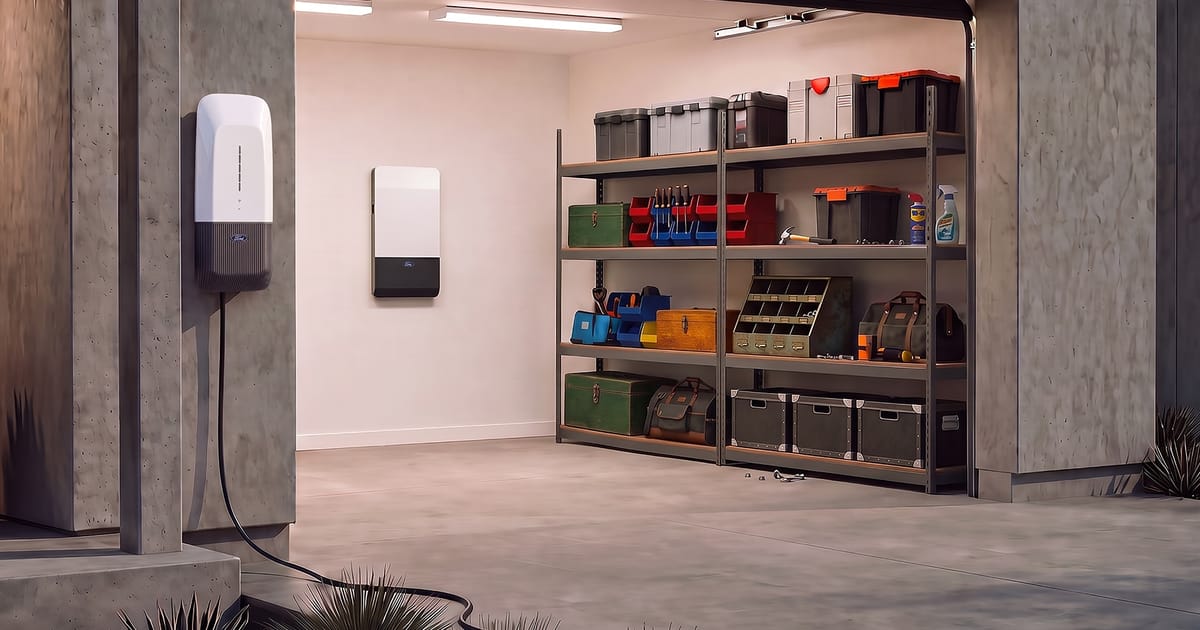
Ford’s new Fathom electric pickup, priced from $ 28, 350, will include an onboard inverter enabling alternating current power delivery to homes without expensive bidirectional chargers. The vehicle’s system converts direct-current battery power to home-ready AC, avoiding the $ 7, 000 to $ 10, 000 cost of separate DC-to-AC inverters now required for most bidirectional EVs. Ford has not finalized the exact price for the home power management tech but confirmed it will be significantly cheaper than existing options.
The Fathom’s AC-capable bidirectional charging system will cost roughly half the $ 1, 300 price of Ford’s Charge Station Pro, which was designed for the discontinued F-150 Lightning. When paired with a home backup power panel, the total system will cost 60% less than the $ 5, 200 combined price of the Charge Station Pro and integration system, excluding installation. Ford’s system allows homes to manage power consumption during normal grid operation and provide backup power during outages.
Ford’s onboard inverter technology was developed with engineers from Auto Motive Power, a startup acquired in 2023, and is integrated into the company’s new Universal EV Platform. Jiaqi Liang, Ford’s senior director of electrical hardware, noted the cost advantage of embedding grid-ready inverter capability from the start rather than retrofitting legacy platforms. The system uses the SAE J 3068 standard, developed with input from University of Delaware professor Willett Kempton, to ensure safe AC power delivery.
Ford is collaborating with major utilities including American Electric Power, BC Hydro, Consumers Energy, Exelon, and Pacific Gas & Electric to establish standard interconnection rules for its AC vehicle-to-home charging system. Only California and Maryland currently have utility regulations for AC bidirectional charging outside pilot projects, while most of the nation’s 3, 000-plus utilities lack clear guidelines, complicating widespread adoption.