As US grid batteries surge, risk of fires plummets
U.S. grid-scale battery failures have dropped over 97% since 2016 despite a 250-fold increase in installations, with failure rates now comparable to substation transformers.
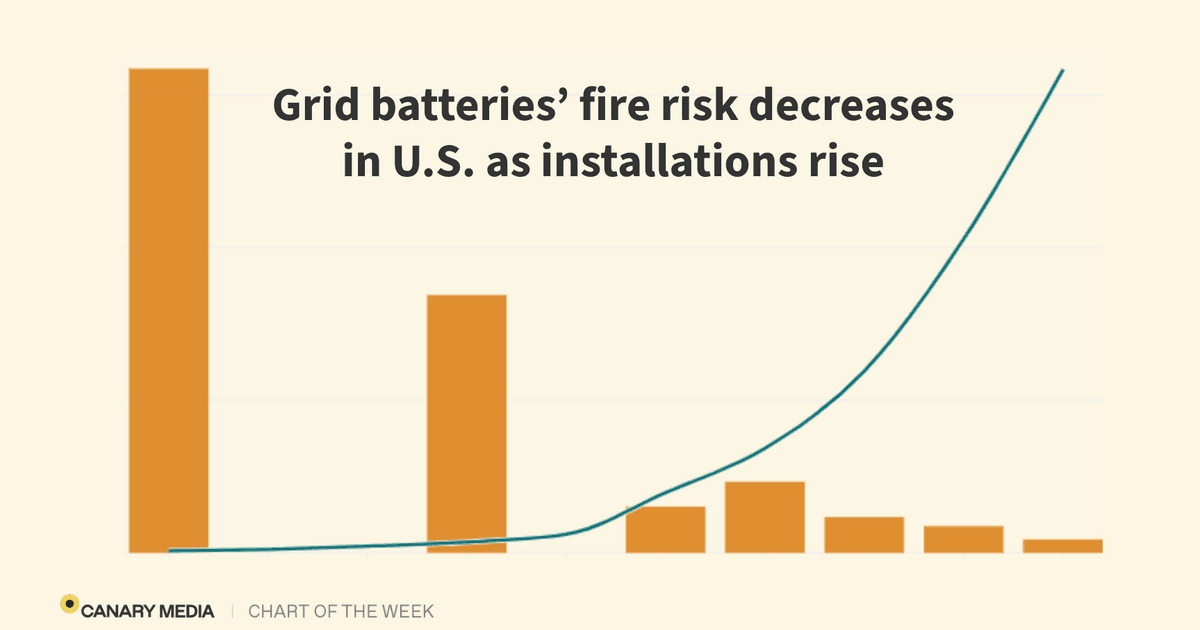
Battery fires remain a public concern, but data from the Electric Power Research Institute shows they occur far less frequently than often feared. The nonprofit’s analysis indicates that as grid-scale battery deployments have surged in the U.S., the annual failure rate has plummeted, even as total installations grew exponentially. New safety standards and improved project designs have contributed to this trend, suggesting the technology is becoming safer over time. The dataset highlights that battery failures are now as rare as shark attacks, challenging common perceptions about their risks.
A comparison of EPRI’s failure data with installation records from the Solar Energy Industries Association and Benchmark Mineral Intelligence reveals a striking improvement. By 2025, the annual failure rate had fallen by more than 97% from 2016 levels, while cumulative battery deployments rose 250-fold. For three separate years in the past decade, no known failures were recorded, underscoring the reliability of modern systems. This trend reflects not just fewer incidents but also the growing sophistication of battery projects and safety protocols.
Despite these improvements, the dataset has limitations due to its small sample size, as noted by Lakshmi Srinivasan, lead author of the EPRI report. The analysis does not account for the severity of individual failures, which range from minor incidents to significant events like the 2019 Phoenix incident that hospitalized four emergency responders. The Moss Landing fire in California, though destructive, did not cause injuries but led to a multi-day evacuation, illustrating the localized impact of such events.
EPRI’s findings suggest that grid-scale battery units now fail at rates comparable to oil-filled substation transformers, a long-established technology with decades of deployment history. Srinivasan emphasized that transformers are familiar to grid operators and the public, whereas battery projects face heightened scrutiny despite their improving safety record. The data aims to help communities assess risks more accurately, balancing concerns about safety against benefits like tax revenue, grid reliability, and lower electricity costs.