Heat pumps have so far withstood the death of federal tax credits
Heat pump demand remains strong in 2026 despite the loss of federal tax credits, defying expectations and outpacing other clean energy sectors.
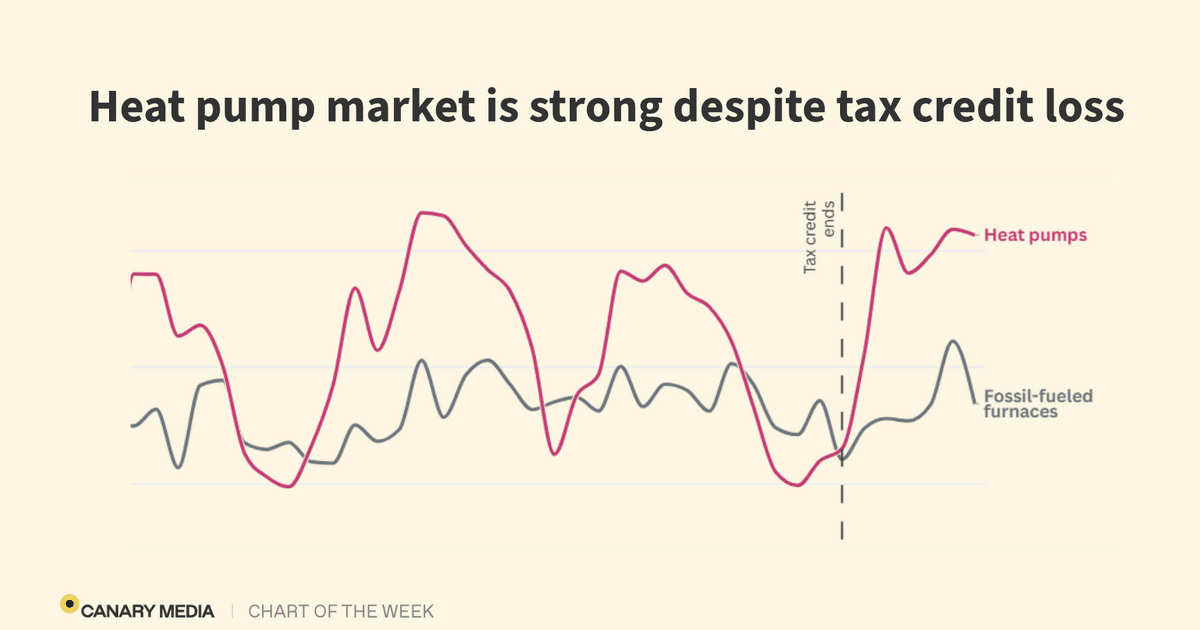
Shipments of heat pumps in the first half of 2026 remained robust, with the technology on track to match or surpass its best year on record, according to a report from the Building Decarbonization Coalition. The nonprofit’s analysis, based on data from the Air-Conditioning, Heating, and Refrigeration Institute, indicates sustained market performance even after federal incentives expired. This resilience contrasts with other clean energy technologies, such as rooftop solar and electric vehicles, which have shown signs of decline following the removal of similar credits.
The expiration of the $2 000 federal tax credit for heat pumps at the end of 2025 removed a key financial incentive that had been available since 2018. The credit, which reduced upfront costs for households, was eliminated seven years earlier than planned under the Biden administration’s original timeline. Despite its removal, heat pump adoption has continued, suggesting that other factors may be driving consumer decisions more than financial incentives.
Research from Lucas Davis, a business professor at the University of California, Berkeley, suggests that geography, climate, and electricity prices play a more significant role in heat pump adoption than tax credits. Davis noted that many households likely adopted heat pumps without ever being aware of the credit or only learned about it months later during tax filing. Contractors, rather than customers, were often the ones initiating discussions about the tax credit, indicating its limited direct influence on purchasing decisions.
State and utility incentives, along with local government policies promoting fossil fuel alternatives, have helped sustain heat pump demand in some regions. Additionally, contractors have grown more experienced with heat pump installations, reducing barriers to adoption. While the rooftop solar and electric vehicle sectors have struggled post-tax-credit, heat pumps have emerged as a standout performer in the clean energy transition.