The wins and weak spots in America's solar supply chain
America’s solar module production now exceeds annual installations, but upstream components like cells, wafers, and polysilicon lag behind, risking future supply gaps once federal incentives taper.
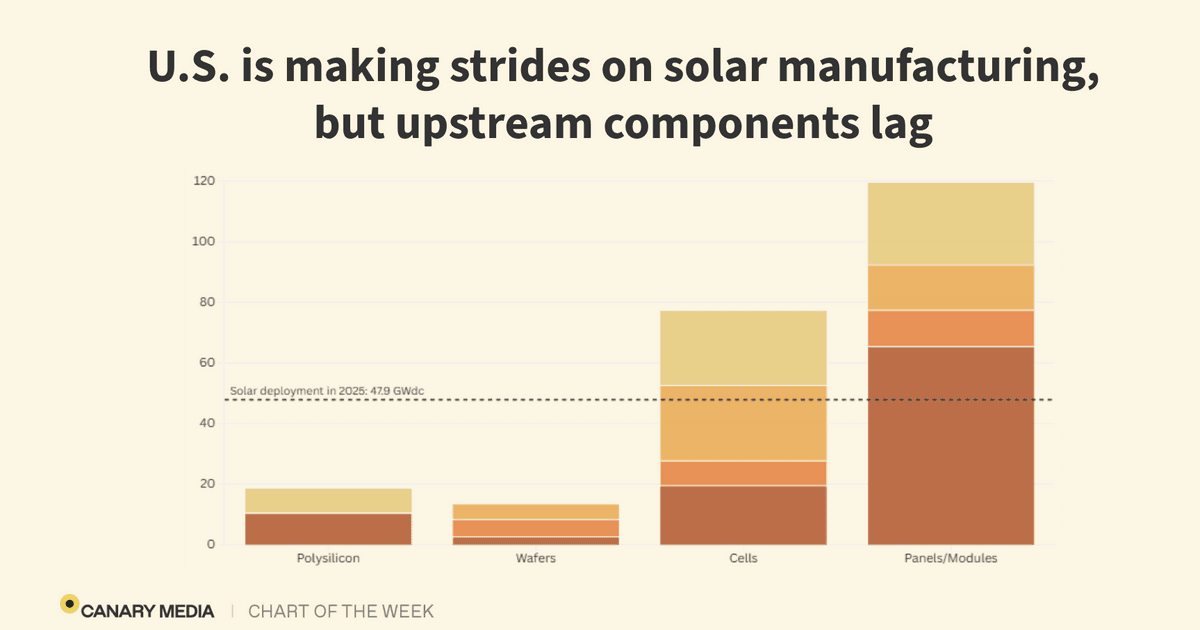
Solar module manufacturing in the U.S. has expanded to meet or exceed annual installation demand, which reached 47.9 gigawatts in 2023. If all announced projects progress, domestic module production could increase by about 83%, reversing years of reliance on imports. Federal incentives and tariffs have driven this growth, reviving an industry that had nearly disappeared. However, modules represent only the final stage of the supply chain, leaving upstream components like cells, wafers, and polysilicon as critical gaps.
Domestic solar cell production has shown the most progress among upstream components, with factories now capable of producing up to 19 gigawatts annually. If current construction projects are completed, the U.S. could meet 2025 deployment needs for cells. This progress follows recent factory openings, but cells are just one step in the supply chain, which also requires wafers and polysilicon.
Polysilicon and wafer production remain the weakest links in the U.S. solar supply chain, with insufficient capacity to match cell or module output. The Rhodium Group’s modeling indicates that post-2030 solar installations could range from 8 to 52 gigawatts annually, creating uncertainty about future demand for upstream components.
Even if factories are built, their long-term viability depends on sustained demand after federal tax credits expire. The industry must demonstrate it can operate competitively in the U.S. over decades, not just during periods of heavy subsidy. Building capacity is only the first step toward full supply chain self-sufficiency.