n_TOF experiment sheds light on ancient stardust – Home
Researchers at CERN’s n_TOF facility have measured neutron capture in niobium-94 for the first time, resolving a discrepancy in models of ancient stardust composition.
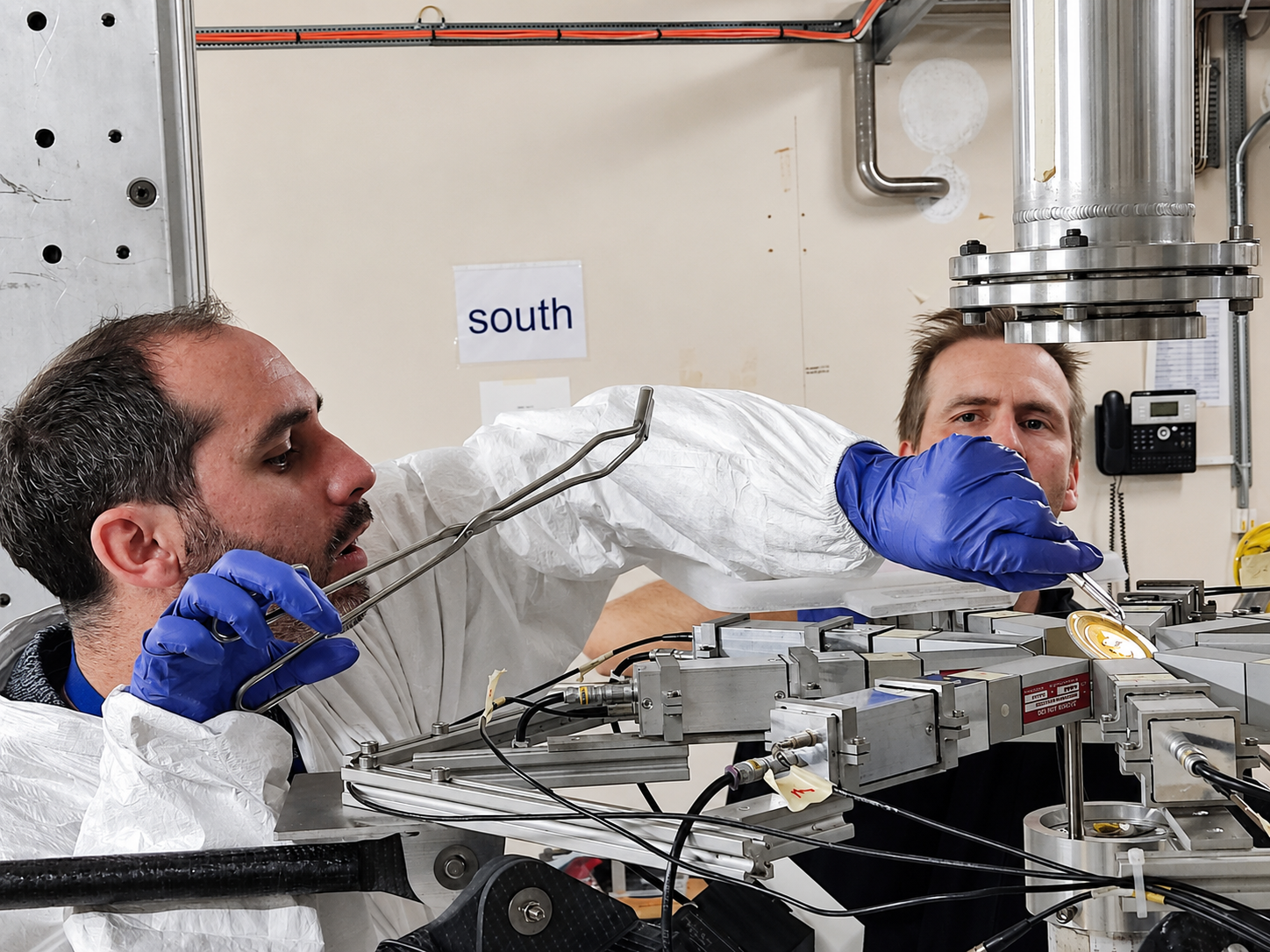
The n_TOF Collaboration at CERN has reported the first experimental measurement of neutron capture in niobium-94, an isotope critical to understanding heavy element formation in dying stars. Published in Physical Review Letters, the study addresses a longstanding puzzle: presolar grains contain more molybdenum-94 than current stellar models predict. Niobium-94, which can decay into molybdenum-94 or capture a neutron to form niobium-95, sits at a key branching point in these processes. The new data provides a benchmark for refining models of stellar nucleosynthesis.
To conduct the experiment, researchers produced and characterized a pure niobium-94 sample through a collaboration involving IFW Dresden, the Institut Laue-Langevin, and the Paul Scherrer Institute. The sample was then irradiated at CERN’s n_TOF facility using one of the world’s most intense neutron sources. The high neutron flux at the EAR2 station enabled detection of the faint neutron capture signal, overcoming previous experimental limitations. The result closely matched some theoretical estimates, suggesting the discrepancy lay not in neutron capture rates but in earlier stellar models.
Incorporating the new measurement into advanced stellar models significantly reduced uncertainties and successfully reproduced the observed molybdenum-94 abundances in presolar grains. This milestone resolves a key aspect of the molybdenum puzzle, offering a clearer picture of how heavy elements form in stellar environments. The findings underscore the importance of precise nuclear data in astrophysical research.
While the neutron capture process is now better understood, another critical pathway—beta decay of niobium-94—remains unmeasured. Future experiments aim to quantify this process to further refine stellar models and complete the picture of molybdenum-94 production in ancient stars. The work highlights the ongoing need for experimental nuclear physics to address gaps in our understanding of cosmic element formation.