Payout Links API: Create and Manage Links via REST
CoinGate introduced a Payout Links API that simplifies crypto payouts by reducing the process to a single POST request, replacing manual beneficiary setup with a hosted recipient page.
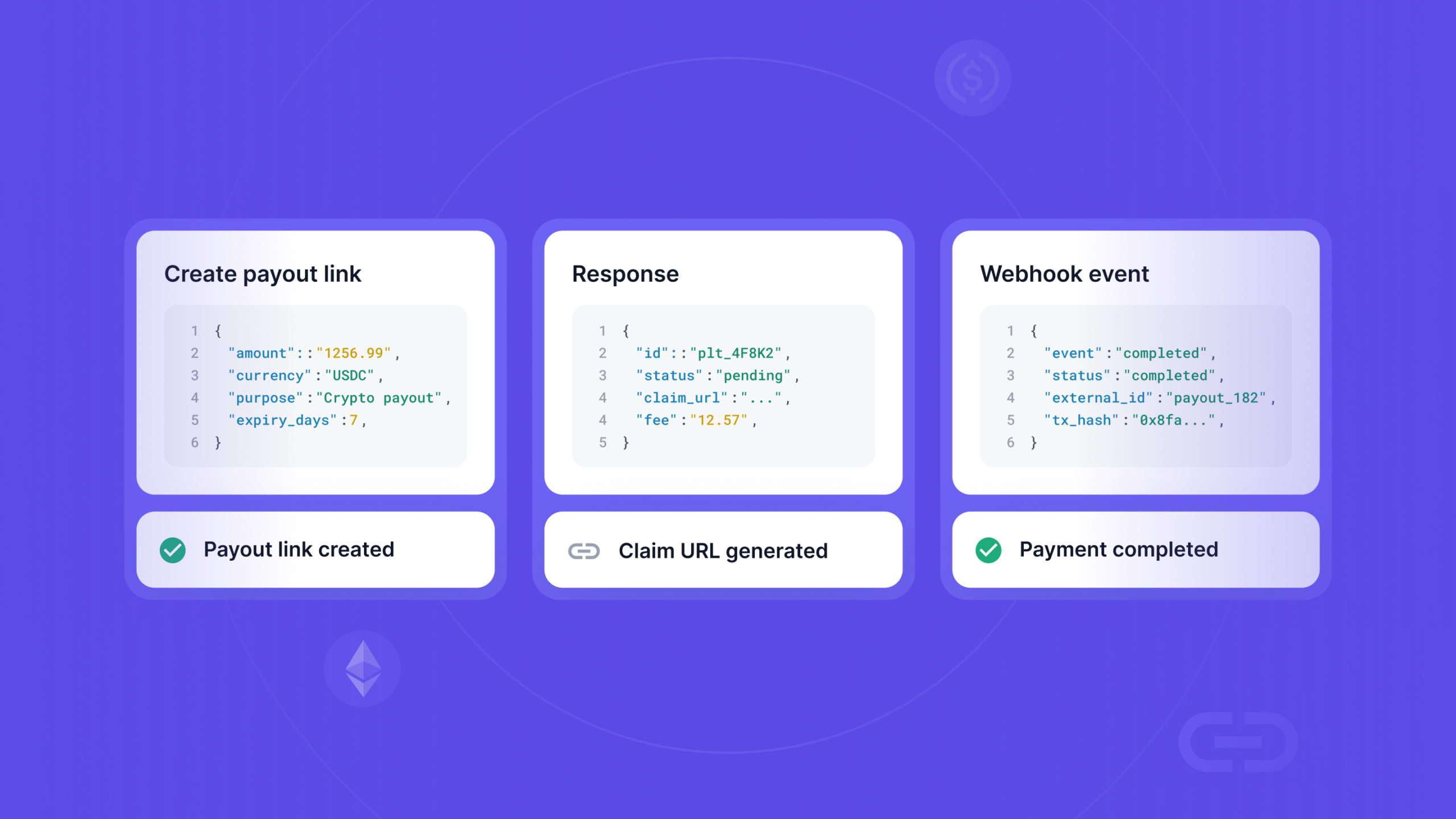
CoinGate’s new Payout Links API streamlines the process of sending cryptocurrency by replacing the previous two-step method—requiring beneficiary details upfront—with a single API call. Merchants now only need to provide the recipient’s email address, while the recipient completes their wallet address, country, currency, and identity details on a hosted page managed by CoinGate. This eliminates the need for merchants to build forms or handle manual data collection, reducing integration complexity. The API key is required for merchant-side operations, and the feature is part of the existing api/v2 REST conventions.
The API supports standard operations: creating links, listing them with pagination, reading individual links, and canceling them. Each link is assigned a UUID, and recipients access a separate public endpoint to provide their details. Merchants must account for rate limits of 200 requests per minute and handle responses that include the link’s ID, status, external ID, display amount, currency, and fee breakdown. The balance debit occurs immediately upon creation, and funds are held until the link is canceled or completed, even if the link remains in draft status.
Approval workflows differ between the dashboard and API. Links created via the dashboard require one approver, while API-created links need two distinct approvers, neither of whom can be the creator. Merchants must design their systems to account for this discrepancy, as a 200 response does not guarantee a usable link. The status must be checked, and draft links awaiting approval still incur costs. If multi-approval is disabled while links are in draft, those links are automatically canceled and refunded.
The API’s surface area is intentionally limited to reduce complexity. Listing links supports filtering by status and pagination, with responses including metadata such as current page, per-page count, and total records. Canceling a link refunds the amount and service fee to the original balance, but links cannot be edited after creation—errors require cancellation and recreation. Links progress through seven statuses: draft, pending, processing, completed, expired, failed, or canceled, with callbacks triggered for all but draft status.