Garmin Autoland offers added confidence to pilots and passengers in more than 2,500 aircraft
Garmin Autoland, an autonomous emergency landing system, is now installed on over 2,500 aircraft, expanding from piston planes to twin-engine jets with certified real-world capability.
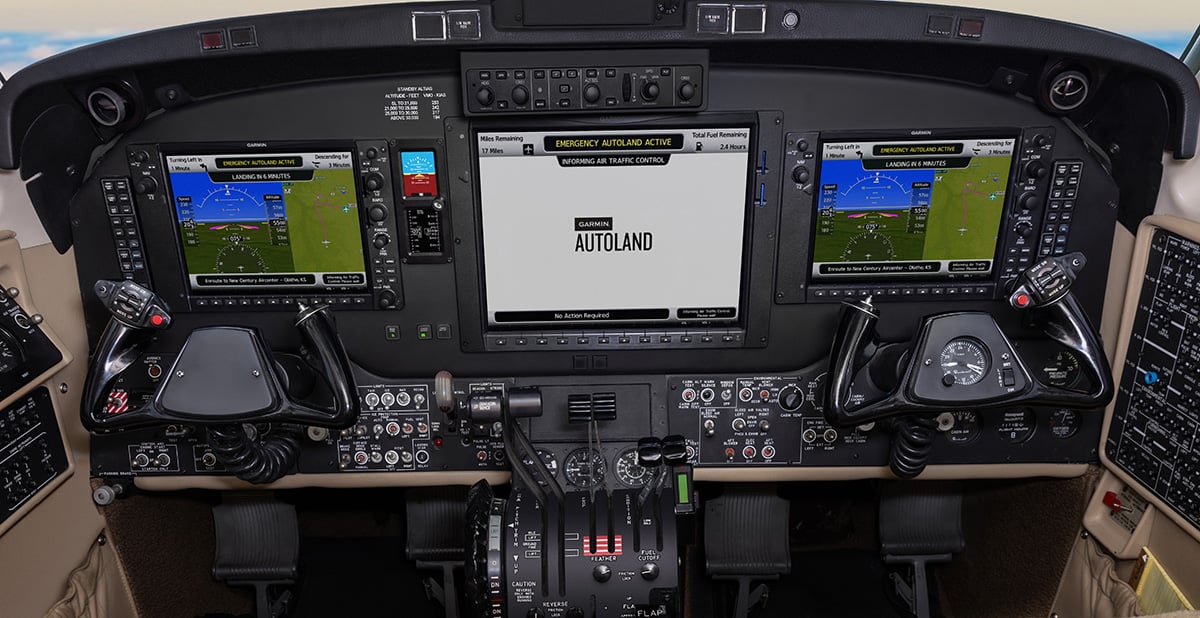
Garmin Autoland is designed to take control of an aircraft during an emergency if the pilot is unable to operate the plane, providing an autonomous landing without human intervention. The system can be activated automatically if a pilot becomes unresponsive or manually by a pilot, co-pilot, or passenger. Once engaged, Garmin Autoland assumes full control and completes the landing process independently, requiring no further action from those onboard. The technology is part of the Garmin Autonomí product family, which focuses on enhancing safety through active systems that simplify flying operations.
The system has reached a milestone with installations on more than 2,500 aircraft, including piston-powered planes and twin-engine jets, reflecting growing adoption across aviation segments. Certification began in 2020 on the Piper M600 SLS, and the technology has since expanded to over 15 certified models globally. Recent additions include certifications for the HondaJet Elite II, Embraer Phenom 300EV, Pilatus PC-12 PRO, and Epic E1000 AX, marking the first such installations in twin-engine jet aircraft.
Garmin Autoland has received multiple industry awards, including the 2020 Robert J. Collier Trophy from the National Aeronautic Association and a Popular Science Best of What’s New award. Additional recognitions include a CES Innovation Award, a FLYING Magazine Editors’ Choice Award, and multiple Flying Innovation Awards, underscoring its technical and safety contributions to aviation.
Nearly 250 of the 2,500 Autoland installations were retrofitted onto existing aircraft, including full-retrofit King Air models and other eligible platforms that did not originally include the system. Many installations are integrated into Garmin flight decks such as the G1000 NXi, G3000, and G3000 PRIME, which support the technology’s operation and functionality.