New AI Modeling Approach Accelerates the Development of Advanced Materials
Berkeley Lab researchers developed an AI model that predicts solid-state material reactions by accounting for atomic movement, accelerating advanced material development for batteries, sensors, and medical devices.
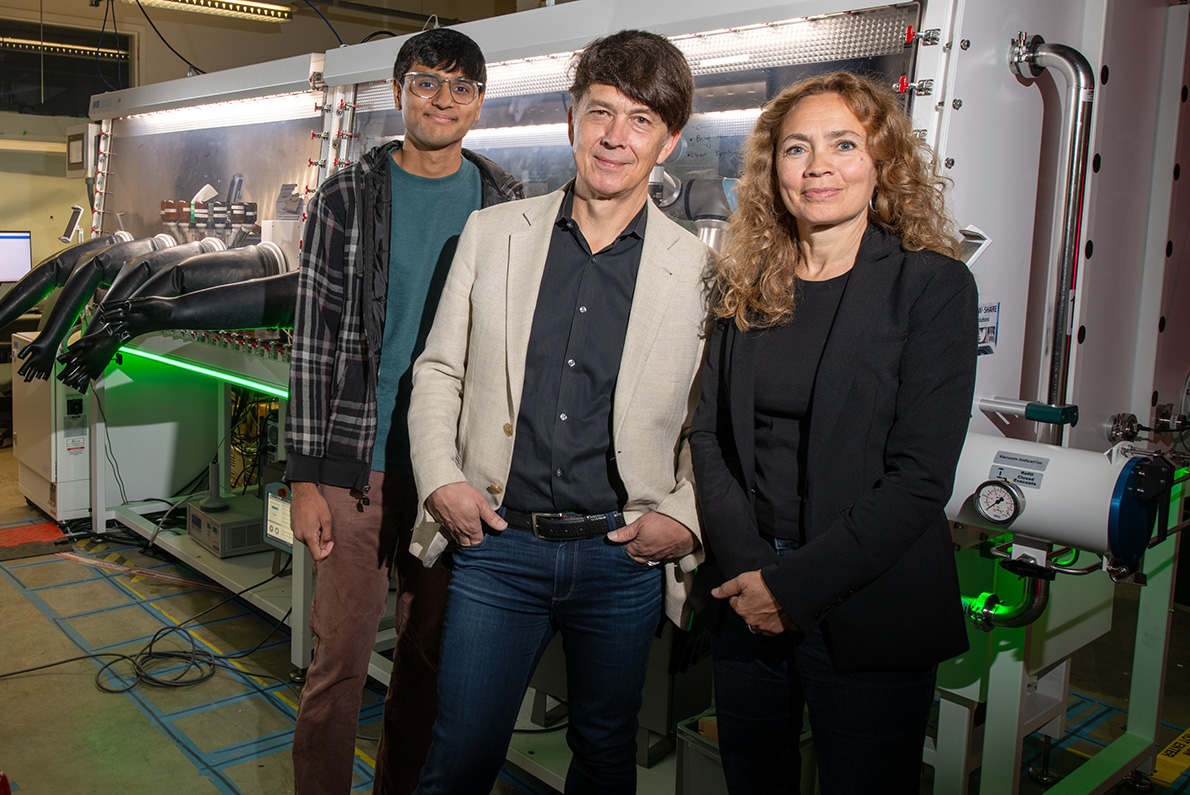
A research team at Lawrence Berkeley National Laboratory has created an AI model that predicts how atoms move during solid-state reactions, addressing a longstanding gap in materials science. The model integrates thermodynamics with kinetics, revealing how atomic mobility influences reaction outcomes. This approach contrasts with traditional thermodynamic-only models, which often fail to account for the slow movement of atoms in solids. The team validated the model using barium-titanium oxides, a material family with applications in electronics, achieving strong agreement with decades of experimental data.
The AI model simulates full reaction pathways in minutes, identifying intermediate compounds, final products, and impurities based on starting materials, ratios, and temperature conditions. This capability reduces the need for time-consuming trial-and-error experiments, which can take weeks to years in conventional synthesis. The researchers demonstrated the model’s accuracy by replicating known reaction sequences under varying conditions, highlighting its potential to streamline material discovery.
Kristin Persson, a senior scientist at Berkeley Lab and UC Berkeley professor, emphasized the model’s practical impact on accelerating the development of advanced materials. She noted that the approach could help bridge the gap between laboratory discovery and commercial manufacturing, enabling higher purity and yield in material production. The research was published in Nature Materials and supported by the Department of Energy’s Office of Science.
The team plans to expand the model’s applicability by training it on additional solid-state materials, with a long-term goal of developing a foundation model for universal use. This would allow researchers across industries to predict reaction outcomes for a wide range of materials, from batteries to medical devices. The project aligns with Berkeley Lab’s mission to advance discovery science and energy solutions, leveraging its expertise in materials, chemistry, and computing.