Ferroelectricity Emerges at the Nanoscale
Researchers at Berkeley Lab discovered that ultrathin titanium dioxide exhibits ferroelectricity, enabling low-voltage switching for energy-efficient microchips.
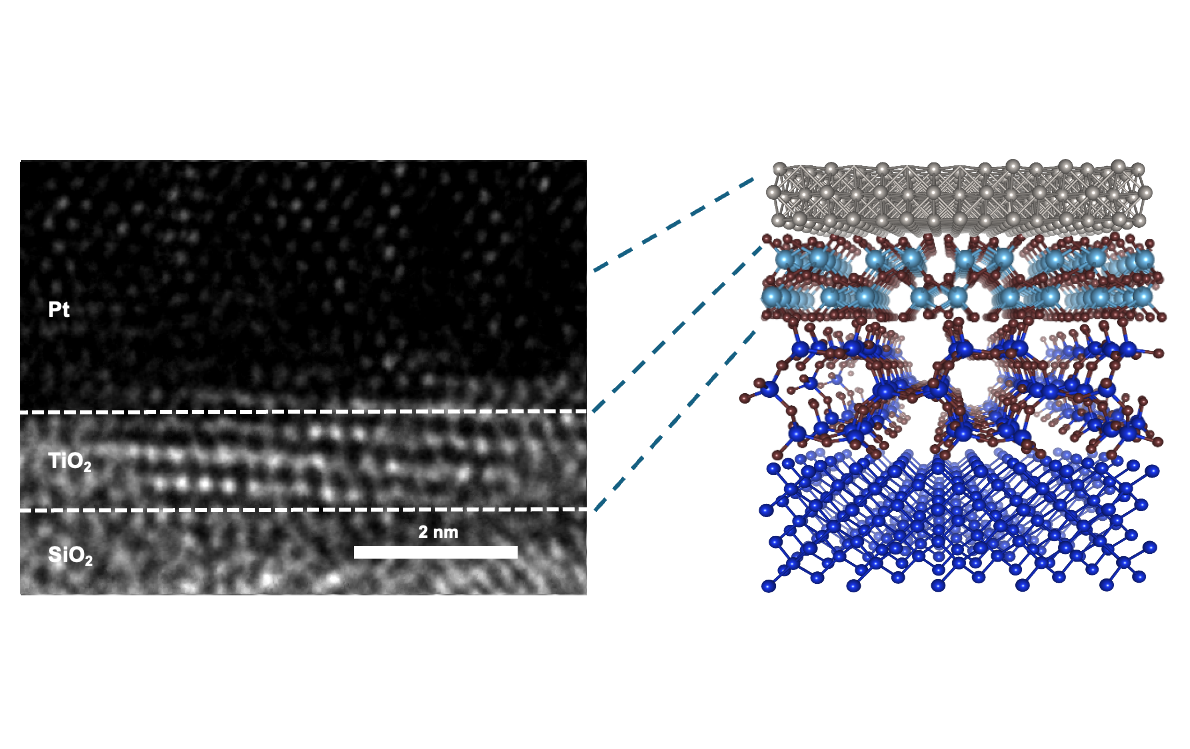
A team at Lawrence Berkeley National Laboratory found that titanium dioxide, a common oxide material, displays ferroelectric properties when reduced to a few nanometers in thickness. This electrical property allows the material to switch polarization at lower voltages than conventional components, potentially improving energy efficiency in microelectronic devices. The discovery addresses a long-standing challenge where most ferroelectric materials lose their properties when thinned, offering a new pathway for advanced memory and logic chips. Researchers emphasized the material’s compatibility with existing silicon-based semiconductor technology, a critical factor for practical applications.
The study, published in Science, built on earlier work demonstrating ferroelectric switching in hafnium oxide. Using atomic layer deposition, the team synthesized titanium dioxide layers between one and ten nanometers thick on various substrates without requiring extreme temperatures. The researchers then analyzed the samples for electrical polarization using X-ray and optical techniques at Berkeley Lab’s Advanced Light Source and Molecular Foundry. For samples thinner than three nanometers, measurements revealed anisotropy and symmetry-breaking consistent with ferroelectric behavior, confirming the material’s unique properties at the nanoscale.
Unlike bulk titanium dioxide, which is a standard dielectric used in paints and plastics, the ultrathin version stabilizes into a distorted orthorhombic structure that supports ferroelectricity. The transition occurs abruptly around three nanometers, as observed through complementary experimental methods sensitive to different structural and polarization characteristics. The findings challenge conventional understanding, as most ferroelectric materials typically lose their properties when thinned, rather than gaining them.
The discovery opens opportunities for developing a broader library of ultrathin ferroelectric materials tailored for specific microelectronic applications. Researchers suggest these materials could enhance energy efficiency in memory and logic chips, particularly in power-intensive technologies like AI and data centers. The work, supported by the DOE Office of Science, underscores the potential of nanoscale engineering to reduce power consumption in next-generation devices while maintaining compatibility with existing manufacturing processes.