Ice Ice Maybe: New Ways to Search for Frozen Water on the Moon
Berkeley Lab and partners developed a model and cryogenic chamber to detect lunar subsurface ice using seismic waves, supporting NASA’s Artemis missions and the upcoming VIPER rover.
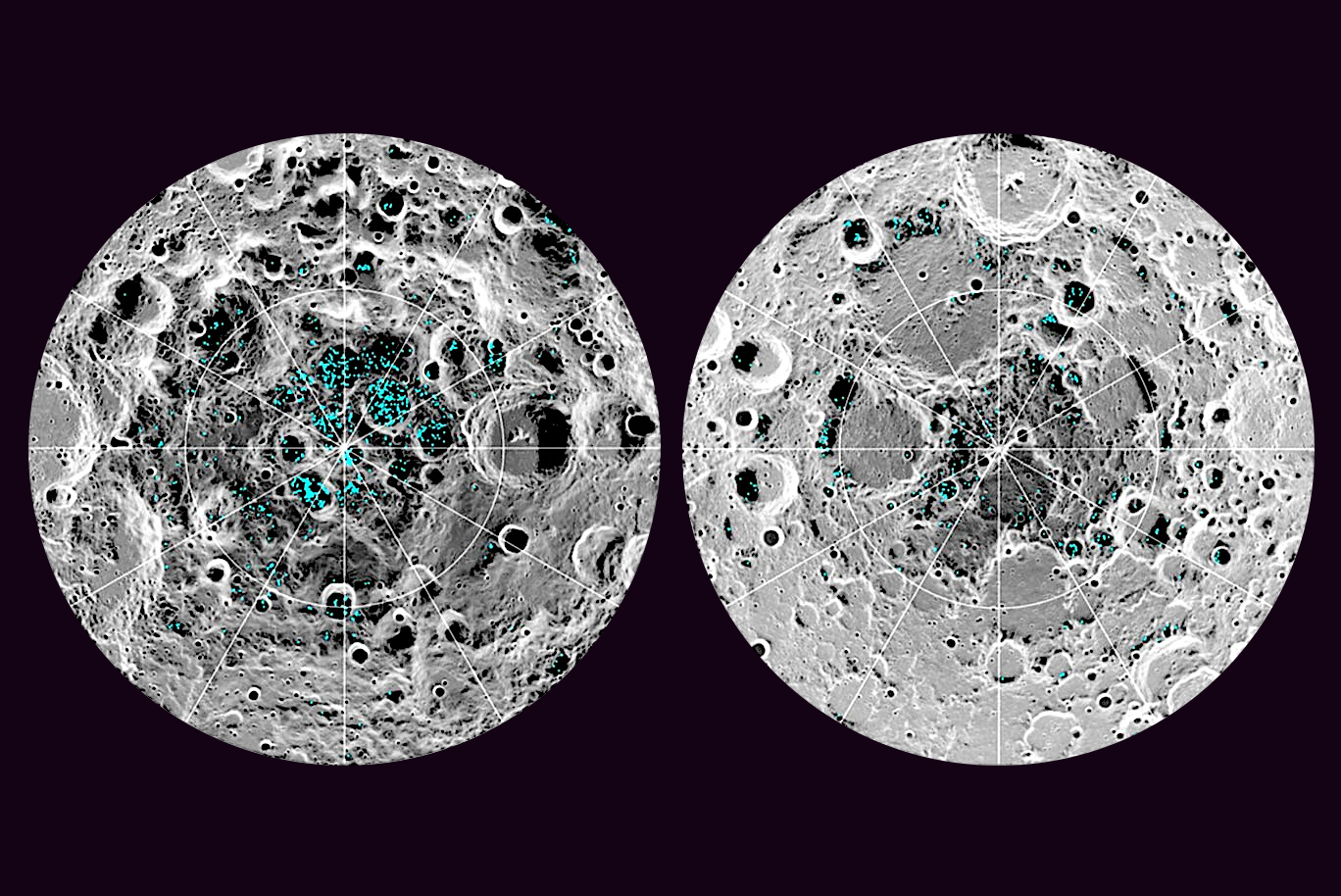
NASA’s Artemis program aims to establish a long-term human presence on the Moon, requiring reliable water sources beyond what can be transported. Recent research confirms substantial frozen water deposits exist, but their precise locations remain uncertain. A team led by Berkeley Lab’s Harrison Lisabeth created a computational model to interpret seismic wave responses in the Moon’s subsurface, helping identify ice-rich zones. The model addresses challenges posed by the Moon’s extreme vacuum and cold, conditions that alter material behavior unpredictably.
To validate their model, researchers built FROST, a 15-inch cryogenic vacuum chamber at Berkeley Lab’s Advanced Light Source. FROST simulates lunar conditions to observe how simulated moon rock (regolith) deforms under subzero temperatures and vacuum. Experiments revealed distinct microscopic changes in regolith depending on ice content, providing ground-truth data for lunar geophysics. The findings bridge gaps in understanding how ice affects seismic wave propagation, a critical factor for future lunar surveys.
The team integrated FROST data with satellite observations and seismic simulations to develop a combined approach for detecting buried ice. Their model predicts seismic signatures unique to different ice deposit types, enabling targeted exploration. The work supports NASA’s VIPER rover mission, scheduled to land near the Moon’s south pole, where it will use seismic sensors to probe for ice up to 800 meters deep. The approach aims to refine techniques for locating water essential for sustained lunar habitation.
Funded by Berkeley Lab’s LDRD program and supported by NASA and the DOE Office of Science, the research underscores the importance of fundamental geophysical data for space exploration. The team, part of the NASA-funded GEODES initiative, plans to test their model with VIPER’s seismic instruments. By correlating seismic wave data with ice presence, scientists hope to uncover deeper insights into the Moon’s subsurface, advancing efforts to secure water resources for future missions.