New Account Security Features for WhatsApp
Meta’s WhatsApp introduces stronger two-step verification with alphanumeric passwords and passkey support across Android and iOS, alongside caller ID enhancements for unknown contacts.
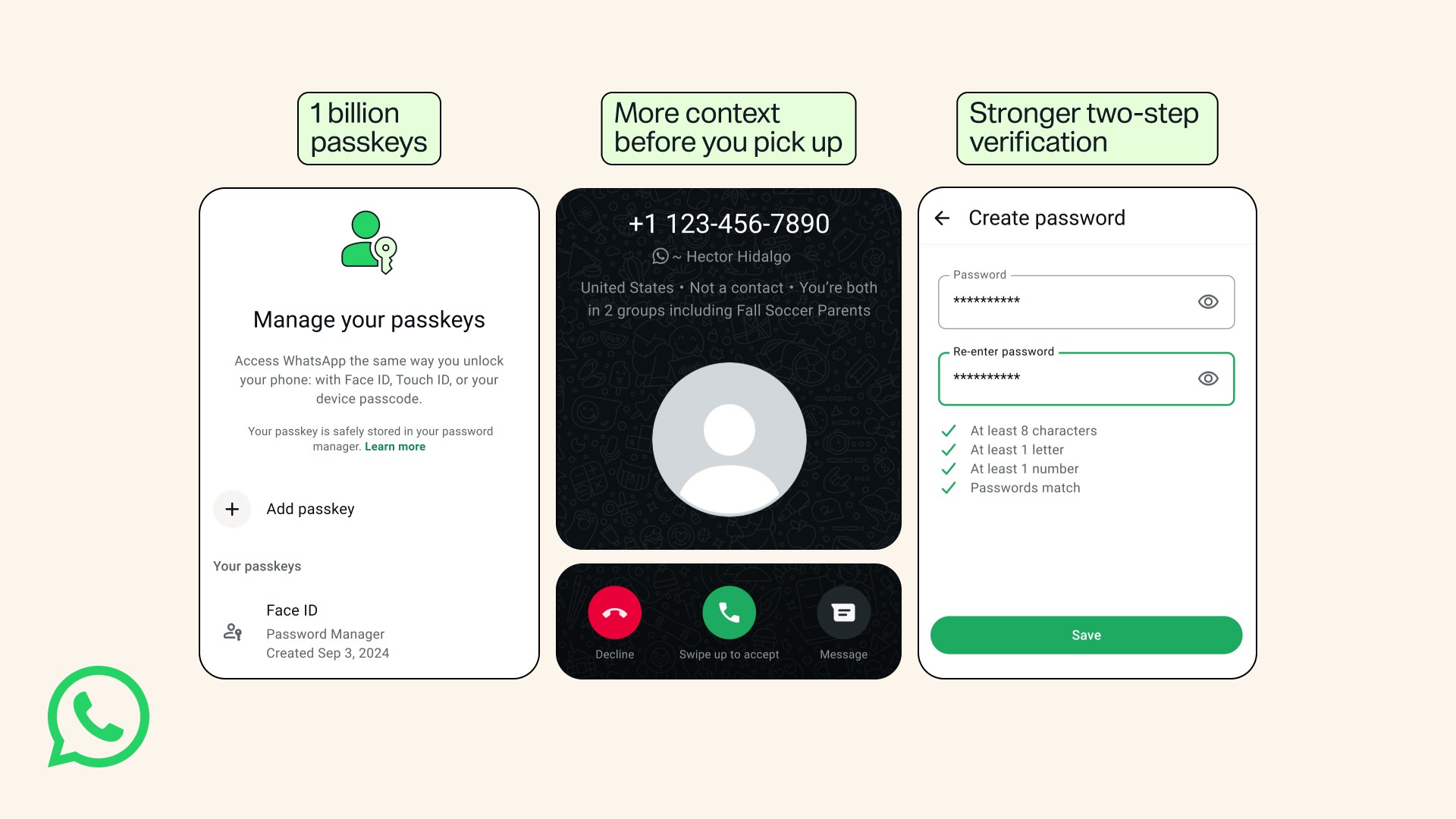
WhatsApp has upgraded its two-step verification from a six-digit PIN to a full alphanumeric password, including special characters, to strengthen account protection against unauthorized access. The change aims to reduce the risk of account takeovers even if a one-time passcode is compromised. Users can now create longer, more complex passwords for added security. This feature remains optional but recommended for enhanced protection.
Android users will see additional caller details when receiving calls from unknown numbers, including the caller’s country and shared group memberships. This contextual information helps users assess call legitimacy before answering, addressing tactics used by scammers who rely on urgency. The update does not alter contact lists or block calls but provides transparency to aid decision-making. No changes are applied to iOS at this time.
Passkeys are now supported for multiple device logins, allowing users to authenticate with biometrics or screen lock codes instead of traditional PINs or passwords. WhatsApp previously allowed one passkey per account, but now supports multiple passkeys for users who switch between Android and iOS. This feature is accessible via Settings > Account > Passkeys and simplifies the login process while maintaining high security standards.
Meta emphasizes ongoing efforts to expand account security tools, framing these updates as part of a broader strategy to keep user accounts under individual control. The company highlights that end-to-end encryption remains the default for all conversations. Additional features are expected to be introduced in future updates, though no specific timelines were provided.